
City guide · Valletta
Valletta
Reading Malta's capital between the walls and harbours planned by the Knights
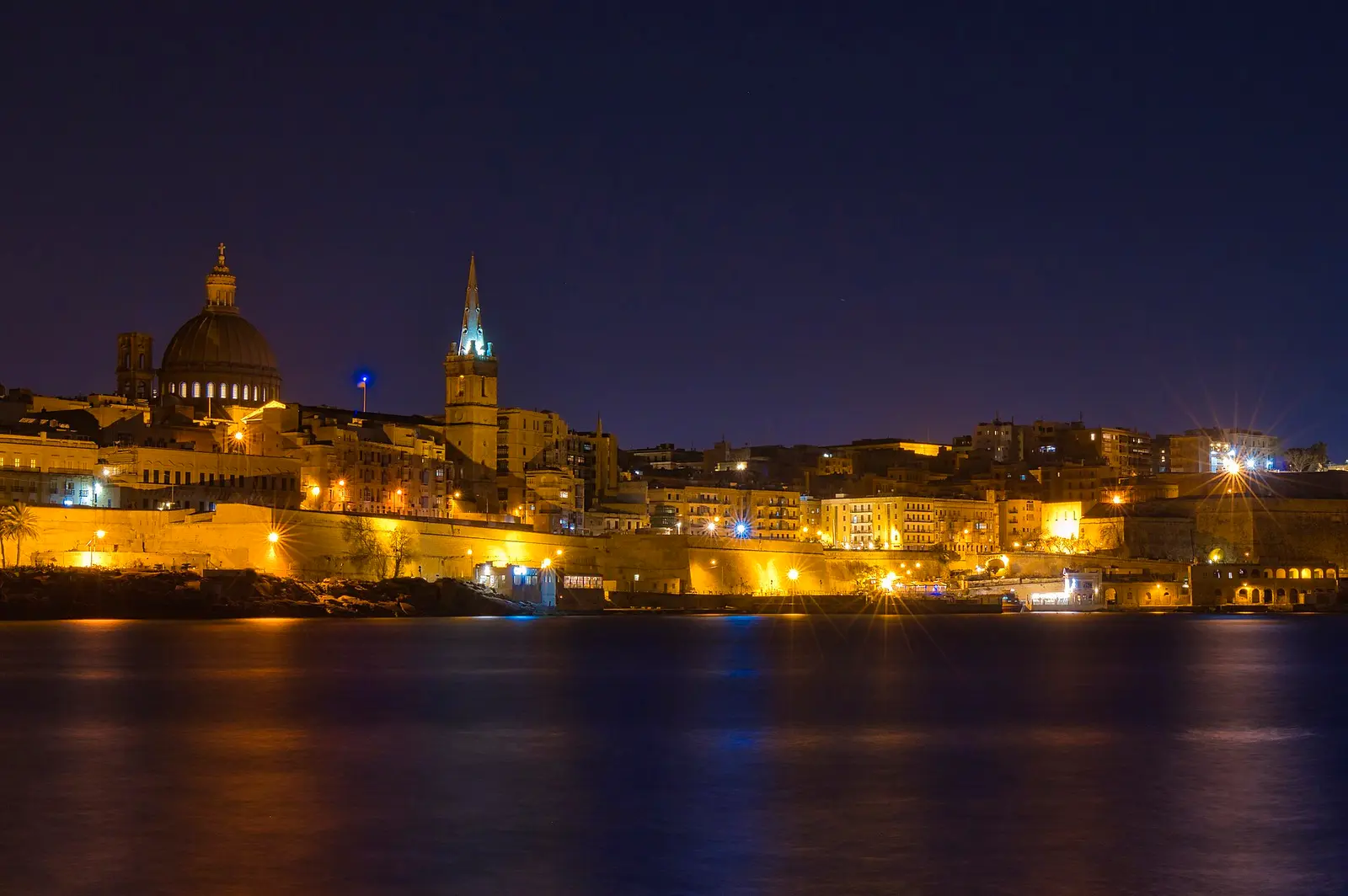
Valletta stands on a narrow peninsula between two harbours, and the streets of the old city run across the slopes on a planned grid. St John's Co-Cathedral and the Upper Barrakka Gardens are good for art from the Knights' era and for harbour views respectively; religious sites and public gardens have different admission rules, so please check each. Other places worth visiting in the city: St John's Co-Cathedral and the Upper Barrakka Gardens. Mdina is a separate town on the island of Malta and can be planned as a half-day or full-day trip; the Three Cities across the Grand Harbour are also separate towns.
History
How the city came to be
The founding of Valletta is closely tied to the history of the Order of St John. After the Great Siege of Malta in 1565, the Order planned a new city on the high ground between two natural harbours, and construction of Valletta began in 1566. European military engineers worked on the walls, bastions and regular street layout, so that the city combined defence, administration, religion and charity. St John's Co-Cathedral, the Knights' auberges and the hospital show how the Order operated, while around Upper Barrakka you can see the geographic relationship between the fortifications and the harbour. The city later passed through different regimes and 19th-century alterations, and the Second World War also caused damage, but its historic layout and many important buildings survive. Valletta was inscribed as World Heritage in 1980. UNESCO emphasises its overall value as a late-Renaissance planned city, so it can't be understood merely as a single fortress or one church. Walking today from the city gate to the harbour, you compare the Knights' planning, harbour functions and modern capital life within the same compact space.
- 1565The Great Siege of Malta prompted the plan to build a new city on the peninsula.
- 1566Construction of Valletta began.
- Second half of the 16th centuryThe walls, streets and public buildings of the Order gradually took shape.
- 18th centuryThe city continued to add public and religious buildings.
- Second World WarSome of the city's buildings were damaged.
- 1964Malta became independent.
- 1980Valletta was inscribed as World Heritage.
Stories
Stories of the city
A new capital after the Great Siege
History · Valletta
In 1565 the Knights Hospitaller held Malta through the Great Siege. On 28 March of the following year, Grand Master de Valette laid the foundation stone of the new city himself, and it was named after him. In 1571 the Knights moved their capital here.
Caravaggio's only signed work
History · Valletta
St John's Co-Cathedral holds Caravaggio's largest painting, The Beheading of Saint John the Baptist, which is also the only work he ever signed. The artist was active in Malta in 1607–1608 and painted it for the Co-Cathedral's oratory.
“The Most Humble City”
History · Valletta
Valletta's nickname is “Città Umilissima”, meaning “the Most Humble City”. Its motto, however, is rather proud: “City Built By Gentlemen For Gentlemen”.
How do you like this place?