
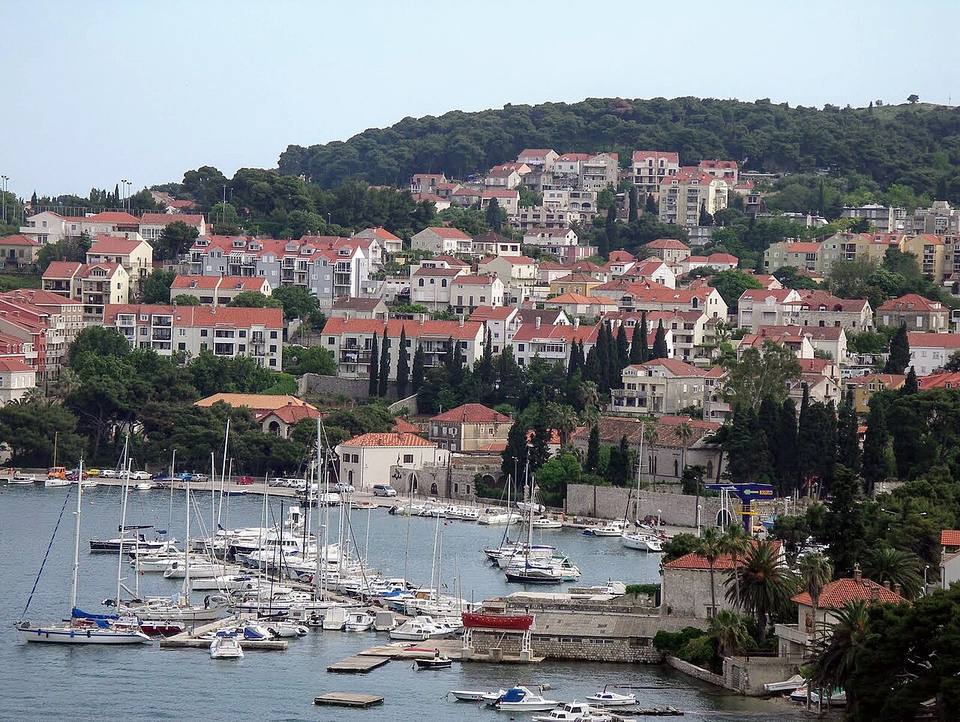
Dubrovnik Old Town

Country guide · hr

Croatia

Two landscapes open a journey through Croatia: Dubrovnik's walls above the sea and the living travertine waterfalls of Plitvice Lakes. One carries the history of a maritime republic; the other asks for careful stewardship of a natural heritage. Together they reveal the different rhythms of coast and interior.

Photo: René Cortin · CC BY-SA 4.0
CurrencyEUR euroEurope ↗
GoTerraVoya · 2026

Croatia

01

Getting Around

Croatia's rail network is limited and there is no high-speed rail, so intercity travel is mainly by long-distance bus; the coastal Split–Dubrovnik route takes about 4.5–5.5 hours. Rental cars are a flexible choice for coastal and inland towns. In cities, Dubrovnik relies on Libertas buses (routes 1A, 1B and 3 link Gruž port with the Pile Gate old town, routes 4 and 6 serve the Lapad peninsula), Zagreb has buses and trams, and old-town cores are walkable. Islands are reached by Jadrolinija car ferries (slower, cheaper, vehicles carried) and Krilo-type fast catamarans (passengers only, faster, pricier); the classic island-hopping route is Split–Brač–Hvar–Korčula–Dubrovnik. Tickets: book ferries ahead in high season, as rough seas can change schedules — recheck the day before travel. In Dubrovnik, a pre-bought 1-hour bus ticket is about €1.73, on-board purchase about €2.50, and a 24-hour ticket about €5.31, as officially published by Libertas; the Dubrovnik Pass, covering buses plus city walls and museums, pays off over several days.
02

Etiquette & Taboos

  • 🔴 Red Line: driving into old-town pedestrian zones or residents-only parking areas (in Dubrovnik, zones 2 and 4 are reserved for residents and permit holders, and visitors parked there are also fined); drink-driving; travelling without a ticket.
  • 🟡 Taboo: dragging suitcases noisily over old-town cobbles late at night; blocking narrow lanes side by side to take photos in high season; making noise inside small island churches and monasteries.
  • 🟢 Good Manners: sit in your assigned seat on ferries and place luggage in designated areas; offer seats to older passengers on buses; respect the quiet, siesta-like atmosphere on small islands.
  • Common pitfalls for visitors: ① parking near Dubrovnik old town is very expensive and strictly zoned — the car park by Pile Gate is about €20 for the first hour in high season — so park in Gruž or Lapad and take the bus in; ② renting a car for the whole island-hopping trip can be a burden, as catamarans do not carry cars and car-ferry spaces are tight in high season — walking plus buses, with short local rentals, usually suffices; ③ assuming a fast direct ferry links Split and Dubrovnik, when the bus at 4.5–5.5 hours is steadier; ④ in Dubrovnik, Uber drivers are mostly licensed taxi drivers, so being picked up by a taxi is normal and the app price applies.

Source leads are being checked individually; confirm travel details with local official notices.

Regional deep dives

Read deeper into each place

Dubrovnik Old Town

Central & Eastern Europe · Old city / seaside

Dubrovnik Old Town

Two kilometres of city walls ring a marble old town, and Stradun gleams bright enough to see your face in — the "Pearl of the Adriatic" played King's Landing in Game of Thrones, and off-screen it is still the real home of Croatians.

Read more
Location

Dubrovnik-Neretva County, Croatia

Stories and legends

The city's origins and the narrative of the Ragusan exiles who founded it mix documented history with tradition.

History and context

Dubrovnik's predecessor, the Republic of Ragusa (1358–1808), was a maritime trading republic that flew Libertas (freedom) as its banner and motto; the old town was listed as World Heritage in 1979; in the siege of 1991–92 it was damaged and later restored to heritage standards (the old and new roof tiles can still be told apart today); the walls run about 1,940 metres in total, including the Minčeta Tower and other fortresses, under a ticket system (often sold jointly with Lovrijenac Fortress — follow the city); Croatia joined the euro area and the Schengen area in 2023.

Local life

The old town's character is a "tug-of-war between postcard and real life": the resident population keeps moving out to the new town, but the early morning still belongs to the locals — the market (the morning market on Gundulić Square), Mass, and coffee (Croatian coffee culture is intense; one cup can last half a day). The walls at sunset, and the full view from Mount Srđ (412 m) reached by cable car, are the dusk ritual that visitors and citizens share.

Customs

The Dubrovnik Summer Festival (usually July–August, as officially announced) fills the old town with open-air performances; swimming off the rocks outside the walls (along the Buža bar stretch) is a local summer custom.

Beliefs

The Franciscan and Dominican monasteries and the cathedral form the Catholic core; in the Ragusa era, merchants of many faiths coexisted (the synagogue is widely said to be among the oldest in Europe still in use).

Local etiquette

Walking in the old town in swimwear is forbidden (municipal ordinance, with fines); do not sit on monument steps to eat and drink; the walls offer no shade — in summer bring plenty of water and a hat; drones are strictly controlled over the old town.

Visiting notes

Best from May to June and from September to October (avoiding the cruise-ship peak and the heat); walk the walls at first opening or two hours before sunset; the Dubrovnik Pass is best value when it includes the walls (following the official pass policy); on cruise days, check the port calendar to dodge the peak.

What to eat nearby

Black risotto (Crni rižot, rice blackened with cuttlefish ink); octopus baked under the bell (Hobotnica ispod peke — must be ordered in advance); oysters (from Ston, with the Pelješac peninsula as a side trip); prawns buzara-style (Buzara); Croatian wines (the red Dingač)

Small restaurants in the old-town lanes, the local strip outside the Ploče Gate, and the Lapad district

Dishes baked under the peka bell must be ordered several hours ahead (slow roasting); seafood is priced by the kilogram — confirm before ordering

A sit-down meal €25–45 (approx. RMB 195–351, for reference only)

Dining inside the old town carries an obvious premium — five minutes' walk beyond the gates the prices fall back; keep your walls ticket safe (it is checked at the midway exits).

Source leads: Dubrovnik city tourism / the walls' managing body; UNESCO, Old City of Dubrovnik (1979).

Image source · René Cortin · CC BY-SA 4.0

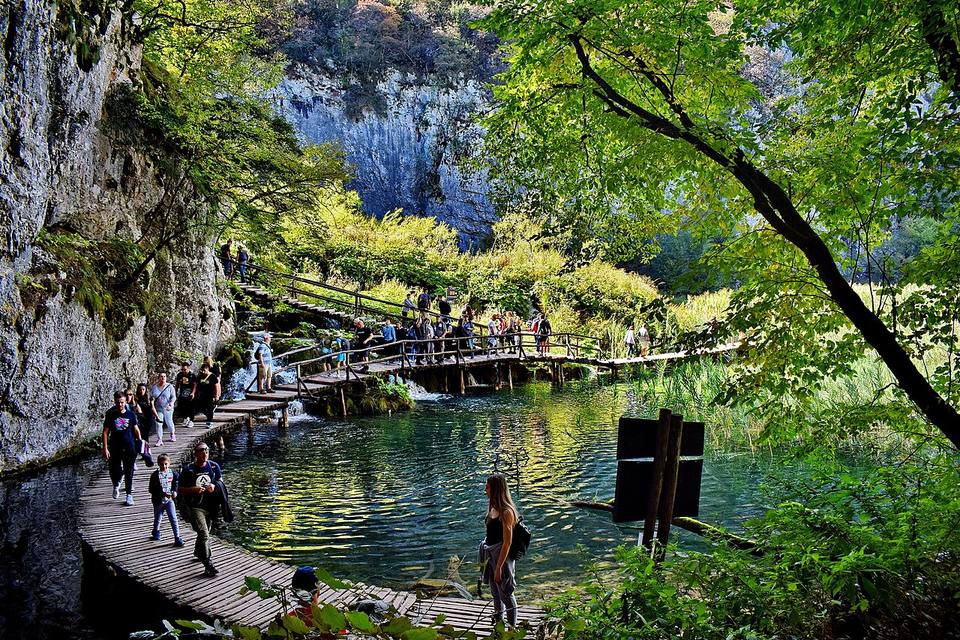
Plitvice Lakes National Park

Central & Eastern Europe · National park / natural heritage

Plitvice Lakes National Park

Sixteen stepped lakes strung together by travertine dams, with more than ninety waterfalls building new stone barriers day and night — listed as World Natural Heritage in 1979, this is Croatia's national-treasure waterscape.

Read more
Location

Lika-Senj County / Karlovac County, Croatia

Stories and legends

The legend of the Black Queen (Crna Kraljica), who prayed for rain and thereby made the lakes, is the park's classic tale.

History and context

The park covers about 295 square kilometres; it was made a national park in 1949 and listed as World Heritage in 1979 (among Croatia's first). The lake system divides into the Upper Lakes (12) and the Lower Lakes (4), dammed by travertine deposited from the headwaters of the Korana river; the tallest waterfall, Veliki slap, drops 78 metres, and the largest lake, Kozjak, is crossed by electric boat. Entry now runs on timed reservations along one-way routes (routes A–K and others — follow the park authorities).

Local life

Plitvice's character is "wildness under a strong sense of order": boardwalks, boats and sightseeing buses weave a tight circulation, so that even in peak season the crowds are many but never chaotic. The surrounding region of Lika — high plain, sheep-herding and the inland temperament of ćevapi grilled meat — is quite distinct from coastal Croatia, and the frozen waterfalls of winter and the green waterfalls of summer make it two parks in one.

Customs

There are no festival customs; swimming is banned throughout the park (unlike Croatia's other lakes and rivers — here it is an iron rule).

Beliefs

No particular religious association; its main cultural identity is karst hydrology and travertine geology.

Local etiquette

Never swim or step onto the travertine dams (travertine is extremely fragile and grows by millimetres a year); do not stop on the boardwalks and block the way for selfies; drones are banned; feeding the fish and ducks is forbidden.

Visiting notes

Best in spring and autumn and on summer mornings; book your entry time slot in advance on the official website (sell-outs are common in high season); the full highlights route (Route H, about 4–6 hours) combines boat and bus; stay in the villages outside the gates (Mukinje and the like) to enjoy first entry; by car it is about 2 hours from Zagreb and 1.5 hours from Zadar.

What to eat nearby

Lika roast lamb (Janjetina, a roadside roast-lamb tradition); ćevapi (Ćevapi); trout (farmed in the rivers outside the park); Lika potatoes and cheese (škripavac cheese); rakija, a fruit brandy (an after-dinner drink — keep it shallow)

Village restaurants outside the park gates, and the town of Korenica

Ask the price of roast lamb by the kilogram or portion first; rakija is a spirit of around 40% — taste a little and do not get into drinking contests

A sit-down meal €18–35 (approx. RMB 140–273, for reference only)

Food outlets inside the park are few and expensive — bring your own provisions (and carry the litter out); after rain the boardwalks are extremely slippery, so shoes must have grip.

Source leads: Plitvice Lakes National Park (official); UNESCO, Plitvice Lakes (1979).

Image source · Miroslav.vajdic · CC BY-SA 4.0

Source leads are being checked individually; confirm travel details with local official notices.