
City guide · Vilnius
Vilnius
Walking between the old-town layout of a grand ducal capital and the arts quarter across the river
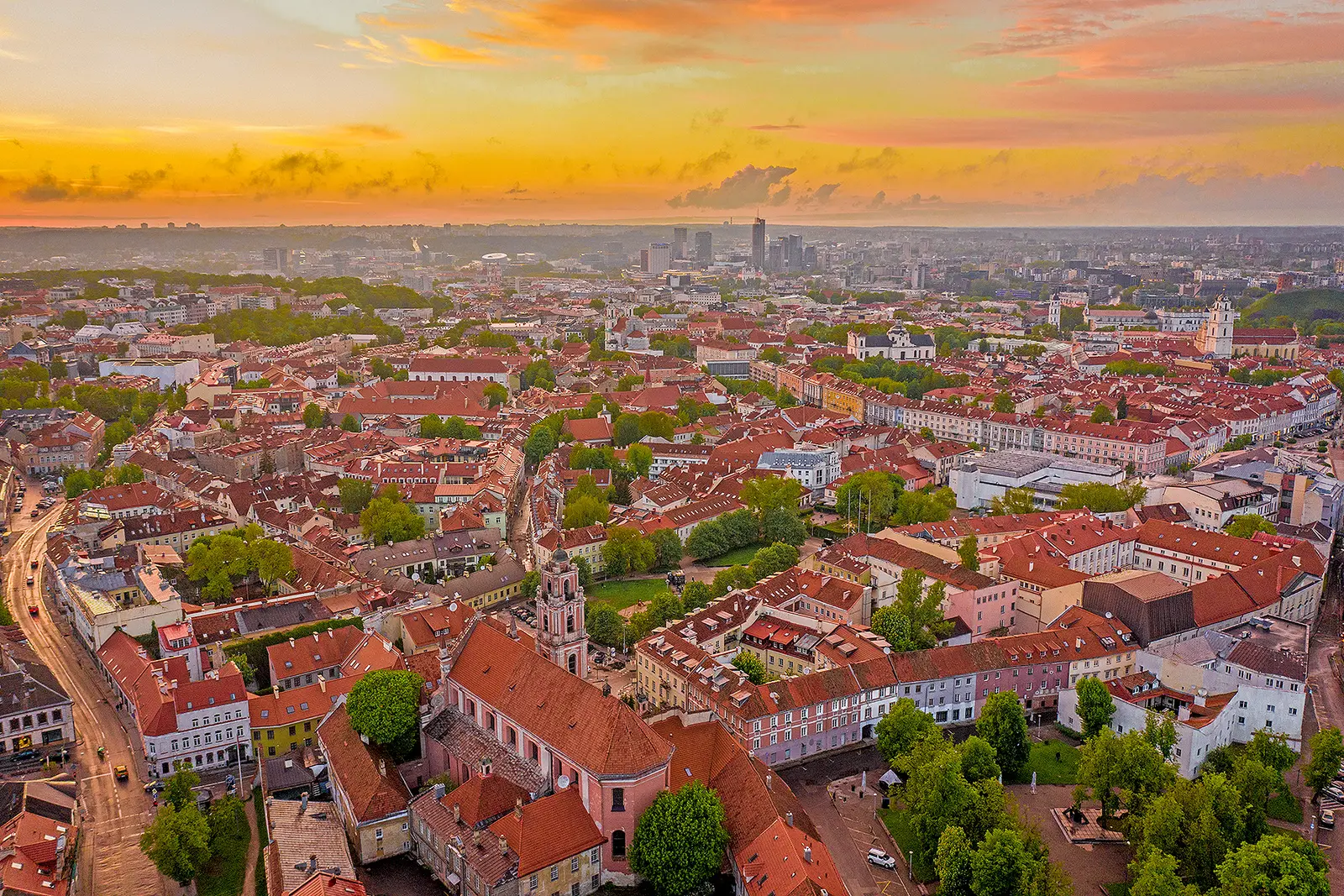
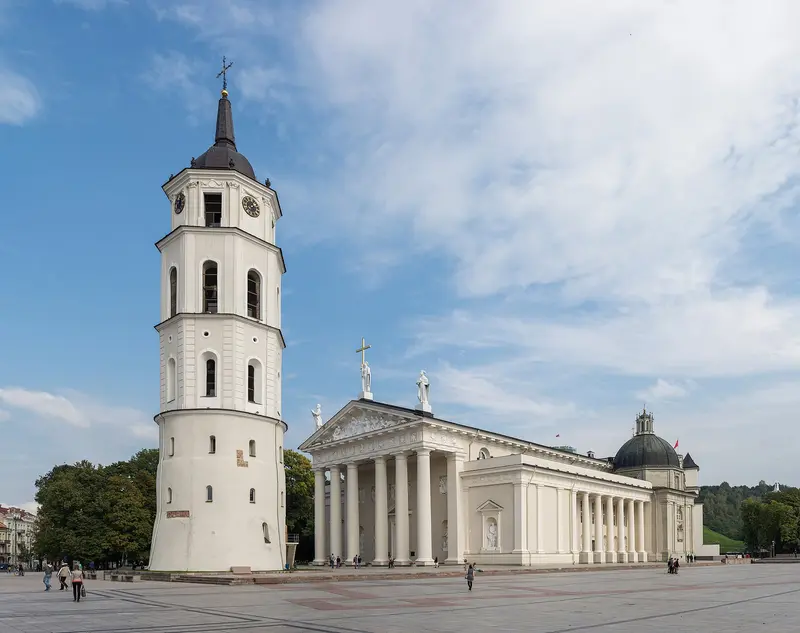
You can enter the historic core from Cathedral Square, follow irregular streets past churches and houses of different periods, then cross the Vilnia River to the Užupis quarter on the other side. It calls itself a "republic" as an artistic and cultural statement; it is not a real independent state. Other places worth visiting in the city: the cathedral and the self-styled republic across the river. Trakai Castle is outside Vilnius and can be a separate day trip.
History
How the city came to be
Vilnius sits in hilly country where the Neris and Vilnia rivers meet. UNESCO records that a wooden fort stood around Castle Hill by about AD 1000; the settlement developed as a town in the 13th century, and by the time of the 1323 documentary record it was already the capital of the Grand Duchy of Lithuania. The Grand Duchy's political, commercial and religious activity drove the old town's growth, and its streets keep their irregular medieval layout. From the 15th century onwards different faiths and communities left Gothic, Renaissance, Baroque and Classicist buildings, and institutions such as Vilnius University took part in the city's cultural life. Political upheaval at the end of the 18th century and later wars and occupations severely damaged parts of the city and its communities, yet the historic centre still keeps many important streets and groups of buildings. In 1994 the Historic Centre of Vilnius was inscribed as World Heritage. Užupis across the river later drew artists, and its symbolic "republic" status expresses the city's creativity today. When you visit, look at the preserved buildings but also understand the historical layers that have disappeared or changed.
- c. 1000 ADUNESCO records that a wooden fort was built near Castle Hill.
- 13th centuryThe settlement gradually developed into a town.
- 1323An early mention of Vilnius appears in surviving documents; it was already the capital of the Grand Duchy.
- 1579Vilnius University was founded.
- Late 18th centuryThe era of the Grand Duchy ended, and the city's political situation changed profoundly.
- 1990Lithuania declared the restoration of its independence.
- 1994The Historic Centre of Vilnius was inscribed as World Heritage.
- 2002The angel statue in the quarter across the river was unveiled and became one of its local cultural symbols.
Stories
Stories of the city
City rights from Jogaila
History · Vilnius Old Town
In 1387 Jogaila, Grand Duke of Lithuania and also King of Poland, granted Vilnius city rights under Magdeburg law. From the 13th to the end of the 18th century, the city remained the political centre of the Grand Duchy of Lithuania.
Užupis, beyond the old city limits
History · Vilnius Old Town
Užupis, across the Vilnia, was once a historic suburb outside the city limits and is now often regarded as part of the Old Town. The “historic centre” of the World Heritage listing covers the castle complex and the area once enclosed by the city walls, which is not quite the same as what people call the “Old Town” — worth keeping in mind when you read a map.
How do you like this place?