
Central & Eastern Europe · Parliament building / viewpoint
Budapest Parliament and Fisherman's Bastion
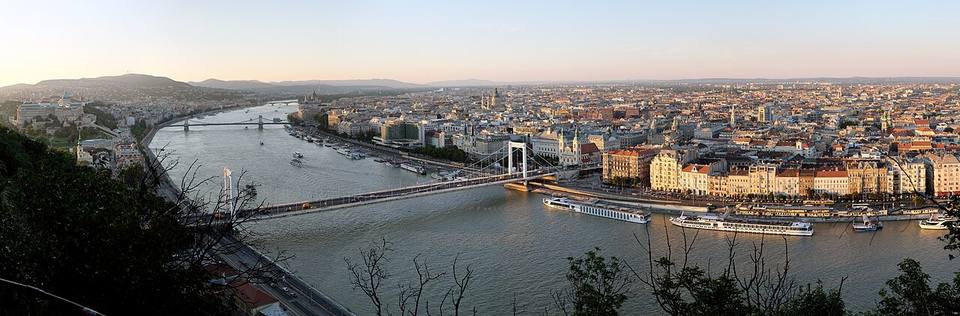
On the Danube's left bank the 96-metre Parliament casts its reflection on the water, while on the right bank Fisherman's Bastion's seven white towers stand guard over the whole city — Budapest's national dignity and its fairy tale face each other across a single river.
Location
Budapest, Hungary
Stories and legends
Fisherman's Bastion takes its name from the medieval fish market and the legend that the fishermen defended that stretch of wall — a matter of historical tradition.
History and context
The Parliament was built in 1885–1904 in neo-Gothic style, 268 metres long and 96 metres high (commemorating the Magyar conquest of 896; 96 is a symbolic Hungarian number), to a design by Imre Steindl; the Holy Crown of Hungary is displayed inside, and visits are only by official guided tour (in timed language groups, by reservation). Fisherman's Bastion was built in 1899–1902 for the millennium celebrations, its seven towers symbolising the seven Magyar tribes of 896; its designer was Frigyes Schulek, and below it stands Matthias Church, the coronation church of Hungarian kings.
Local life
Budapest's character is "the afterglow of empire and the everyday life of the baths": by day Parliament and the Chain Bridge speak of Austro-Hungarian glory, and by night the citizens slip into the Széchenyi Baths (built in 1913, among Europe's largest thermal bath complexes) to play chess and soak in a neo-Baroque palace. In the early morning the Bastion's terrace belongs to local runners and photographers, while the Chain Bridge (opened in 1849, rebuilt after being blown up in the war) is the emotional landmark of the whole city.
Customs
Parliament visits pass airport-style security — bring your documents; the thermal baths are mixed and communal, with rules on swim caps and the like following each bathhouse.
Beliefs
Parliament and Fisherman's Bastion have no religious function (Matthias Church is an active Catholic church); the ensemble serves as a national symbol and cityscape.
Local etiquette
On the Parliament tour, never leave the group or touch the exhibits; latecomers are not admitted; the Bastion steps are slippery in rain and snow; for Danube cruises choose a reputable company, and the night deck is windy.
Visiting notes
Best in spring and autumn; book Parliament tickets in advance on the official website (prices differ for EU and non-EU visitors — follow the website); arrive at Fisherman's Bastion at sunrise to have it to yourself; work out whether the Budapest Card, covering transport and some sights, pays off for your itinerary (following the official card).
What to eat nearby
Hungarian goulash (Gulyás, served as a soup-stew); chimney cake (Kürtőskalács — a traditional Hungarian baked pastry, similar in form to Prague's Trdelník); foie gras — [Note on a contested item: foie gras production involves the force-feeding controversy; it is marked "choose with care," and readers may simply avoid it]; fruit brandy (Pálinka); fried dough (Lángos)
The café belt around Parliament (the New York Café is a famous historic café — expect a queue), and the restaurants of the Buda Castle district
Goulash is served with dumplings (nokedli) as a main course — do not order it as a small soup portion; café culture prizes lingering, and occupying a table with one coffee and a book is entirely normal
A sit-down meal 6,000–11,000 forints (approx. RMB 120–220, for reference only)
Forint denominations are large, and card payment is universal; Széchenyi Bath tickets are sold in time bands — bringing your own swimsuit, towel and flip-flops is the cheapest way.
Source leads: Hungarian Parliament visitor service (official); Budapest city tourism (official).
Image source · Mgimelfarb · CC BY-SA 4.0