
The Nordics · Harbour district / city character
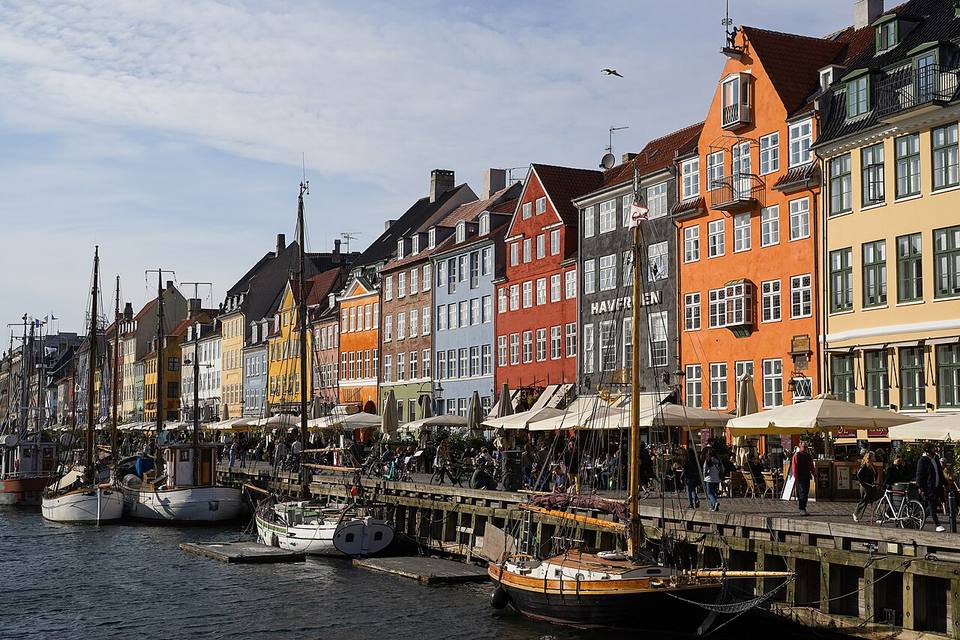
Nyhavn, Copenhagen
Rows of coloured gables along a hand-dug 17th-century canal; Hans Christian Andersen lived at Nos. 18, 20 and 67 — every beer at Nyhavn is drunk beneath the windows of the fairy-tale writer.
Location
Copenhagen, Denmark
Stories and legends
There is no myth or legend; Andersen's residence here belongs to documented history.
History and context
Nyhavn was dug out as a harbour canal between 1660 and 1673, and the terraced houses on both sides were mostly built in the 17th–18th centuries; it was originally a noisy port quarter of sailors and merchants (with a past of taverns and red-light colour alike). Andersen lived at several Nyhavn addresses on and off between 1834 and 1875 (No. 20 was his first home here; he lived longest at No. 67). In the 20th century the district declined and was then revived as a dining and walking quarter, and it is now a Copenhagen landmark; canal tour boats departing from Nyhavn are the classic itinerary.
Local life
Nyhavn's character is the shopfront of hygge (Danish cosiness): on sunny days the whole city sits along the quay with legs dangling, beer and ice cream in hand, against a backdrop of historic wooden ships (museum vessels in the harbour). But the locals also know its tourist prices — they prefer the street-food market on the Refshaleøen side of the water and their own neighbourhood bars, and for them Nyhavn is a walking backdrop rather than the stage for their spending.
Customs
A summer culture of sitting and drinking on the quay; canal tours and winter swimming (the harbour water is clean enough to swim in, and harbour bathing is a civic tradition).
Beliefs
No particular religious association; its main cultural identity is harbour-trade history and the Andersen literary landscape.
Local etiquette
The quay edge has no railings — after drinking, do not lean out over the water; swim in the canals only in the designated harbour baths; pedestrians must never occupy the cycle lanes for photographs (in Copenhagen cycling reigns supreme).
Visiting notes
Best from May to September; walk Nyhavn together with the Little Mermaid and Kongens Nytorv in half a day; take the first canal boat to avoid the groups; stay within the walking circle of the city centre.
What to eat nearby
Danish open sandwiches (Smørrebrød, on a rye-bread base, with herring / prawns / roast beef); Danish pastry (Wienerbrød); hot-dog cart snacks (Pølsevogn); New Nordic cuisine (at the expensive end, to be booked ahead); herring platters
The Nyhavn restaurant belt (priced for the view); the Torvehallerne food market; the street-food district on Refshaleøen
Open sandwiches are eaten with a knife and fork — do not fold them up in your hand; a lunch beer (frokost) is part of ordinary culture, so accept it at ease (unless you are driving)
A sit-down meal 200–350 Danish kroner (approx. RMB 210–368, for reference only); the view seats at Nyhavn carry a clear premium. Costs are reckoned in kroner — Denmark uses the Danish krone, not the euro
Work out whether the Copenhagen Card (with canal boats and transport) fits your itinerary; the Nyhavn photo position is on the bridge at the north end of the canal, unobstructed in the early morning.
Source leads: Copenhagen city tourism (Visit Copenhagen, official); historical materials on Nyhavn.
Image source · OleNeitzel · CC BY 4.0