
The Nordics · Historic capital / old-town island
Stockholm Old Town
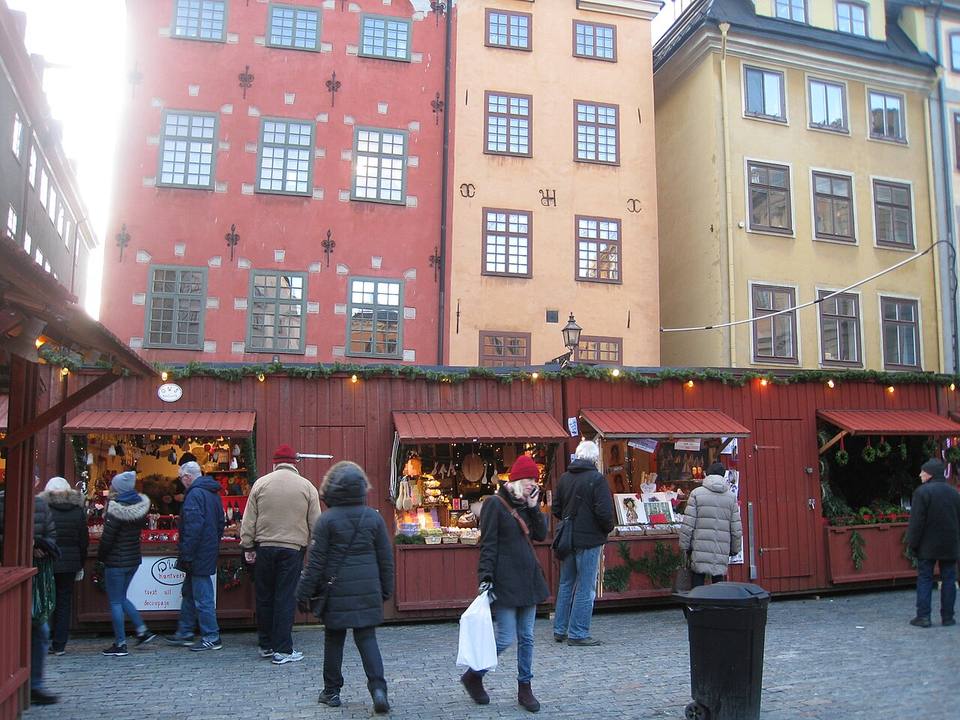
Beneath the coloured gables of Stortorget lies the wound of the "Stockholm Bloodbath" of 1520, while the Royal Palace and the Nobel Museum ring lanes laid out in the 13th century — one of the most complete old towns in Northern Europe.
Location
Stockholm, Sweden
Stories and legends
The old town's origins and the founding legends of Birger Jarl belong to history blended with tradition.
History and context
Stockholm first appears in written records in 1252, and the island of Stadsholmen, where the old town stands, is the city's origin; in 1520 Stortorget was the scene of the "Bloodbath," in which the Danish king Christian II executed Swedish nobles; the present Royal Palace is 18th-century Baroque (rebuilt after the fire of 1697), the Cathedral (Storkyrkan) is the city's oldest church, with 13th-century origins, and the Nobel Museum is housed in the old stock-exchange building on the square; the old town's narrowest lane, Mårten Trotzigs gränd, is less than a metre wide and a popular photo stop.
Local life
The old town's character is "restrained splendour": ochre and terracotta façades, wrought-iron signs and the smell of coffee, with Swedish fika (the coffee-break culture) made fully concrete here — locals take it several times a day, always with a cinnamon bun. Beyond the main tourist street (Västerlånggatan), the lanes to the east fall quiet at once, and residents wheel prams out to buy bread: a living old town, not a stage set.
Customs
Fika culture runs all day long; Midsummer (June) and St Lucia's Day (13 December) are Sweden's great festivals, with processions and concerts in the old town (as announced by the city).
Beliefs
The Cathedral is the Lutheran cathedral (active); the whole is centred on royal and civic history.
Local etiquette
In the Royal Palace's changing-of-the-guard area, do not cross the line or tease the guards; do not block the narrow lanes when cycling through; the old town's cobbles ice over in winter and are extremely slippery.
Visiting notes
Best from May to September and in the December Christmas season; give the old town half a day on foot, and pair it with the Vasa Museum (the warship that sank in 1628, a Stockholm must) on Djurgården island for a full day out; work out the Stockholm pass according to the density of sights on your list.
What to eat nearby
Swedish meatballs (Köttbullar, with lingonberry jam and mashed potato); cinnamon buns (Kanelbulle, the standard fika companion); herring dishes (Sill, for festivals and the smorgasbord); the open prawn sandwich (Räkmacka); princess cake (Prinsesstårta, with its green marzipan coat)
Small restaurants in the old-town lanes, around Riddarholmen and the City Hall, and the Södermalm dining district (an easy detour)
Fika cannot be hurried (it is a social ritual); most herring is pickled in a sweet-and-sour style — try a small portion first
A sit-down meal 220–380 Swedish kronor (approx. RMB 152–262, for reference only); fika about 80–120 kronor (for reference only)
Sweden is a nearly cashless society — pay mainly by card or mobile and carry an international card; the tap water is drinkable, so do not waste money on bottled water.
Source leads: Stockholm city tourism (Visit Stockholm, official); the Royal Palace / Nobel Museum (official).
Image source · Bysmon · CC BY-SA 4.0