

City guide · Budapest
Budapest
Twin cities on the Danube: the Parliament, Castle Hill and thermal baths
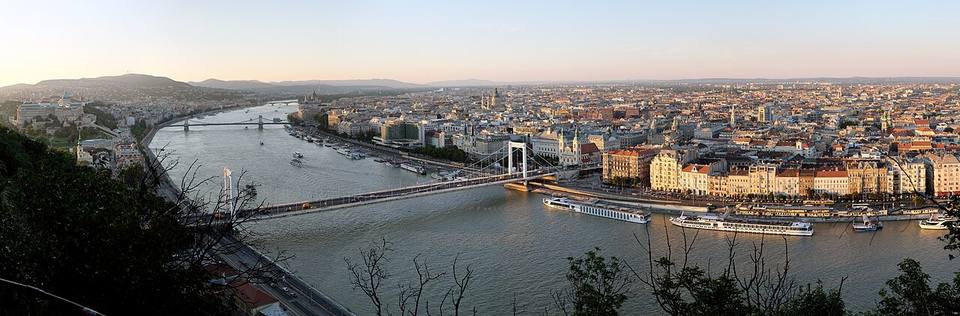
Budapest is the capital of Hungary, divided by the Danube into Buda on the west bank and Pest on the east bank. As you stand on the Chain Bridge looking at the reflection of the Parliament Building, look over Pest from Castle Hill, and soak in the steaming thermal water of the Széchenyi Baths, you will find a city that layers imperial grandeur, spa culture, and café life together. Plan a full day for Buda and one to two days for Pest. Also worth visiting in the city: Matthias Church, Chain Bridge, St. Stephen's Basilica, Heroes' Square, Andrássy Avenue, Gellért Baths, Central Market Hall, Great Synagogue in the Jewish Quarter, Margaret Island, City Park and House of Terror Museum.
History
How the city came to be
The story of Budapest begins with Aquincum: a Celtic settlement that later became part of the Roman province of Pannonia, and Hungarians moved into the area in the 9th century. Historically, Buda, Óbuda, and Pest were three cities on the two banks of the Danube, and on 17 November 1873 they were merged into Budapest. The Parliament Building was begun in 1885 and completed in 1904, and it remains one of the tallest buildings in Hungary. The Castle District has three churches, six museums, and many historic buildings; St. Matthias Church was built in the 14th century, and Work on Andrássy Avenue began in 1872. In 1987, the banks of the Danube and the Buda Castle Quarter were inscribed on the World Heritage List, and in 2002 the listing was extended to Andrássy Avenue, Heroes' Square and the Millennium Underground Railway; opened in 1896, the Millennium Underground is the oldest metro on the European continent. Budapest has many geothermal springs, and spa culture is part of city life.
- Ancient timesthe Celtic settlement of Aquincum, which later became a Roman provincial city.
- 9th centuryHungarians move into the area.
- 1872work on Andrássy Avenue begins.
- 17 November 1873Buda, Óbuda, and Pest are merged into Budapest.
- 1896the Millennium Underground Railway opens.
- 1904the Parliament Building is completed.
- 1956the Hungarian Revolution (the October events); Kossuth Square in front of the Parliament Building and other sites are important memorial places.
- 1987the banks of the Danube and the Buda Castle Quarter are inscribed on the World Heritage List.
- 2002the World Heritage listing is extended to Andrássy Avenue, Heroes' Square and the Millennium Underground Railway.
Stories
Stories of the city
The Holy Right
History · St Stephen's Day in Budapest
More than forty years after his death, Stephen I was canonised on 20 August 1083. It is said that when his tomb was opened his right hand was found intact; this Holy Right has been kept as a relic ever since, is displayed in St Stephen's Basilica in Budapest, and is carried in procession every 20 August in the early evening.
A spring drilled from the earth
History · Széchenyi Thermal Bath
The mining engineer Vilmos Zsigmondy drilled in City Park for years before striking artesian thermal water at a depth of about 970 metres or more. The name given to the bath while it was being planned, the Artesian Bath, comes from this well.
Named after Széchenyi
History · Széchenyi Thermal Bath
The bath opened on 16 June 1913 and was named after the 19th-century statesman István Széchenyi. More than 200,000 bathers came in its first year, and by 1919 the figure was close to 890,000.
Chess in the water
History · Széchenyi Thermal Bath
In the steaming outdoor pools, locals set chessboards on floating boards and play, a habit that has gone on for decades and become the bath's most iconic sight. If you watch, please keep quiet and do not disturb the game.
The Turul bird
Legend · Buda Castle
In Hungarian legend the Turul is the sacred bird of the Magyars. A statue of the Turul crowns a pillar in the palace's eastern forecourt, recalling this legend of the nation's origins. It belongs to legend, not history.
The Corvina Library
History · Buda Castle
King Matthias Corvinus's court library was famous for its golden ceilings and its precious manuscripts, known as Corvinas. According to English Wikipedia, the National Széchényi Library, now housed in the palace, holds 35 of them.
The great siege of 1686
History · Buda Castle
In 1541 the Ottomans occupied Buda without resistance. In 1686 Christian allied forces besieged and recaptured Buda, and the medieval palace was destroyed in the great siege; every palace since has been rebuilt on its ruins.
St Stephen's Hall restored
History · Buda Castle
In 2016 Hungary announced the reconstruction of St Stephen's Hall in the palace as the first step towards eventually restoring the whole castle. Accurately restored, the hall opened to the public on 20 August 2021.
Must see
Places you shouldn’t miss

Széchenyi Thermal Bath
A yellow, palace-like Neo-Baroque bath in City Park, with 3 outdoor and 15 indoor pools — 18 in all — fed by two thermal springs at 74°C and 77°…

Buda Castle
The Hungarian royal palace complex at the southern end of Castle Hill, rebuilt layer upon layer from a medieval palace to a Neo-Baroque one; tod…
Trips beyond the city
These places can be explored from this city but lie outside it. See each place for transport and visiting guidance.

Regional deep dives
Read deeper into each place
Central & Eastern Europe · Parliament building / viewpoint
Budapest Parliament and Fisherman's Bastion
On the Danube's left bank the 96-metre Parliament casts its reflection on the water, while on the right bank Fisherman's Bastion's seven white towers stand guard over the whole city — Budapest's national dignity and its fairy tale face each other across a single river.
Explore the local guide ↗Source leads: Hungarian Parliament visitor service (official); Budapest city tourism (official).
Image source · Mgimelfarb · CC BY-SA 4.0
Source leads are being checked individually; confirm travel details with local official notices.