
City guide · Dublin / Baile Átha Cliath
Dublin
Along the Liffey and through the old university quarter, read Dublin's Viking and independence history
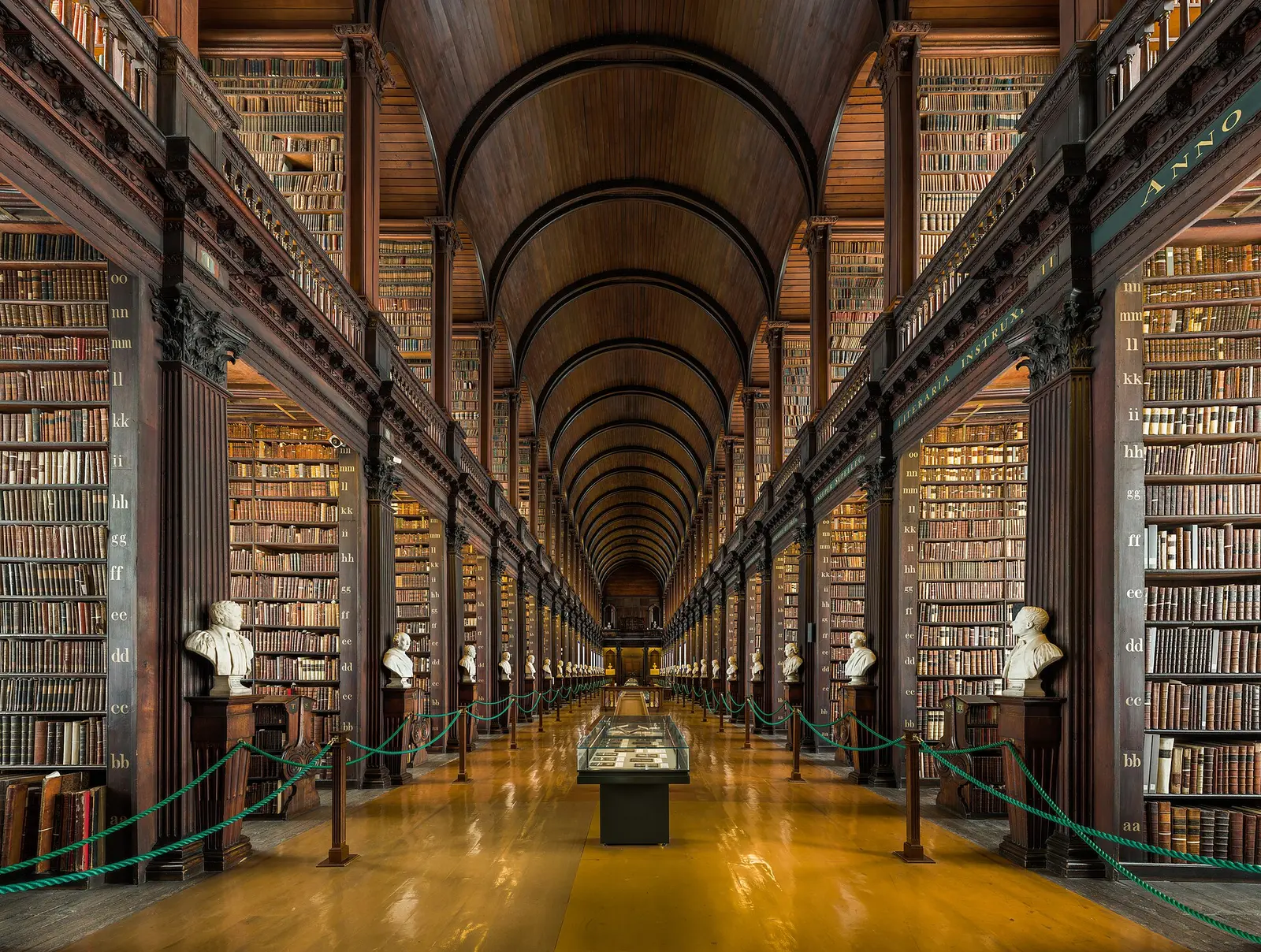
We suggest staying 2–3 days. The Old Library at Trinity College, the National Museum, St Patrick's Cathedral and both banks of the Liffey form the usual main route. Other places in the city worth a visit: the National Museum of Ireland – Archaeology, St Patrick's Cathedral and the Liffey quays.
History
How the city came to be
Dublin stands where the Liffey meets the sea; the Vikings left a harbour settlement and the place-name clue “Black Pool”. After the Normans arrived in the twelfth century, the castle and churches became spaces of rule and religion; from 1204 to 1922 Dublin Castle long served as the seat of British administration in Ireland. Trinity College was founded in 1592, and its Old Library and the Book of Kells showcase traditions of writing, religion and scholarship. Georgian streets and quayside building in the eighteenth and nineteenth centuries expanded the city, and the 1916 Easter Rising and the independence movement that followed changed the political landscape; in 1922 the castle was handed over to the newly founded Irish state. Walking the quays, the old town and the museums today, you can link Viking trade, colonial administration, literature and the story of independence. Because of the castle's closure in 2026 and the conservation project for the Old Library's books, interior displays shown in old photos and older guides may differ; go by what the institutions actually have open and on show.
- Viking periodA harbour settlement grows at the mouth of the Liffey.
- 12th centuryThe Normans arrive in Dublin.
- 1204The castle becomes a key seat of government.
- 1592Trinity College is founded.
- 18th–19th centuriesGeorgian districts develop.
- 1916The Easter Rising.
- 1922The castle is handed over to the Irish state.
- May to end of 2026The castle closes to the public for EU Council events.
Stories
Stories of the city
The shamrock and the Trinity
Legend · St Patrick's Day in Ireland
Legend has it that while preaching in Ireland, St Patrick used the three-leaved shamrock to explain the Holy Trinity of Father, Son and Holy Spirit to the people. The shamrock has been a symbol of Ireland and of this day ever since.
The Book of Kells comes to Trinity
History · Old Library, Trinity College Dublin
The Book of Kells is a gospel manuscript written around AD 800. In 1661 Henry Jones presented it to the Library of Trinity College, where it has remained ever since.
The Long Room and its raised roof
History · Old Library, Trinity College Dublin
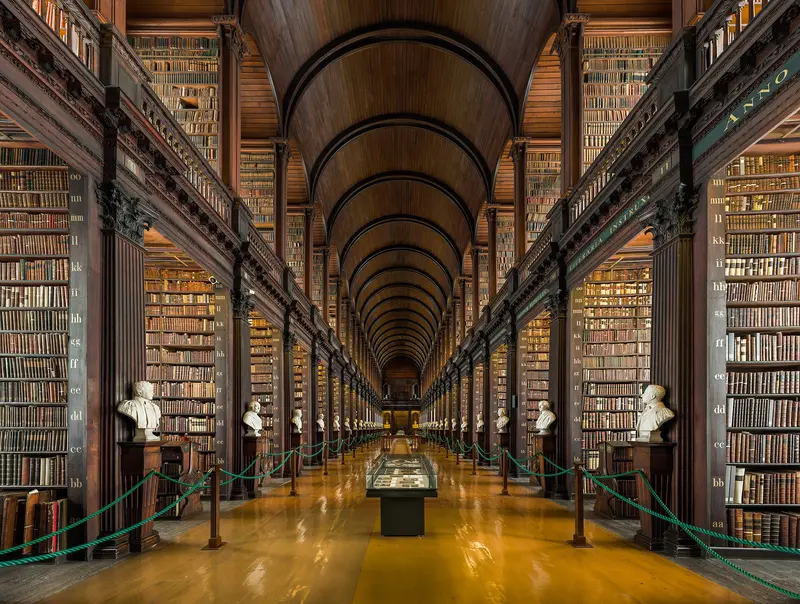
The Old Library was built between 1712 and 1732 to the design of Thomas Burgh. In 1860 the Long Room's roof was raised to add an upper gallery. Today its oak bookcases hold about 200,000 of the Library's oldest books.
Restoring the Long Room
History · Old Library, Trinity College Dublin
In 2022 restoration of the Long Room began, costing about €90 million. Apart from the first four bays, its books have been temporarily removed for conservation, and the hall displays the temporary Gaia installation.
Before you go
Rules to know in Dublin
Ireland: leave farm gates as you find them and keep dogs off farmland
Do
- Stay on waymarked trails and walk along field edges
- Leave gates as you find them; close any that were closed
- Cross boundaries by gates or stiles
- Take all your litter home
- Don't park across farm entrances
Don’t
- Don't climb over or damage fences, stone walls or hedges
- Don't interfere with livestock, machinery or crops
- Don't bring a dog onto farmland, even on a lead, without the landowner's permission
Disturbing livestock or damaging boundaries causes real losses for farmers and can put you at risk. Many trails cross private land with the owners' consent, so follow the signs on site.
Verified Oct 19, 2026Source: Irish Farmers Journal: What is expected of the public when entering on to farmland
Ireland: dress modestly in churches and don't disturb services
Do
- Dress modestly, ideally covering shoulders and knees
- Men should remove hats inside
- Move quietly and silence your phone
- Try to avoid service times; check each church's published opening hours
- Check notices or ask staff before taking photos
Don’t
- Don't take photos or use flash during services
- Don't eat or drink inside
- If you are not Catholic, don't go up for Communion; simply watch quietly
Most Irish churches are active places of worship. The sources checked show no uniform dress code; inappropriate dress or behaviour will usually draw a reminder or upset worshippers. Follow each church's notices.
Verified Oct 19, 2026Source: Official site: St Patrick's Cathedral, Dublin – Visit
Ireland: buy your round in the pub
Do
- When drinking with a group, buy a round for the whole table when it's your turn
- Non-drinkers can join in with water, coffee or a soft drink
- Order at the bar and pay as you go
- Pace yourself with the table
Don’t
- Don't leave before it's your turn to buy
- Once in a round, don't buy a drink just for yourself or one person
- Don't talk loudly while traditional musicians are playing
People remember who skipped their round, and it is seen as bad form. A round is about being there and everyone sharing, not about how much you drink.
Verified Oct 19, 2026Source: Cultural Atlas: Irish Culture – Etiquette
Ireland: ask before taking close-ups of people
Do
- Landscapes and buildings are generally fine to photograph
- Ask before photographing a specific person, especially close up
- Get a parent's permission before photographing children
- Be extra considerate in small communities and island villages
- At traditional music sessions, check notices or ask the musicians first
Don’t
- Don't keep shooting after someone says no
- Don't step into private yards or gardens for a shot
There is usually no penalty, but photographing people without asking can cause offence; asking first often leads to a more natural picture and a conversation. At events, follow the organisers' rules on photography.
Verified Oct 19, 2026Source: My Irish Cousin: Irish etiquette and customs
Ireland: check for a service charge, then round up or tip about 10%
Do
- Check whether a service charge is already on the bill; if so, no need to add more
- For good service at a sit-down restaurant, round up or leave about 5–10%
- With table service in a pub, round up or leave a few euros
- For short city taxi rides, round up to the nearest euro
Don’t
- No need to tip per drink when ordering at the bar
- Don't feel bound by the high percentages suggested by card machines or apps
A tip is a gesture, not an obligation, and nobody will usually mind if you skip it. Some restaurants (mainly in Dublin, Galway and Cork, for large groups or at weekends) add a service charge of around 10% automatically; check your bill.
Verified Oct 19, 2026Source: My Irish Cousin: Tipping in Ireland
Ireland: chat back warmly, and don't raise sensitive topics first
Do
- Answer warmly when shop staff, drivers or the person next to you start chatting
- Weather, your travels and sport are safe openers
- You can learn the Irish greeting 'Dia dhuit' (hello)
- Laugh along when you are gently teased ('slagging')
Don’t
- Don't call Ireland part of the United Kingdom
- Don't bring up Northern Ireland or the last few decades of history unless the other person does
- Don't imitate an Irish accent
Being cool carries no penalty but comes across as unfriendly; getting the country's name wrong or joking about history can easily offend. English is fine for everyday conversation.
Verified Oct 19, 2026Source: Cultural Atlas: Irish Culture – Communication
How do you like this place?