

City guide · 哈尔滨 Harbin
Harbin
The ice city on the Songhua: Central Avenue, Saint Sophia Cathedral and the Ice and Snow World
Harbin is the capital of Heilongjiang Province and the "Ice City" on the banks of the Songhua River, known as the "Moscow of the East": the European-style buildings of Central Avenue, the onion domes of Saint Sophia Cathedral, and the Ice and Snow World on the Songhua River together make up this city that rose because of the railway. You can come in winter to see the Ice and Snow Festival, or in summer to escape the heat, and spend two to three days walking through Central Avenue, Saint Sophia Cathedral, and Sun Island. Also worth visiting in the city: Songhua River Flood Control Memorial Tower, Laodaowai Baroque Style Street, Harbin Polar Park, Volga Manor (Acheng District), Harbin Grand Theatre, Heilongjiang Provincial Museum, Long Tower, Stalin Park, Gogol Street and Harbin Jewish New Synagogue Site.
History
How the city came to be
Harbin's modern urban history began with the Chinese Eastern Railway. In 1898, the Chinese Eastern Railway was built, and Harbin became a construction hub and administrative center; immigrants from Russia, Jewish, Polish, German, Japanese, Korean, and other backgrounds moved in one after another, and a multilingual railway town appeared on Chinese soil; Central Avenue was also first built in 1898 during the construction of the Chinese Eastern Railway, originally an earth road for transporting railway materials. On July 14, 1903, the Chinese Eastern Railway fully opened, and the city was again called Harbin. In 1905, the Qing government set up a customs circuit office in Harbin, managing Chinese residents outside the railway zone and collecting customs duties from foreign merchants. In 1913, the government of the Republic of China established Binjiang County in Harbin. In 1928, Central Avenue was formally renamed. On April 28, 1946, the People's Liberation Army entered Harbin, and Harbin became the first large city liberated by the People's Liberation Army, and is therefore also called the "eldest son of the Republic." In 1997, Central Avenue was designated a pedestrian street; in 1999, the Ice and Snow World was first created, welcoming the millennium celebration tour of China.
- 1898the Chinese Eastern Railway built; Harbin became a construction hub; Central Avenue first built.
- July 14, 1903the Chinese Eastern Railway fully opened; the city again called Harbin.
- 1905the Qing government set up a customs circuit office in Harbin.
- March 17, 1907Saint Sophia Cathedral laid its foundation.
- November 4, 1912the brick-and-wood reconstruction of Saint Sophia Cathedral completed.
- 1913Binjiang County established.
- 1928Central Avenue formally renamed.
- November 25, 1932Saint Sophia Cathedral completed after its second reconstruction.
- April 28, 1946the People's Liberation Army entered Harbin.
- 1996Saint Sophia Cathedral listed in the fourth batch of Major Historical and Cultural Sites Protected at the National Level.
- 1997Central Avenue designated a pedestrian street.
- 1999the Ice and Snow World first created.
Stories
Stories of the city
From ice lantern garden parties to the festival
History · Harbin Ice and Snow Festival
Harbin began holding winter ice lantern garden parties in 1963, which were later interrupted for a time. On January 5, 1985, Harbin announced an annual ice and snow festival, carrying the ice lantern tradition forward.
"On Sun Island" and the Sun Stone
History · Sun Island
In 1979 the song "On Sun Island", composed by Wang Liping and sung by Zheng Xulan, made the island famous across China and beyond. Visitors arriving by boat kept asking "Where is Sun Island?", so the scenic area put up a stone inscribed with the words "Sun Island" to guide them. The three characters on today's Sun Stone come from calligraphy written by Zhao Puchu in 1984.

Trips beyond the city
These places can be explored from this city but lie outside it. See each place for transport and visiting guidance.

Jingpo Lake
China's largest alpine lava-dammed lake, 45 km from north to south; the Diaoshuilou Waterfall pours at its northern end, and an "underground for…

Wudalianchi
A Global Geopark of 14 volcanoes and five linked lava-dammed lakes; Laohei Mountain and Huoshao Mountain erupted in the Kangxi era of the Qing d…
Regional deep dives
Read deeper into each place
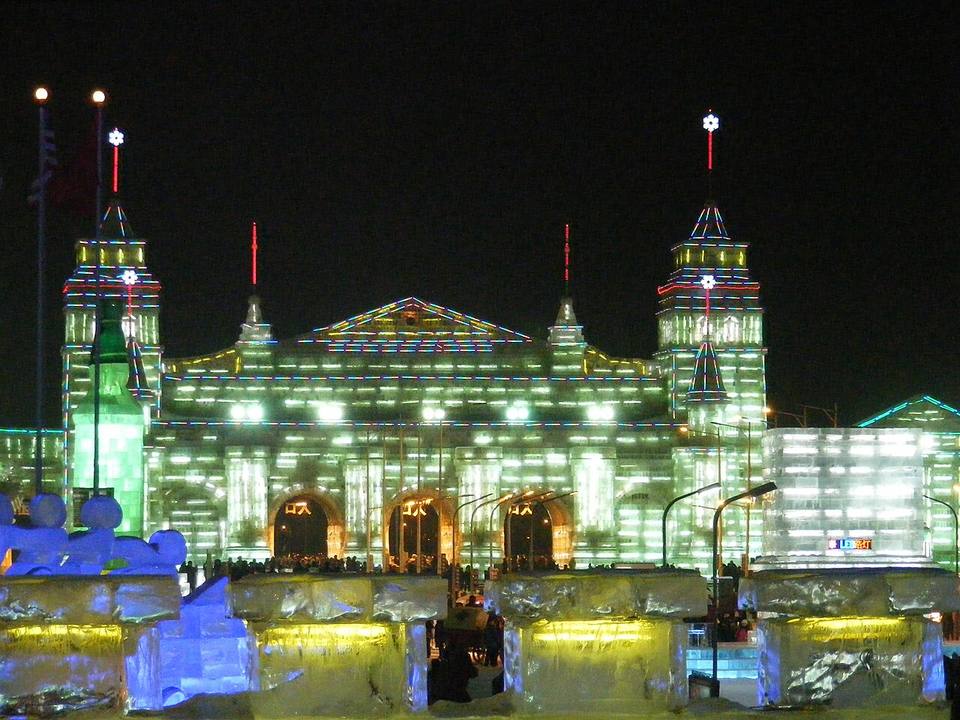
Songbei District, Harbin, Heilongjiang Province · Festival / Ice-and-Snow Park
Harbin Ice and Snow World
Usually open from late December to the following February (subject to official announcement each year), it builds a glowing city you can walk into out of Songhua River ice — and people happily queue two hours for the giant ice slide.
Explore the local guide ↗Source leads: Official releases of Harbin Ice and Snow World (each edition's scale and dates subject to official announcement); Harbin Municipal Bureau of Culture, Radio, Television and Tourism.
Image source · Rincewind42 from China · CC BY 2.0
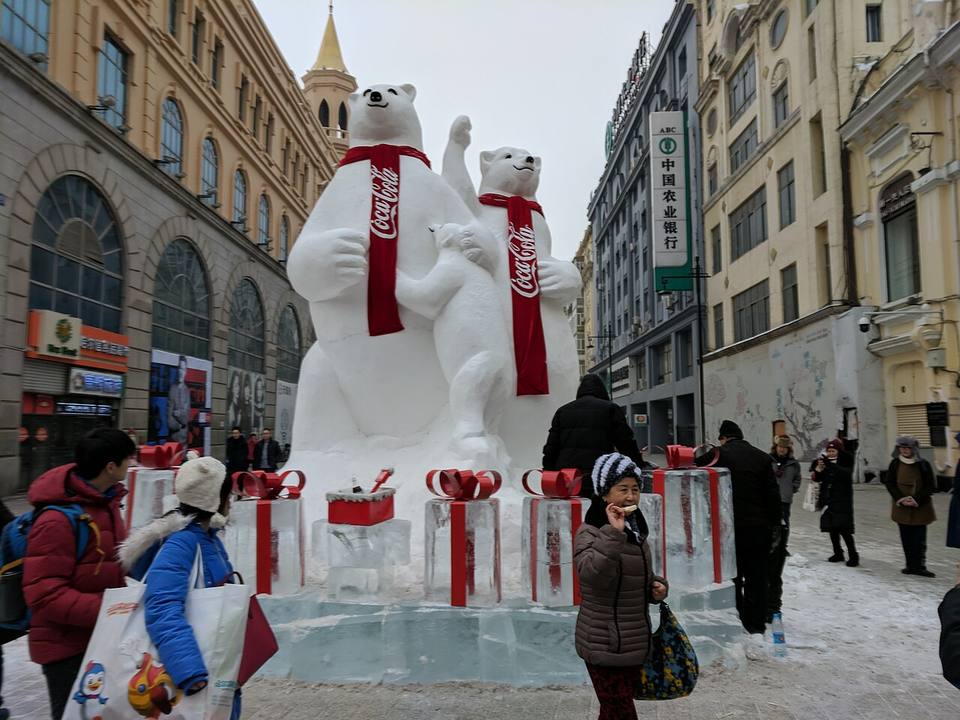
Daoli District, Harbin, Heilongjiang Province · Historic Street / Old-City Charm
Harbin Central Street
A 1,450-metre street paved with stone blocks, lined by some 71 European-style old buildings in a row — every "bread stone" underfoot, legend has it, once cost a silver dollar.
Explore the local guide ↗Source leads: Harbin Municipal People's Government materials on the Central Street protected district; official introductions from Daoli District.
Image source · 闫恩铭 / Enming Yan · CC BY-SA 4.0
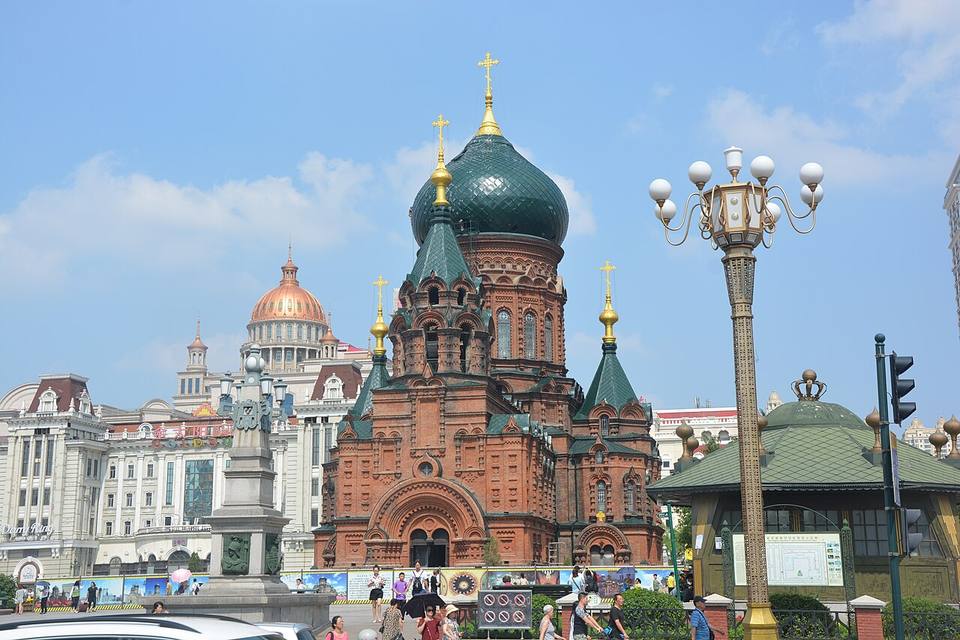
Daoli District, Harbin, Heilongjiang Province · Religious Architecture / Historic Landmark
Saint Sophia Cathedral (Harbin)
A Byzantine-style Orthodox church rebuilt and completed in 1912, its green dome and red-brick walls standing in the city centre — the most condensed face of Harbin's immigrant history.
Explore the local guide ↗Source leads: Harbin Architectural Art Museum / Harbin Municipal Bureau of Culture and Tourism materials; the register of Major Historical and Cultural Sites Protected at the National Level.
Image source · Jonashtand · CC BY-SA 4.0
Source leads are being checked individually; confirm travel details with local official notices.
