

City guide · Stockholm
Stockholm
The Venice of the North on a Baltic archipelago, where the Nobel banquet raises its glasses
The capital of Sweden, built on fourteen islands where Lake Mälaren flows into the Baltic, its bridges joining the cobbled old town with the glass-walled new city. The old town is a 13th-century trading post, with the Royal Palace, the cathedral and the Nobel Museum squeezed among its narrow lanes; the cliffs of Södermalm are the balcony for watching the sunset. Stockholmers live "fika" (the coffee break) as a daily ritual and the archipelago summer as a faith — an archipelago of nearly thirty thousand islands stretches from the city-centre quays all the way out to the open sea.
History
How the city came to be
Stockholm was founded around 1252 by the regent Birger Jarl to guard against pirates and control the trade of Lake Mälaren; the city's name means "log island." As a Hanseatic trading port exporting iron ore and copper, it quickly became Sweden's largest city. In 1520 the Danish king staged the "Stockholm Bloodbath" here, which instead ignited Sweden's war of independence; in 1523 Gustav Vasa entered the city and Sweden broke away from the Kalmar Union. In the 17th century Sweden rose to a Baltic great power and Stockholm was built up on a grand scale. From 1901 the Nobel Prizes have been awarded here (the Peace Prize in Oslo). In 1912 it hosted the Summer Olympics. In the 20th century it became known for its modernist new districts and its "art metro," and in 2010 the EU named it the first "European Green Capital."
- c. 1252The regent Birger Jarl founds Stockholm
- 1520The Stockholm Bloodbath
- 1523Gustav Vasa enters the city; Sweden moves toward independence
- 1634Stockholm formally becomes the capital of Sweden
- 1901The first Nobel Prizes awarded in Stockholm
- 1912The Summer Olympic Games hosted
- 1950The first section of the Stockholm metro opens
- 2010Named the first "European Green Capital"
Must see
Places you shouldn’t miss

Local life
Food and local daily life
Vasa Museum
Must-try
- Swedish meatballs
- Cinnamon buns
- Herring platter
Swedish meatballs (köttbullar, with lingonberry jam), cinnamon buns (kanelbulle, part of fika culture), herring platters, shrimp sandwiches (räksmörgås), princess cake
| Where to eat | The museum restaurant, cafés on Djurgården, Östermalms Saluhall market hall |
|---|---|
| Dining etiquette | Fika coffee breaks are never to be rushed; take-a-number queuing culture |
| Typical price per person | SEK 180–320 ≈ CNY 140–250 |
| Tips | The museum restaurant's lunchtime meatball set is good value; the market hall partly closes on Sundays. |
Prices are typical rates as of October 2026, not exact quotes; CNY equivalents are approximate where exchange rates fluctuate.

RandomKatze · CC0
Before you go
Rules to know in Stockholm
Sweden: winter tyres are compulsory in winter
Do
- From 1 December to 31 March, make sure your hire car has winter tyres
Don’t
- Driving on ordinary tyres in winter
It is a legal requirement.
Verified Oct 19, 2026Source: GOV.UK: Sweden travel advice
Sweden: drugs, including cannabis, are strictly prohibited
Do
- Stay away from drugs of any kind
Don’t
- Possessing, using or carrying drugs, even in small amounts
Up to 10 years in prison and heavy fines.
Verified Oct 19, 2026Source: GOV.UK: Sweden travel advice
Regional deep dives
Read deeper into each place
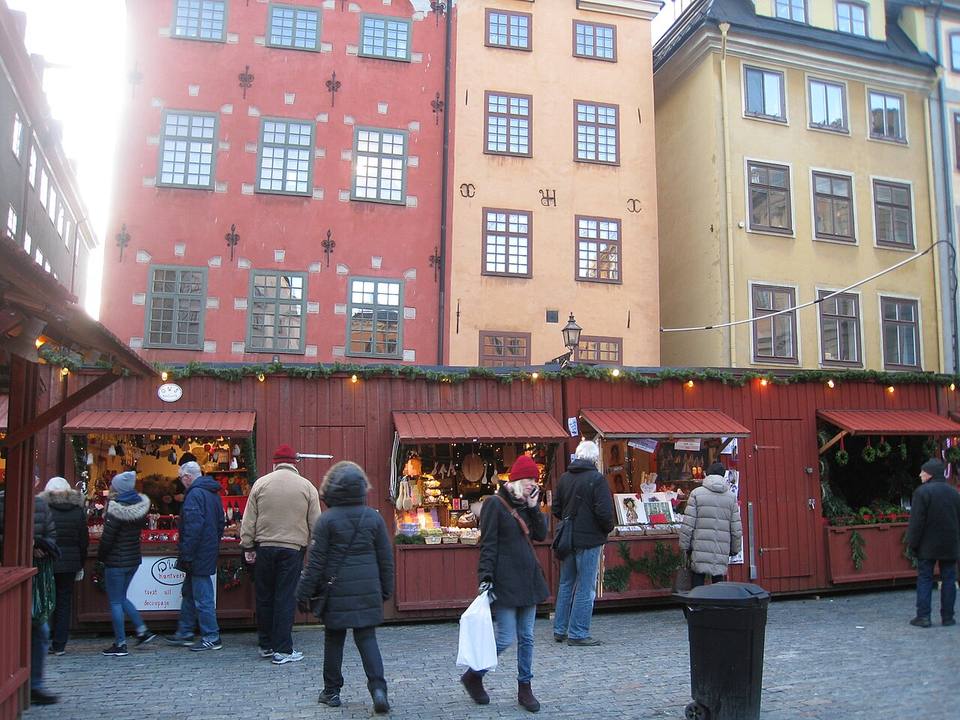
The Nordics · Historic capital / old-town island
Stockholm Old Town
Beneath the coloured gables of Stortorget lies the wound of the "Stockholm Bloodbath" of 1520, while the Royal Palace and the Nobel Museum ring lanes laid out in the 13th century — one of the most complete old towns in Northern Europe.
Explore the local guide ↗Source leads: Stockholm city tourism (Visit Stockholm, official); the Royal Palace / Nobel Museum (official).
Image source · Bysmon · CC BY-SA 4.0
Source leads are being checked individually; confirm travel details with local official notices.