
Cherry-blossom sites · Cherry blossoms / Castle town
Hirosaki Park
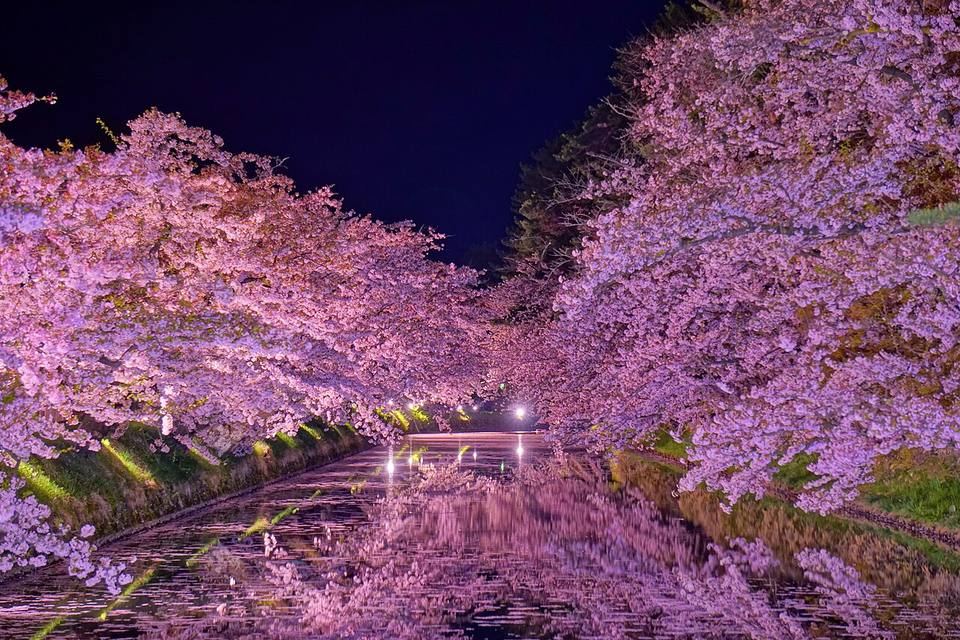
About 2,600 cherry trees of 52 varieties surround the surviving castle keep and moats; petals falling to cover the water form "flower rafts" (hanaikada) — regarded as one of Japan's most representative cherry-blossom sites.
Location
Hirosaki, Aomori Prefecture
Stories and legends
Modern photo traditions such as the "heart of cherry blossoms" (two branches overlapping into a heart shape) circulate among visitors as word-of-mouth lore, with no historical basis.
History and context
Hirosaki Castle was built in 1611 by the Tsugaru clan; the surviving keep is an 1810 rebuild, one of only twelve surviving keeps in Japan; the park covers about 49.2 hectares. Cherry planting began in 1715, when a retainer presented kasumi-zakura saplings, and Somei Yoshino were widely planted after the Meiji era. Its uniqueness lies in "Hirosaki-style pruning" — cherry trees are pruned using apple-pruning techniques, so each bud cluster yields far more flowers than elsewhere. The cherry-blossom festival usually runs from late April to early May (subject to official announcements each year).
Local life
Hirosaki is the center of Tsugaru culture: the shamisen, the unadorned local version of the Neputa festival ("Hirosaki Neputa"), and apple farming together shape its character. Here the cherries are not an isolated sight but the roof of the castle town — standing at the west moat to see the cherry tunnel, the flower rafts, and Mount Iwaki (the "Tsugaru Fuji") in one frame is the most concentrated expression of the north country's late spring. Blooming nearly a month later than Tokyo, this is one of the finales of Honshu's hanami season.
Customs
During the cherry-blossom festival there is night lighting, boating on the moats, and Tsugaru shamisen performances; locals like to bring apple juice and hometown bentos to their flower viewing.
Beliefs
No specific religious association; its main cultural identity is castle history and citizen flower-viewing culture (shrines within the park are ancillary).
Local etiquette
Do not shake trees to make petal "rain," and do not climb or break cherry branches (many old trees are protected); do not feed or disturb the waterbirds at the moats; outside designated areas in the park during the festival, open fires and picnics are prohibited.
Visiting notes
Best in the week around full bloom in late April; from 6:00–8:00 the west moat and the main keep area are emptiest; the keep has been relocated for stone-wall repairs, so check its opening status on the official site before visiting; festival accommodation prices soar, and a day trip from Aomori City (about 40 minutes by train) is a backup option.
What to eat nearby
Hirosaki apple pie (アップルパイ, competed over by dozens of shops in the city, with an apple-pie map); Tsugaru soba / Tsugaru ramen (煮干しラーメン, a rich dried-sardine broth); apple curry; local side dishes such as Neputa-zuke pickles; apple sweets at Taishō Roman-style cafés
In front of Hirosaki Station and the Dotemachi shopping street, the Taishō Roman Tea Room (inside the Fujita Memorial Garden), the cluster of apple-pie shops around Hirosaki Park
Apple-pie shops bake in small batches and stop when sold out — do not complain; niboshi ramen soup is extremely rich, and the local way is to finish the noodles but feel free to leave soup
Ramen 800–1,100 yen (about 38–52 yuan, for reference only); apple pie by the slice 400–600 yen (about 19–28 yuan, for reference only)
Buy the apple-pie "map" and compare three shops by it; visit again in October's apple season for a completely different harvest atmosphere.
Source leads: Hirosaki City official site, Hirosaki Park official / Hirosaki Tourism Association, Japanese-language materials (49.2 hectares, 2,600 trees).
Image source · 掬茶 · CC BY-SA 4.0