
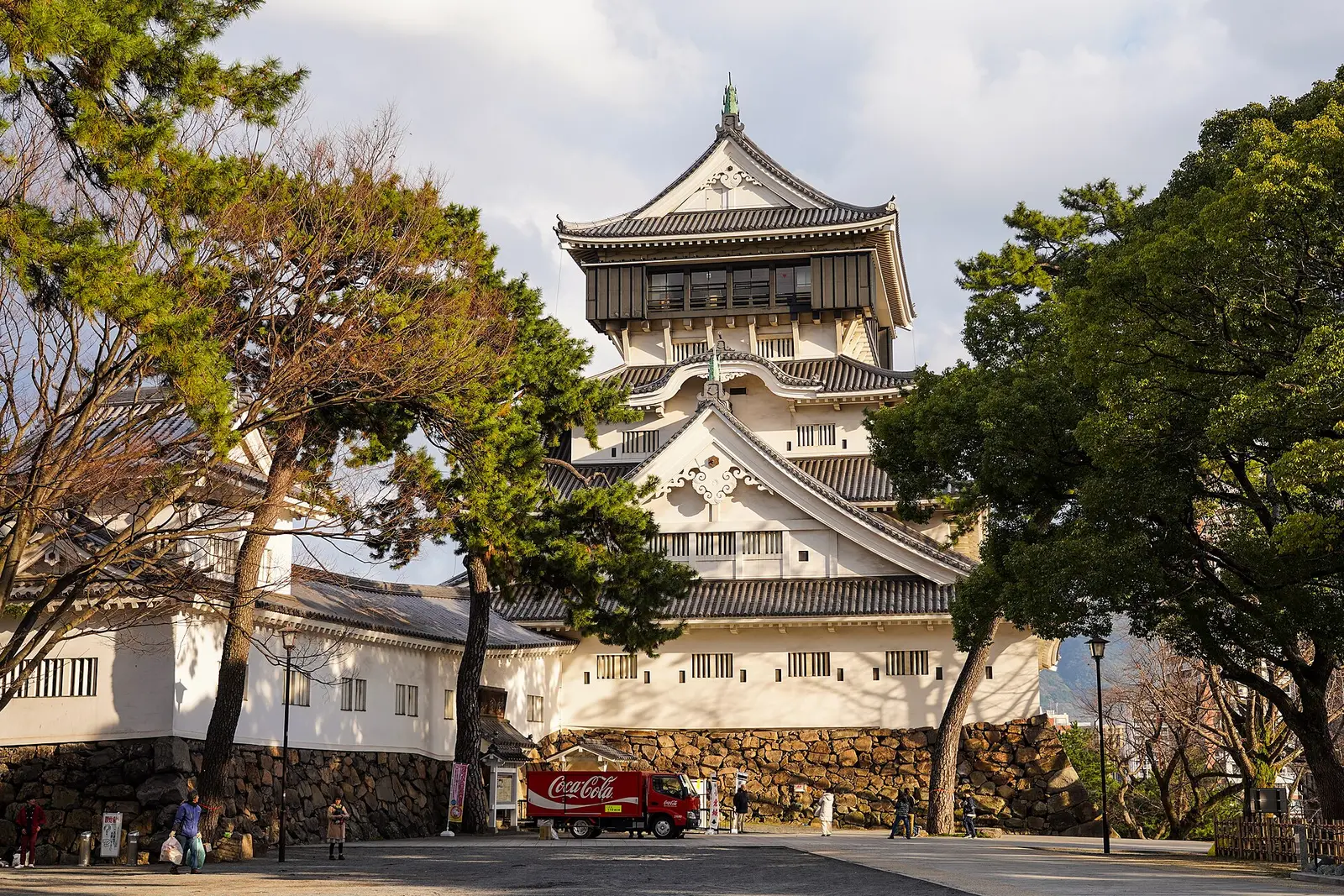
Kokura Castle
小倉城 · Kokurakita Ward, Kitakyūshū, Fukuoka
From the postwar reconstructed keep, look back on Kokura's history as a transport and castle-town hub of Kyūshū.
Know before you go
- Do not describe the 1959 reconstructed keep as the 1602 original
- do not mistake the Kokura Castle Japanese Garden for an exhibition hall inside the keep
- do not take photos or use flash where photography is prohibited.
This article is Not yet verified. Please check official announcements for prices, opening hours and dates.
Culture
Culture & customs
Background
Kokura Castle stands in Kokurakita Ward, Kitakyūshū. According to Kitakyūshū City, the Mōri clan built a castle on the present site in 1569; Hosokawa Tadaoki carried out large-scale construction from 1602, and the Ogasawara clan later took over in 1632. The castle and its roads made Kokura a gateway to Kyūshū and the center of a castle town. The original keep burned down in a fire in 1837; the present keep is a reinforced-concrete building rebuilt in 1959 at the urging of citizens and should not be called the original Edo-period keep. The exhibits, castle-town model and views inside are a modern museum experience, while the stone walls, grounds and surrounding streets help you understand the historical terrain. The castle is next to the Kokura Castle Japanese Garden and Katsuyama Park, but the garden is a separate facility with its own operating rules; do not treat their tickets or exhibitions as one package just because they are adjacent.
Local customs
- Before entering, check which areas are open that day and the exhibition rules
- do not touch exhibits, cross barrier lines or take photos in rooms where photography is prohibited. When climbing the keep, mind the narrow routes and other visitors
- the outer castle grounds are public space, and events, night illumination and large-scale shoots may have separate rules. Visiting a modern reconstructed keep also means respecting its historical displays, without simply equating reconstruction with forgery.
Religion & beliefs
Kokura Castle is a castle and history museum, not a religious site. If you also visit a nearby shrine, follow that shrine's own notices on worship and photography rather than the castle's rules.
Etiquette & taboos
Etiquette & taboos
Rules that apply here
No photography and no eating or drinking in the permanent gallery of the Okinawa Prefectural Peace Memorial Museum
Do
- Put away your camera, food and drinks before entering the permanent gallery
- For the special exhibition gallery and the children's gallery, check the notices of the day to see whether photography is allowed
- If you need to eat or drink, go to the areas designated by the museum, such as the outdoor colonnade
Don’t
- Do not take photos or videos in the permanent gallery
- Do not eat or drink in the permanent gallery, and do not have meals in other areas of the museum either
- Do not extend the permanent gallery's photo ban into a photo ban across the entire park
The museum's 2026 visitor guide explicitly prohibits photography, eating and drinking in the permanent gallery and asks visitors to check the restrictions for other galleries separately; follow the museum's instructions on site.
Not yet verifiedSource: Okinawa Prefectural Peace Memorial Museum: FY2026 visitor guide, page 6
Japan: At fireworks festivals, don't tape off spots in advance, and never fly drones
Do
- Spread your sheet where there is actual space when you arrive, leaving room for neighbours
- Follow police and staff directions and move with the crowd
- Bring plenty of water and cooling gear to prevent heatstroke
- Riverbanks have lots of insects, so bring repellent
- Festivals usually go ahead in light rain, so bring a raincoat
- Take your rubbish home
Don’t
- Don't mark spots in advance with tape or spray paint on roads or in parks
- Don't fly drones
- Don't use selfie sticks in crowds; the Sumida River festival bans them
- Don't stop in the middle of the path to watch and block the flow
Spots marked in advance are cleared by the organisers, and flying drones is prohibited by law. City-centre festivals run one-way crowd flows, and going against the flow or stopping can cause dangerous crushes.
Verified Oct 19, 2026Source: Excite News: Sumida River Fireworks, access and viewing guide
Mixed, open-air and private baths: read the signs, don't stare, never take photos
Do
- Check the signs before entering; mixed baths are clearly marked, and joining is entirely your choice
- Most mixed baths are nude only, with no swimwear; some allow or lend special bathing wraps or towels, so follow the bath's rules
- If you prefer not to bathe mixed, use the separate men's and women's baths or a private bath
- Outdoor baths are slippery and the temperature changes sharply; hold the handrails when moving
- Use a private bath only within your booked slot and leave on time
- Tohoku and other regions still have many therapeutic hot springs with mixed bathing; for long therapeutic stays, follow the ryokan's and your doctor's advice
Don’t
- Don't stare at other bathers, strike up conversations, or linger to watch
- Don't take photos or videos in the bath area
- Don't overstay a private bath; the next group is waiting
Mixed bathing works only because bathers keep their eyes to themselves; staring or taking photos will get you asked to leave, and filming others in a bath may break local law.
Verified Oct 19, 2026Source: Wikipedia (Japanese): Konyoku
Stay off private land, and ask before photographing children or people
Do
- Ask parents' permission before photographing their children
- Ask geiko, maiko, and other working people before photographing them
- Check for 撮影禁止 (no photography) signs, and ask staff if there are none
- Photograph trains and stations themselves without disrupting operations
Don’t
- Do not enter private homes or land for a shot
- Do not photograph the inside of homes
- Do not aim your camera at individual passengers on trains or buses
- Do not step into rice paddies, flower beds, or along railway tracks for photos
- Do not use selfie sticks or tripods in crowds or dangerous spots
- Do not chase or stop geiko or maiko
Trespassing on private land is illegal and can get you told to leave or to delete your photos. Shooting in no-photo areas will be stopped, and photographing children is seen as an invasion of privacy.
Verified Oct 19, 2026Source: Aichi Now: Sightseeing Manners
Bathe nude in the onsen and keep your towel out of the water
Do
- Bathe fully nude, without swimwear or underwear
- Rest your small towel on your head or the edge of the bath
- Tie up long hair so it stays out of the water
- Enter the bath slowly and keep quiet
- Leave your phone in the locker
- Keep your first soak short, and dry off before returning to the changing room
Don’t
- Do not dip your towel into the bath
- Do not swim, dive, or talk loudly in the bath
- Do not take photos anywhere in the bathing area
- Do not wrap your yukata right side over left; that is how the deceased are dressed
Most of these are written bathhouse rules. Breaking them gets you a reminder from staff, and in serious cases you may be asked to leave. Soaking too long can also make you dizzy.
Verified Oct 19, 2026Source: Authentic Local Japan: Onsen Etiquette
Don’t DON'T
- Do not describe the 1959 reconstructed keep as the 1602 original
- do not mistake the Kokura Castle Japanese Garden for an exhibition hall inside the keep
- do not take photos or use flash where photography is prohibited.
Locals appreciate DO
- See the castle site and stone walls first, then enter the keep for the exhibits on the Hosokawa and Ogasawara clans
- from the top, pick out the Murasaki River, Kokura Station and the modern city to understand how the castle town and today's city overlap.
Plan your visit
Practical info
Travel tips
- Kokura Castle is at 2-1 Jōnai, Kokurakita Ward, Kitakyūshū, within walking distance of the Kokura Station area
- the actual walking route depends on the station exit and any roadworks. Allow about 30–45 minutes just to see the castle site, stone walls and exterior
- to go inside the keep for the history exhibits and the view from the top, allow about 1–1.5 hours
- adding the Kokura Castle Japanese Garden or nearby museums needs extra time and a separate check of their admission conditions. The keep was rebuilt in 1959 and the exhibits were renewed around 2018–2019, so older photos do not reflect the current displays. Opening on holidays, event days and during maintenance, night illumination and photography restrictions follow the operator's notices. Nearby Katsuyama Park can be combined on foot, but Kokura Castle, Mojikō and Mount Sarakura are in different wards and should not be planned as a single walking route.
How do you like this place?
More nearby
Also in Kyushu & Okinawa
Nearby sights
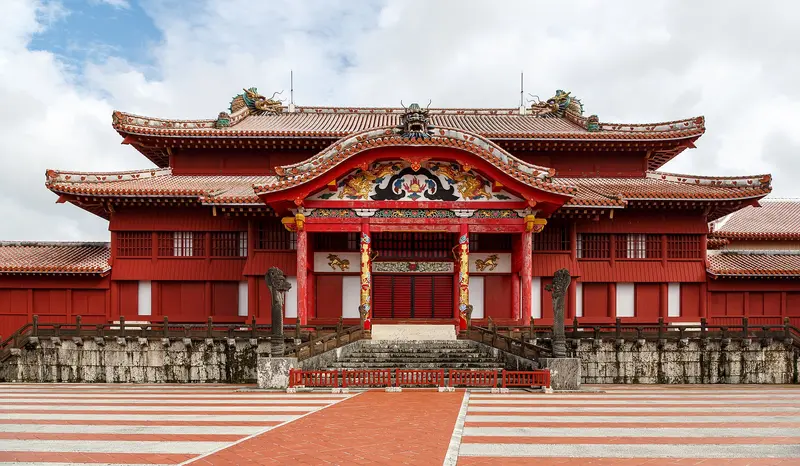
Shuri Castle
The vermilion palace of the Ryukyu Kingdom: the soul of Okinawa reborn from fire
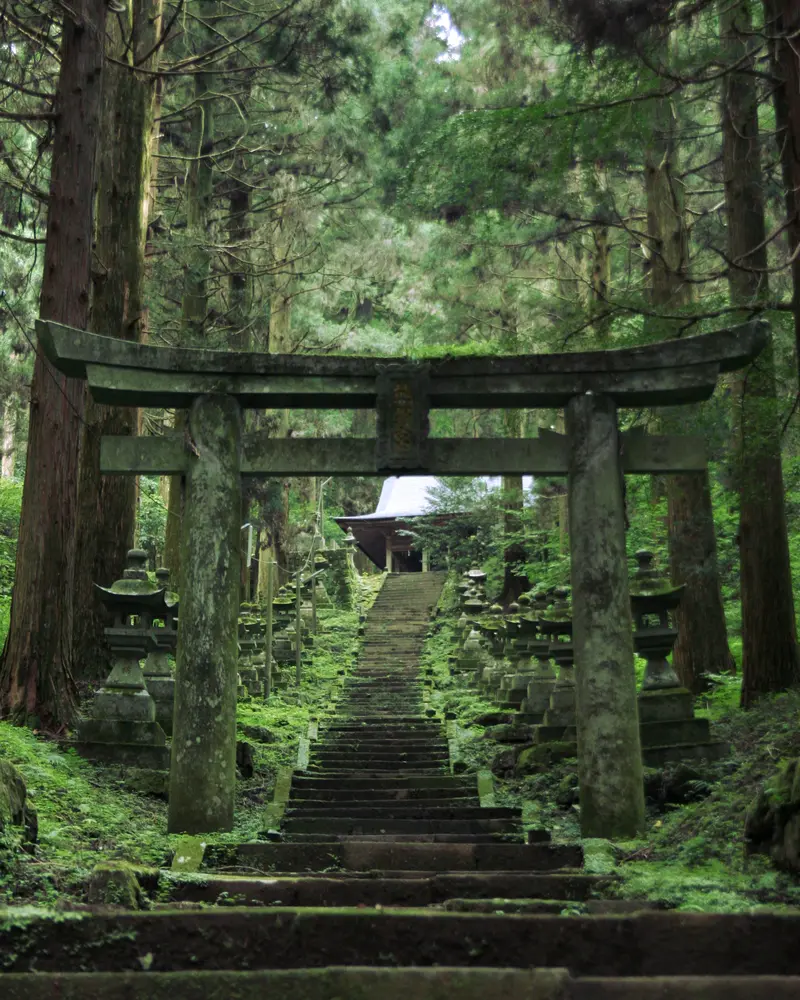
Kamishikimi Kumanoimasu Shrine
An approach of mossy stone lanterns: one step into the otherworld of 'Hotarubi no Mori e'
Kouri Island: Heart Rock
The heart-shaped rock of the 'Island of Love' and Kouri blue
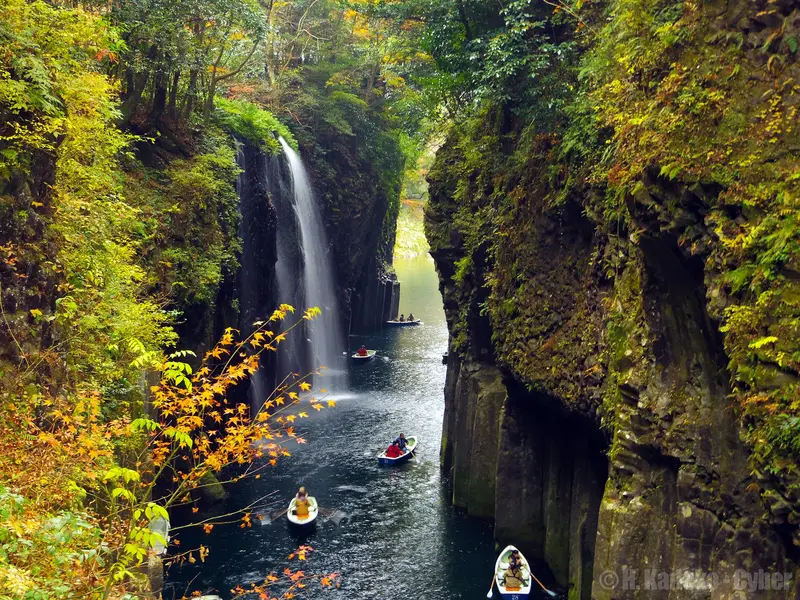
Takachiho Gorge
Columnar joints in the land of myth: rowing a boat to gaze up at Manai Falls
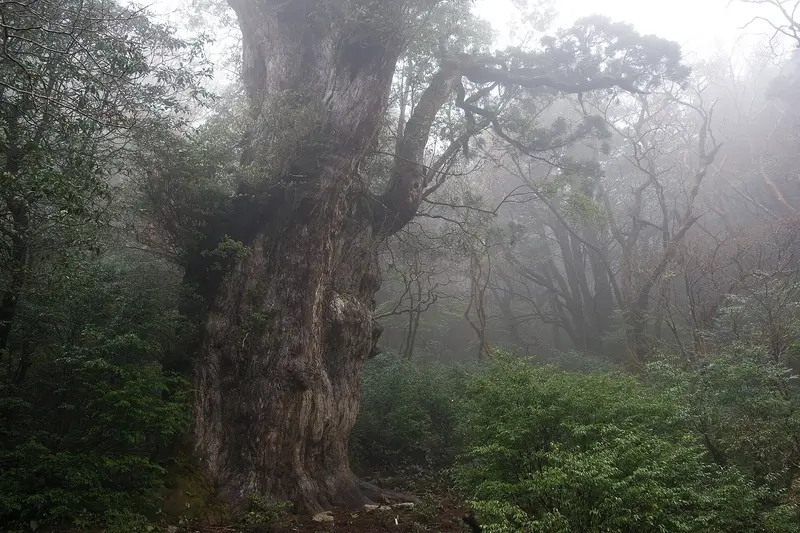
Yakushima
The thousand years of the Jōmon Sugi: meeting 'Princess Mononoke' in a moss forest
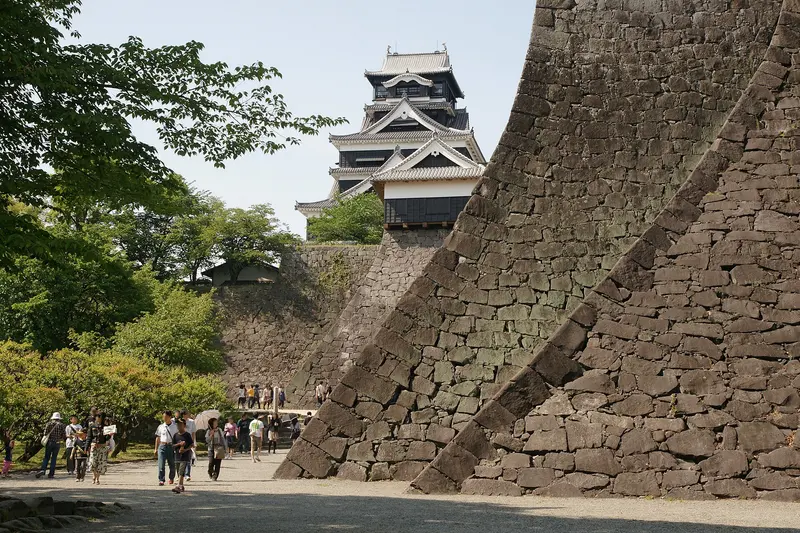
Kumamoto Castle
One of Japan's three great castles, built by Katō Kiyomasa: the sharp curve of its 'musha-gaeshi' stone walls, and a keep reborn after the earth…
Local legends
 Dazaifu TenmangūTobiume: the plum tree that followed its masterMichizane wrote many poems about plum blossom in his lifetime. Legend says that after he died in…
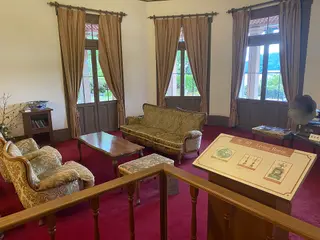 Glover GardenThe 'Madame Butterfly' houseBecause the house and its surroundings evoke Puccini's opera 'Madama Butterfly', it is also know…
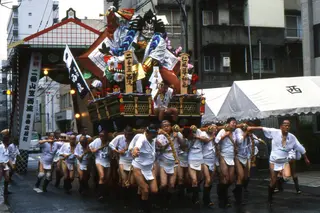 Hakata Gion YamakasaCarrying a priest to sprinkle water and drive off diseaseLegend says that when an epidemic swept Hakata in 1241, Shōichi Kokushi (Enni), founder of Jōten…
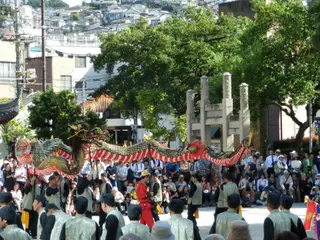 Nagasaki KunchiThe komai of Takao and OtowaTradition holds that in 1634 two courtesans of the Maruyama quarter, Takao and Otowa, performed …
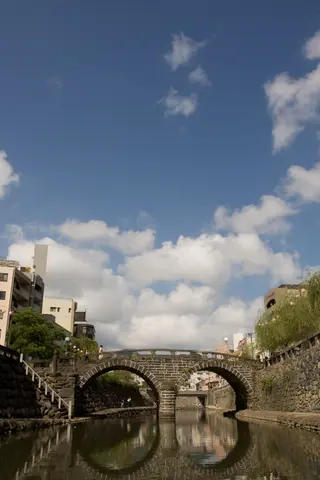 Megane BridgeWishing on the Heart StonesTwenty heart-shaped stones are set in the embankment near Megane Bridge. It is said that you can…
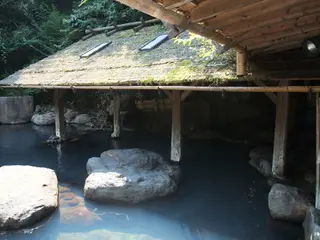 Kurokawa OnsenJinkichi's Jizo and the first springLegend says that Jinkichi, a man of Bungo Province, was about to be beheaded for stealing melons…