
Central & Eastern Europe · Square / historic bridge
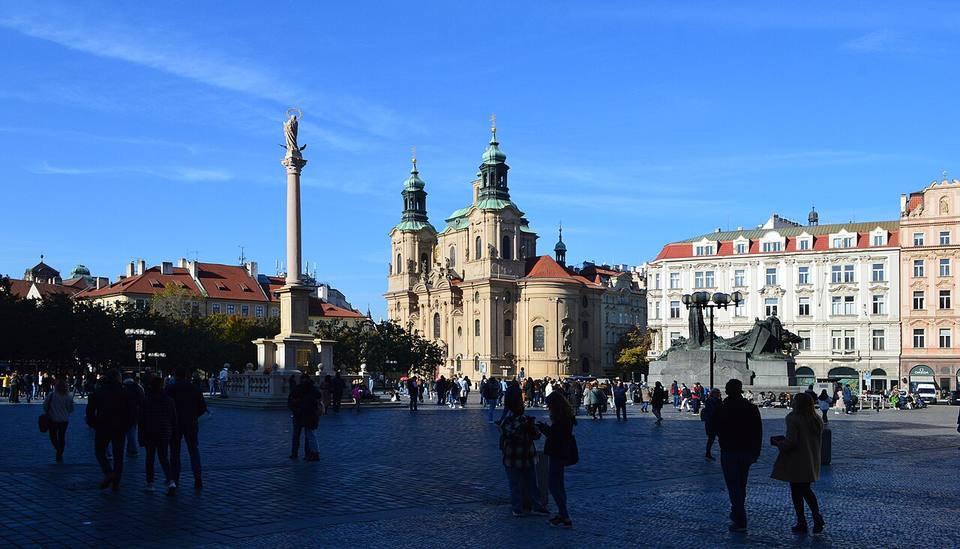
Prague Old Town Square and Charles Bridge
On Prague's Old Town Square the town hall's astronomical clock sends out its procession of apostles every hour, while the thirty statues of Charles Bridge have stood in the morning mist for six hundred years — Prague's cover and its soul in a single kilometre.
Location
Prague, Czech Republic
Stories and legends
The tale that the clockmaker Hanuš was blinded to prevent him from ever copying the clock is widely told but has no documentary basis; the palindrome of Charles Bridge's foundation moment — "9 July 1357, 5:31" (135797531) — is a famous piece of lore, and its astrological timing has a documented tradition.
History and context
Charles Bridge was begun in 1357 under Charles IV, directed by Peter Parler, and completed in the early 15th century; it is 516 metres long with 16 arches, and its towers and Baroque statues (most placed in the 17th–18th centuries; the originals are kept in museums and most of those on the bridge are copies). The Old Town Hall's astronomical clock was built in 1410 and is among the world's oldest astronomical clocks still running, with its astronomical dial, calendar dial and hourly procession of the apostles. Old Town Square also holds the Church of Our Lady before Týn (Gothic twin towers) and the Jan Hus memorial (erected in 1915).
Local life
Prague's old town has the air of "Central Europe in layers": Gothic towers, Baroque façades and Art Nouveau cafés stand face to face, while the clamour of the beer halls wells up from the cellars. At 5 a.m. the bridge belongs only to runners and wedding photographers — the local consensus on beating the crowds, taken to the extreme, is that Prague belongs to the early morning and to winter.
Customs
The clock's hourly show is a ritual for everyone; the Christmas market (Old Town Square, usually from late November to January, as announced by the city) is a famous Central European market.
Beliefs
The Týn Church (Catholic, with Hussite historical associations); among the bridge statues the most celebrated is St John of Nepomuk, one of Prague's patron saints, and touching his relief for good luck is a tourist custom.
Local etiquette
Do not attach "love locks" to the bridge (the city removes them, and they damage it), and do not climb the statues; in the clock's hourly crowd, guard against pickpockets (Prague's old town is a high-incidence area for theft — wear your backpack in front); Segways and similar vehicles have been banned in the old town for years — do not hire a prohibited vehicle type.
Visiting notes
Best in spring and autumn and in the early morning; be at Charles Bridge before sunrise to claim a photo spot; stay one night in the old town to enjoy dawn and dusk; for a Vltava cruise, buy your ticket at the pier of a reputable company.
What to eat nearby
Beef in cream sauce with bread dumplings (Svíčková na smetaně); roast pork knee (Koleno); Czech beer (the pilsner style was born in Plzeň, to the west; pub culture is the heart of Prague); chimney cake (Trdelník — popular mainly as a tourist pastry, with disputed origins); fried cheese (Smažený sýr)
The beer halls of the Old Town and Lesser Town, and around the Havelské Market
Sharing tables in beer halls is normal; the waiter tallies your beers on the coaster — never alter the tally yourself; the tipping custom is about 10% (rounded up), indicated when paying by cash or card
A pub meal 350–600 Czech koruna (approx. RMB 105–180, for reference only)
Spending is mainly in koruna, and euros are usually poor value; for exchange, use proper bureaux and avoid the old town's "0% commission" offers (the rates are often poor — paying by card is the steadiest course).
Source leads: Prague City Tourism (official); Prague City Hall materials on the astronomical clock.
Image source · Scotch Mist · CC BY-SA 4.0