
Western Europe Supplement · Prehistoric site / World Heritage
Stonehenge
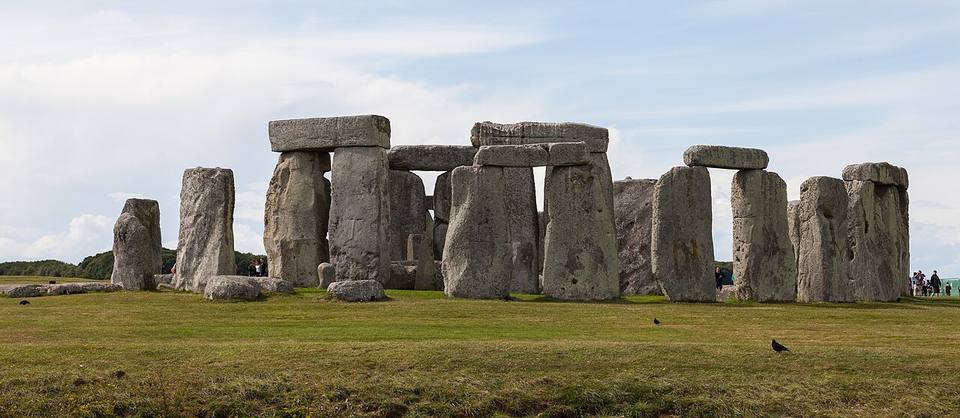
A great ring of stones raised in phases between about 3000 and 2000 BC, its bluestones brought from more than 200 kilometres away in Wales — its purpose is still unsettled, and the summer-solstice sunrise rising directly over the Heel Stone is the one secret it makes public.
Location
Salisbury Plain, Wiltshire, England, United Kingdom
Stories and legends
The medieval chronicles say that Merlin moved the stones from Ireland by magic (recorded by Geoffrey of Monmouth) — the medieval layer of legend.
History and context
Stonehenge was built in phases around 3000–2000 BC; the sarsen stones (local, of roughly the 25-tonne class) and the bluestones (from the Preseli Hills in Wales; studies of their sources continue to be published in the academic journals) form a double ring, and the monument was originally part of a landscape of burial and ritual (with cremation burials and the Avenue around it); it was listed as World Heritage together with Avebury in 1986; it is now managed by English Heritage, with reserved, timed tickets, a visitor-centre shuttle and a one-way circuit (you cannot enter the circle; at the special openings for the summer and winter solstices and the like, when entry into the circle is allowed, follow the official announcements).
Local life
Stonehenge's character is "restrained mystery": English management has made it a minimalist experience — grassland, wind, the stone ring, and the arguments in the audio guide (an astronomical calendar? ancestor worship? a place of healing?). When the site stays open all night at the summer solstice, modern Druid believers and astronomy enthusiasts gather together, adding a contemporary ritual layer to the prehistoric remains. Visitors used to grand mountains and great waters often feel that it is "small," but standing before it you understand that its scale was made for human beings, not for gods.
Customs
The sunrise gatherings at the summer and winter solstices are the annual events (as arranged by English Heritage; transport needs planning ahead).
Beliefs
A prehistoric ritual site (its specific beliefs are beyond written record); modern Druids and other neo-pagan groups regard it as sacred, and the authorities coordinate its management inclusively.
Local etiquette
Never cross the rope barrier into the circle (except at the special openings), and never climb or touch the standing stones; drones are banned; do not chase the sheep grazing on the plain.
Visiting notes
Best on spring and autumn weekdays and in the first and last time slots (raking light, thin crowds); from London Waterloo the train to Salisbury takes about 1.5 hours, then change to the Stonehenge Tour bus; drivers must reserve a parking slot (following the official website); allow 2 hours, including the visitor-centre exhibition (the exhibition is crucial to understanding the site — do not skip it).
What to eat nearby
A proper pub meal (in Salisbury); Cornish pasties (a flavour of a neighbouring region); cream tea (scones with clotted cream and jam — the order in which they are spread is the fond Devon-versus-Cornwall controversy); local cider
Salisbury old town, and the town of Amesbury
In a pub you order at the bar and pay first, as the normal form; tearooms that require a reservation follow their house rules
A pub meal £16–28 (approx. RMB 147–258, for reference only)
Salisbury Cathedral (with the tallest spire in England and one of the original copies of Magna Carta) makes the fullest day of it paired with Stonehenge; the plain is windy, so bring a jacket even in summer.
Source leads: English Heritage, Stonehenge (official); UNESCO, Stonehenge (1986).
Image source · Diego Delso · CC BY-SA 4.0