
The Nordics · Sea fortress / World Heritage
Suomenlinna (Helsinki)
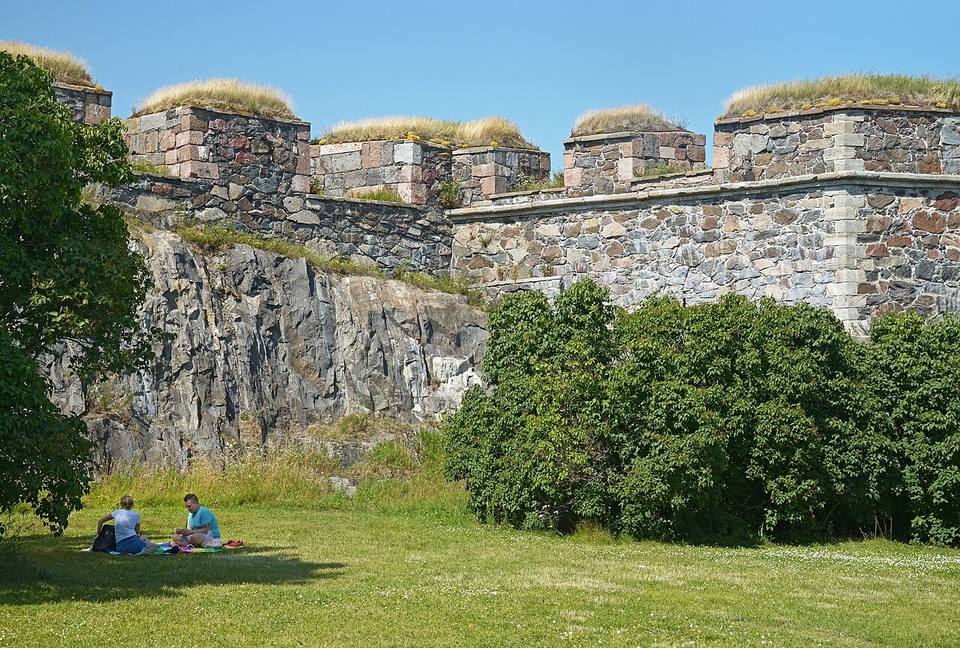
An 18th-century sea fortress built across six islands, with about 800 residents living and commuting to work inside a World Heritage site — Helsinki's summer lawns and winter snowfields alike lie beneath the fortress walls.
Location
Helsinki, Finland
Stories and legends
There is no myth or legend.
History and context
The fortress was begun in 1748, in the Swedish era, to a design by Augustin Ehrensvärd, and was among the largest defensive works in Northern Europe at the time; in 1808, during the Finnish War, it passed into Russian hands, and after Finnish independence in 1918 it was renamed Suomenlinna ("Finland's castle"); it was listed as World Heritage in 1991. The islands hold a dry dock in use since the 18th century, the submarine Vesikko (Second World War), Ehrensvärd's tomb and the King's Gate (1752); the ferry from the Market Square (Kauppatori) takes about 15 minutes, and city transport tickets are valid on it (following the HSL fare system).
Local life
Suomenlinna's character is "a village inside a fortress": gun batteries and lawns, barracks converted into homes and cafés, residents wheeling prams onto the ferry — heritage here is the background to a commute, not a fenced-off exhibit. In summer, Helsinki picnickers with their baskets take over the lawns on the south shore, and in winter, when the sea freezes over, the fortress's snowfields and the blue of the polar night make up a wholly different face.
Customs
Summer picnics and sea swimming (at designated bathing spots), and Midsummer bonfires (as arranged by the island); residents' life takes priority — that is the island's shared consensus.
Beliefs
The fortress church (built in 1829, in the Russian period, and combined with a lighthouse) is a Lutheran church; the whole centres on its military heritage.
Local etiquette
Residents' yards are private — do not enter them; do not lean out over the unfenced cliff edges by the batteries; drone controls follow the island's notices; the gulls snatch food, so keep a watch on your picnic.
Visiting notes
Best from May to September; ferries are frequent — check the last sailing in the HSL timetable; a full walk around the islands takes about 3 hours, and a combined ticket covers several museums (following the island's arrangements); in winter the sea wind is bitterly cold, and a windproof layer is essential.
What to eat nearby
Salmon soup (Lohikeitto); rye bread and Karelian pasties (Karjalanpiirakka, served with egg butter); fried vendace / Baltic herring; reindeer (a northern flavour, in proper Helsinki restaurants); blueberry pie and coffee (the Finns are among the world's leading coffee drinkers per head)
The island's cafés and restaurants (all open in summer), and the Market Square stalls on the way back
The small fish at the market stalls are fried fresh — eat them hot; coffee refills are widespread in Finland, and some places allow a refill, following the house rules
A sit-down meal €20–38 (approx. RMB 156–296, for reference only)
The ferry from the Market Square runs in both a municipal and a private version, with different ticket systems — do not queue for the wrong one; the island is car-free, so carry luggage in a trolley or a backpack.
Source leads: The Suomenlinna governing body (official); UNESCO, Suomenlinna (1991).
Image source · Ввласенко · CC BY-SA 3.0