
Cherry-blossom sites · Cherry blossoms / Castle site
Takato Castle Site Park
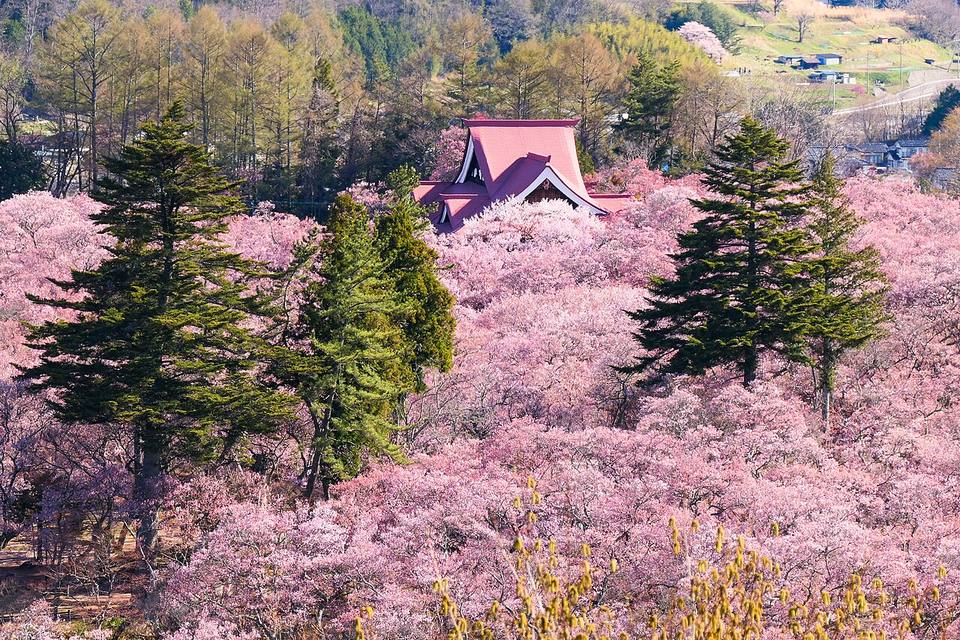
About 1,500 trees of the endemic species "Takato kohigan-zakura," small-flowered and densely pink; at full bloom the whole castle site looks like a pink cloud pressing down on the town, ranked with Hirosaki and Yoshino in the first tier of blossom viewing.
Location
Ina City, Nagano Prefecture
Stories and legends
Takato Castle is widely linked in storytelling with the Takeda retainers and the tragic tale of Nishina Morinobu (Nishina Gorō) dying in its defense during the "Kōshū conquest"; much of the characters' dialogue belongs to later dramatization.
History and context
Takato Castle was a Takeda stronghold in southern Shinano, captured by Oda forces in 1582; today's cherries were planted and tended from the Meiji era by former domain retainers on the ruined site. The variety, Takato kohigan-zakura (タカトオコヒガンザクラ), has reddish-pink flowers and is endemic to the area; the park is listed among the "Three Great Cherry Sites / 100 Best Cherry Blossom Spots in Japan." The cherry festival usually runs from early to mid-April (subject to official announcements each year); at about 880 meters altitude, it blooms roughly two weeks later than Tokyo.
Local life
Takato's ethos is the plainness of a mountain castle town: no big-city hanami commercial clamor, and the cherries set against the snow-dusted Central Alps are the classic picture of "Shinshu's late spring." Local feeling for the cherries verges on stewardship — citizens take part in renewing old trees and grafting saplings, and festival stalls are mostly local farmers and high-school students.
Customs
During the cherry festival there is night lighting and performances of local arts such as the Takato-bayashi.
Beliefs
No specific religious association; its main cultural identity is a Warring States castle site and the citizens' cherry-protecting tradition.
Local etiquette
The old cherries have shallow roots — do not step into the root-protection zones; no drones; roads around the park are controlled during the festival, so do not park illegally on farm roads.
Visiting notes
Best at full bloom in early to mid-April; from Ina City Station the bus takes about 25 minutes, with extra services in blossom season; enter at opening (usually 6:00) and you can have the park to yourself for an hour; combine it on one line with Lake Suwa and Mount Komagatake.
What to eat nearby
Takato soba (高遠そば, eaten in a pungent style with grated daikon and grilled miso); Ina's famous horse-meat dishes (馬刺し basashi / 桜鍋 sakura-nabe — properly inspected horse meat; you may accept or politely decline); Shinshu pickles such as daikon and nozawana; local apples and gohei-mochi
The old-shop street of Takato castle town, the dining district in front of Ina City Station
Takato soba's dipping sauce is extremely hot (辛つゆ, kara-tsuyu), so try a little first; horse meat is a traditional Shinshu food — confirm the cut and price before ordering
Soba 1,200–1,800 yen (about 56–85 yuan, for reference only)
The bloom is offset from other Shinshu cherry sites, so this works as a make-up stop after Tokyo's blossoms have fallen; mornings and evenings in the mountains are cold — bring a jacket.
Source leads: Ina City official tourism, Takato Castle Site Park Cherry Blossom Festival official information, 100 Best Cherry Blossom Spots in Japan (Japan Cherry Blossom Association).
Image source · MaedaAkihiko · CC BY-SA 4.0