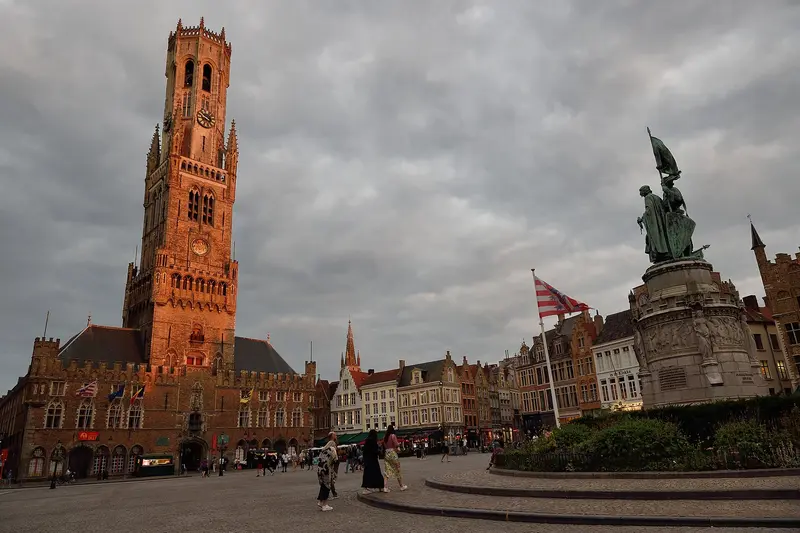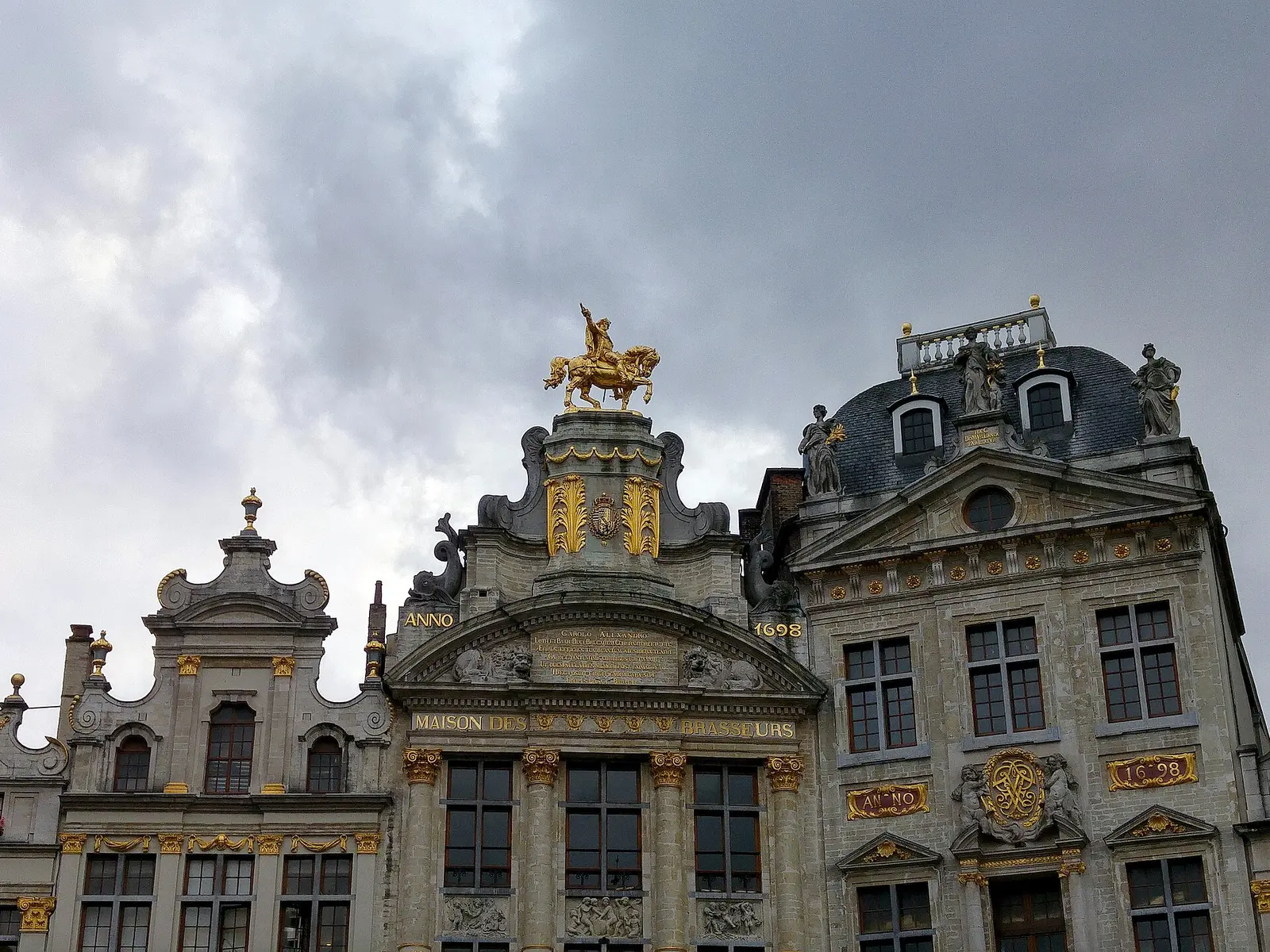
City guide · Bruxelles / Brussel
Brussels
From the Grand-Place to the European Quarter, pick out Brussels's commercial and political layers
We suggest staying 2 days. The Grand-Place and the old town are best on foot; plan the Royal Museums of Fine Arts and the European Quarter as separate segments, and take city transport out to the Atomium. Bruges and Ghent are separate cities, not places within Brussels. Other places in the city worth a visit: the Royal Museums of Fine Arts of Belgium, the Comic Strip Route and the European Quarter.
History
How the city came to be
Brussels grew from a settlement on the Senne into a major city of the Brabant region, and the Grand-Place was already a market in the twelfth century. The fifteenth-century Gothic Town Hall and guildhalls express its commercial and political strength, and under the Burgundians and Habsburgs the court and administrative bodies further increased the city's influence. In 1695 French troops bombarded the area and destroyed the buildings around the Grand-Place; the guilds and citizens then rebuilt it, so what you see today is not an intact medieval original. After Belgian independence in 1830 Brussels became the new nation's capital, and railways, roads and nineteenth-century urban renewal expanded the old town. From the twentieth century, the concentration of EU institutions and international organisations added a new political layer. In 1998 the Grand-Place was inscribed as a World Heritage Site. As you explore, treat the old market town, the national capital and the European institutions' district as urban spaces from different periods.
- 12th centuryThe Grand-Place emerges as a market.
- 15th centuryThe Town Hall and guildhalls develop.
- 1695The Grand-Place is bombarded and then rebuilt.
- 1830Belgium becomes independent and Brussels enters its era as a capital.
- 19th centuryCity roads and public buildings expand.
- 1998The Grand-Place is inscribed as a World Heritage Site.
- Present dayThe EU institutions' district becomes an important part of the city.
Stories
Stories of the city
Three days of bombardment, four years of rebuilding
History · Grand Place, Brussels
From 13 to 15 August 1695, French troops under Marshal de Villeroy, on the orders of Louis XIV, bombarded Brussels and all but levelled the Grand Place. The guilds and other owners rebuilt their halls over the following four years or so, submitting their plans to the authorities for approval, which gave the square its unified appearance today.
The Flower Carpet and the Ommegang
History · Grand Place, Brussels
Every two years in August, the square is covered with a carpet made of nearly a million begonias or dahlias. The Ommegang historical procession re-enacts the Joyous Entry of Emperor Charles V and his son Philip II into Brussels in 1549.
Marx, Hugo and the Workers' Party
History · Grand Place, Brussels
In 1848 Karl Marx wrote The Communist Manifesto on the Grand Place (some accounts place him in the Swan). In 1852 Victor Hugo lived in the Pigeon. In 1885 the Belgian Workers' Party was founded at a meeting on the Grand Place.
Must see
Places you shouldn’t miss
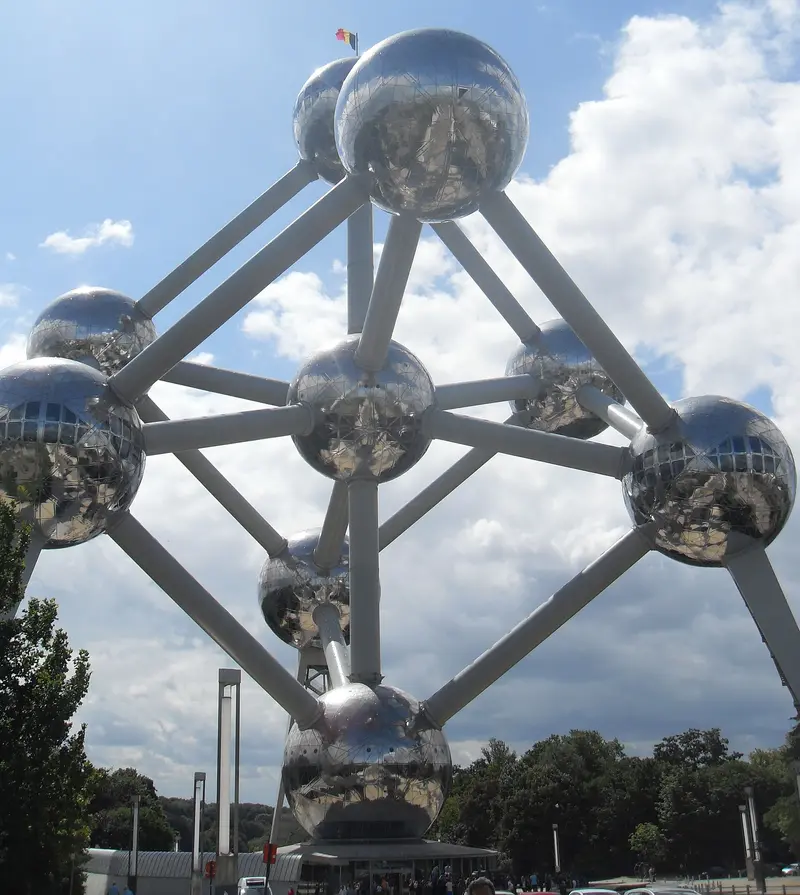
Atomium, Brussels
Step inside the landmark of the 1958 Brussels World's Fair and discover that era's vision of science, technology and the future.
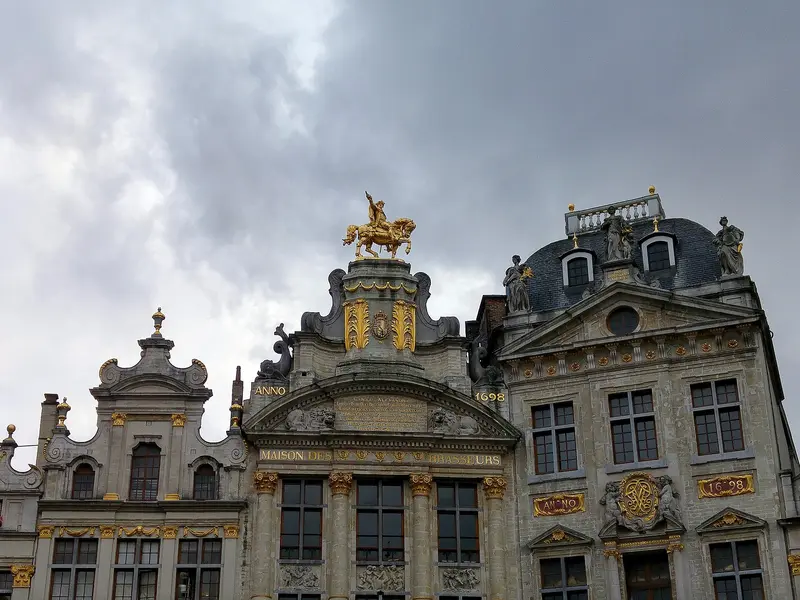
Grand Place, Brussels
The central square of Brussels, enclosed by the 15th-century Gothic Town Hall and the guildhalls rebuilt by the guilds after the 1695 bombardmen…
Before you go
Rules to know in Brussels
Belgium: no flash or tripods when taking photos in museums
Do
- Personal photos without flash are generally allowed, except where marked
- Flash, lights and tripods need the museum's prior written permission
- Keep your distance from the works, as signed in each museum
- Eat and drink only in the museum café or restaurant
Don’t
- Don't touch exhibits or lean on walls and display cases
- Don't use photos or videos commercially
- Don't film staff so they can be identified (Musea Brugge)
Ignoring staff instructions can get you asked to leave immediately, and the police may be called if you refuse (KMSKA rules). Safe distances differ: at least 30 cm at Musea Brugge, 60 cm at KMSKA in Antwerp and 1 m at the Royal Museums of Fine Arts in Brussels.
Verified Oct 19, 2026Source: Official site: Musea Brugge – Visitor regulations
Belgium: cover shoulders and knees in churches and move quietly
Do
- Covering shoulders and knees is the safest choice
- Walk and speak softly inside and silence your phone
- During Mass or prayers, give way to worship; some areas may be closed
- Follow on-site signs and staff instructions on photography
Don’t
- Don't enter in sleeveless tops or shorts
- Don't photograph people who are praying
- Don't eat, drink or give loud commentary inside
Dress requirements vary between Belgian churches and are usually reminders rather than grounds for refusal; dressing to cover shoulders and knees will satisfy even the stricter ones.
Verified Oct 19, 2026Source: Official site: Cathedral of Our Lady, Antwerp – Visit
Belgium: queue in order and keep quiet on transport and at night
Do
- Join the end of the line in shops, bakeries and stations
- Let passengers get off before you board
- Talk quietly on board and use headphones for music
- Keep your voice down in residential streets at night
- Greet staff when entering shops and be on time for appointments
Don’t
- Don't cut in line or hurry people in the queue
- Don't stand or stroll side by side in bike lanes
There is no penalty, but it causes irritation; standing in a bike lane also risks a collision with fast-moving cyclists.
Verified Oct 19, 2026Source: Advisor.travel: Belgium
Belgium: greet people in Dutch or French depending on the region
Do
- In northern Flanders (Bruges, Ghent, Antwerp), use Dutch: 'Goedendag', 'Dank u'
- In southern Wallonia (Liège, Namur), use French: 'Bonjour', 'Merci'
- Brussels is bilingual French–Dutch, with French more widely used
- If unsure, greet in the local language, then ask whether English is OK
Don’t
- Don't open with French in Flanders or with Dutch in Wallonia
- Don't joke about the language divide
- Don't assume everyone speaks English
Belgium has three official languages, Dutch, French and German, with a small German-speaking area in the east. Using the 'wrong' language carries no penalty, but language is a sensitive issue in Belgium and may earn you a cool reception.
Verified Oct 19, 2026Source: Wikipedia: Languages of Belgium
Belgium: shake hands at first meeting; cheek kisses are for people you know
Do
- Shake hands and make eye contact when meeting someone for the first time or formally
- Say hello when you enter a shop before asking for anything
- Let the other person start a cheek kiss and follow their lead
Don’t
- Don't offer cheek kisses to strangers or people you have just met
- A cheek kiss is a light touch of cheeks, not a real kiss
There is no penalty. The number of kisses varies: in Flanders usually one, three for celebrations; in Wallonia one or three, and male friends often kiss too.
Verified Oct 19, 2026Source: Wikipedia: Cheek kissing
Belgium: service is included; round up or tip about 5–10% if pleased
Do
- For good restaurant service, round up or leave about 5–10%
- In cafés and bars, leaving some change is enough
- Round up taxi fares; give porters a little per bag
- Carry some euro cash for stalls and markets that take cash only
- If unsure whether cards are accepted, ask before ordering
Don’t
- Don't treat a tip as compulsory: service is usually included in the price
- Don't pay with €200 or €500 notes; most shops refuse them
Not tipping is not rude. Since July 2022 Belgian businesses must by law offer at least one electronic payment method, but which cards are accepted varies, and cash is still accepted.
Verified Oct 19, 2026Source: Official site: visit.brussels – Money, currency and change
How do you like this place?