City guide · Brugge
Bruges
Along the canals, the belfry and the old street grid, understand Bruges's medieval trading heritage
We suggest staying 1–2 days. Plan your walks around the Markt, the Belfry, the canals and the Beguinage, and allow extra time for entry to museums and churches at busy times. Other places in the city worth a visit: the Basilica of the Holy Blood and the Groeninge Museum.
History
How the city came to be
Bruges lies where the coastal plain meets the sandy inland soils, and its waterways connected it to the North Sea. The official tourist office records that fortifications already stood here in the early ninth century and that the name Bruges appears in a document of 851; the Counts of Flanders then built up a centre of power around the Burg square. From the eleventh century, Flemish cloth production and maritime trade brought the city prosperity; in the late thirteenth century Italian merchants set up trading bases here, and in the fourteenth century Bruges became a leading commercial centre of north-west Europe. The Belfry, merchant buildings, churches and the canal network are all tied to that prosperity. From the late fifteenth century, the court and merchants shifted their focus elsewhere and the sea channel silted up, among other factors, and the city's trading status declined. Modern restoration and heritage protection preserved the old street grid while also retaining later alterations such as Neo-Gothic work. In 2000 the historic centre of Bruges was inscribed as a World Heritage Site; as you explore, distinguish genuine medieval remains from cityscapes restored later.
- Early 9th centuryFortifications take shape near the Burg square.
- 851Bruges is mentioned in a document.
- 11th centuryThe Flemish cloth trade drives growth.
- Late 13th centuryItalian merchants use Bruges as a trading base.
- 14th centuryBruges becomes a major commercial centre of north-west Europe.
- Late 15th centuryIts trading and court status gradually declines.
- At Belgian independence in 1830Bruges's economy is still relatively weak.
- 2000The historic centre is inscribed as a World Heritage Site.
Must see
Places you shouldn’t miss
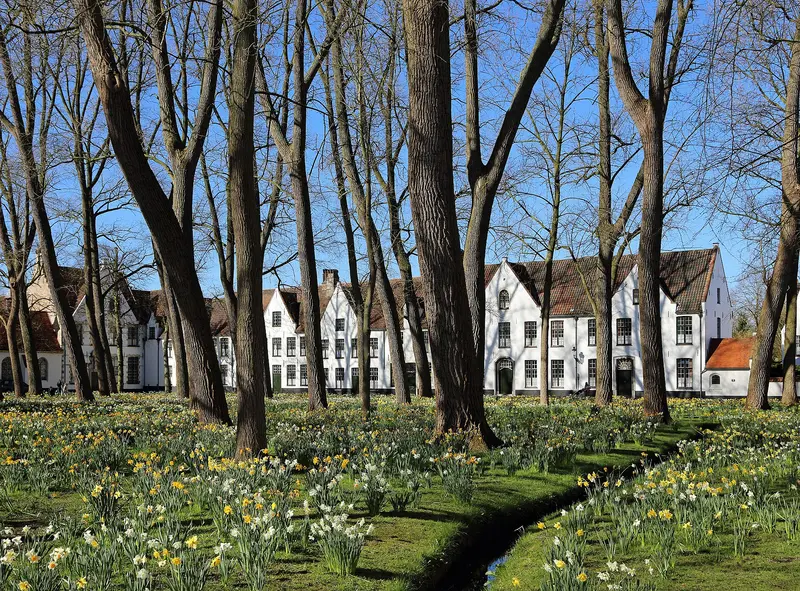
Begijnhof Ten Wijngaerde, Bruges
Step into a still-inhabited courtyard of white houses and discover the living space left by a medieval community of Beguine women.
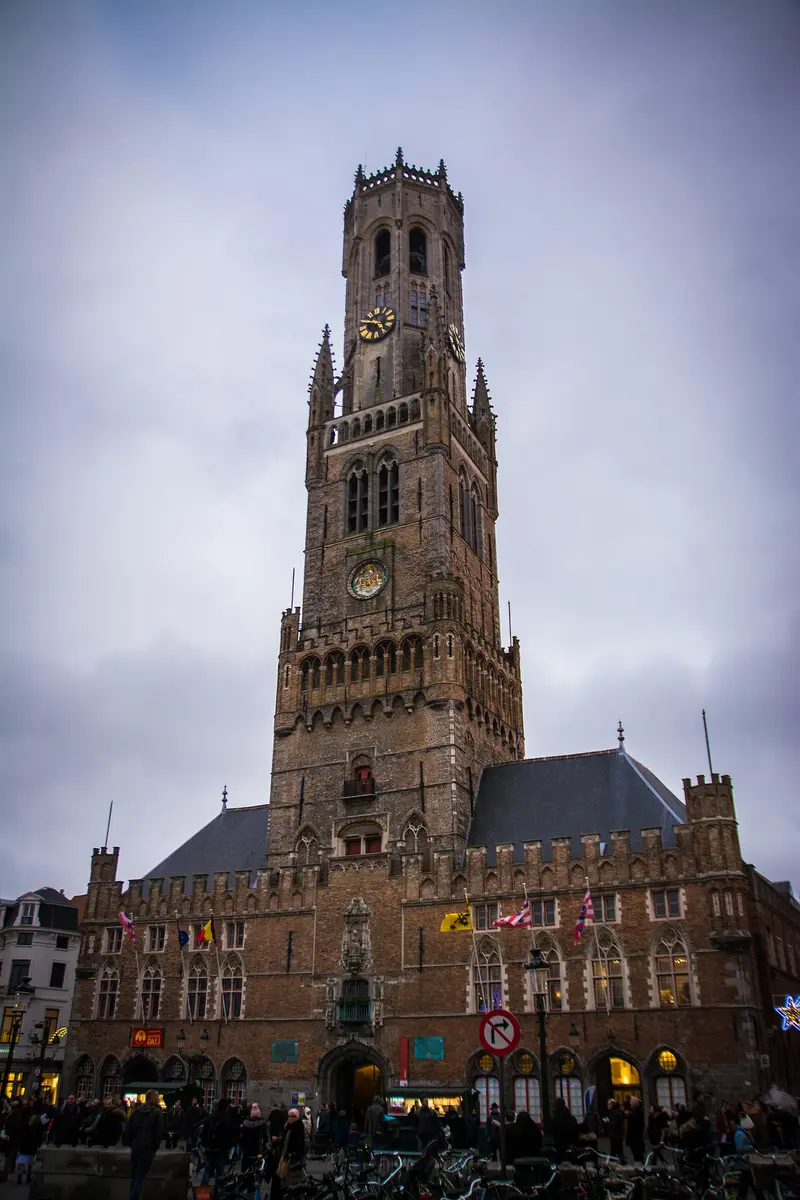
Belfry of Bruges
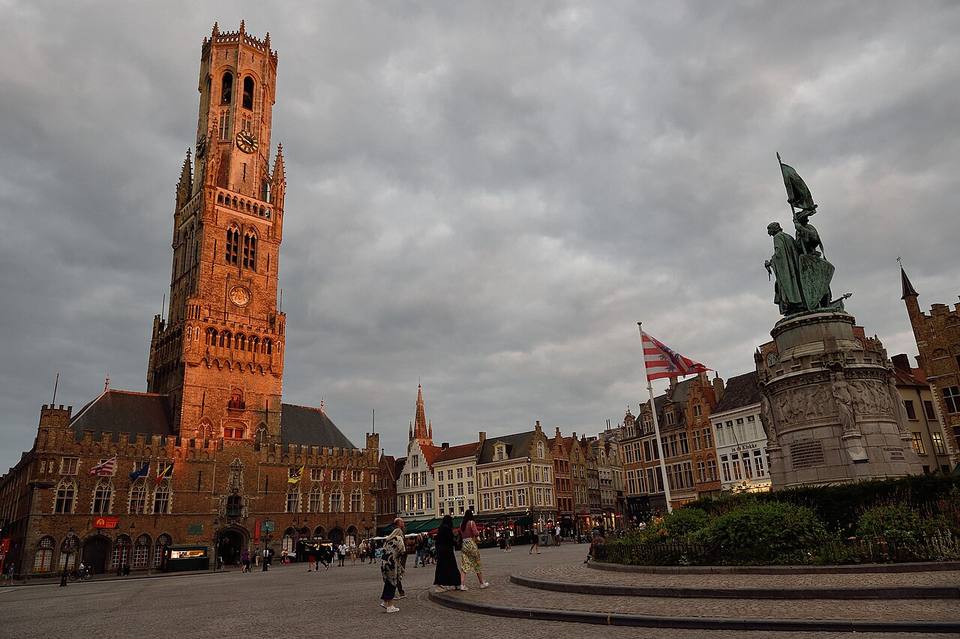
On the Markt, discover how the belfry kept time and sounded alarms for a trading city, and bore witness to civic self-government.
Before you go
Rules to know in Bruges
Belgium: no flash or tripods when taking photos in museums
Do
- Personal photos without flash are generally allowed, except where marked
- Flash, lights and tripods need the museum's prior written permission
- Keep your distance from the works, as signed in each museum
- Eat and drink only in the museum café or restaurant
Don’t
- Don't touch exhibits or lean on walls and display cases
- Don't use photos or videos commercially
- Don't film staff so they can be identified (Musea Brugge)
Ignoring staff instructions can get you asked to leave immediately, and the police may be called if you refuse (KMSKA rules). Safe distances differ: at least 30 cm at Musea Brugge, 60 cm at KMSKA in Antwerp and 1 m at the Royal Museums of Fine Arts in Brussels.
Verified Oct 19, 2026Source: Official site: Musea Brugge – Visitor regulations
Belgium: cover shoulders and knees in churches and move quietly
Do
- Covering shoulders and knees is the safest choice
- Walk and speak softly inside and silence your phone
- During Mass or prayers, give way to worship; some areas may be closed
- Follow on-site signs and staff instructions on photography
Don’t
- Don't enter in sleeveless tops or shorts
- Don't photograph people who are praying
- Don't eat, drink or give loud commentary inside
Dress requirements vary between Belgian churches and are usually reminders rather than grounds for refusal; dressing to cover shoulders and knees will satisfy even the stricter ones.
Verified Oct 19, 2026Source: Official site: Cathedral of Our Lady, Antwerp – Visit
Belgium: queue in order and keep quiet on transport and at night
Do
- Join the end of the line in shops, bakeries and stations
- Let passengers get off before you board
- Talk quietly on board and use headphones for music
- Keep your voice down in residential streets at night
- Greet staff when entering shops and be on time for appointments
Don’t
- Don't cut in line or hurry people in the queue
- Don't stand or stroll side by side in bike lanes
There is no penalty, but it causes irritation; standing in a bike lane also risks a collision with fast-moving cyclists.
Verified Oct 19, 2026Source: Advisor.travel: Belgium
Belgium: greet people in Dutch or French depending on the region
Do
- In northern Flanders (Bruges, Ghent, Antwerp), use Dutch: 'Goedendag', 'Dank u'
- In southern Wallonia (Liège, Namur), use French: 'Bonjour', 'Merci'
- Brussels is bilingual French–Dutch, with French more widely used
- If unsure, greet in the local language, then ask whether English is OK
Don’t
- Don't open with French in Flanders or with Dutch in Wallonia
- Don't joke about the language divide
- Don't assume everyone speaks English
Belgium has three official languages, Dutch, French and German, with a small German-speaking area in the east. Using the 'wrong' language carries no penalty, but language is a sensitive issue in Belgium and may earn you a cool reception.
Verified Oct 19, 2026Source: Wikipedia: Languages of Belgium
Belgium: shake hands at first meeting; cheek kisses are for people you know
Do
- Shake hands and make eye contact when meeting someone for the first time or formally
- Say hello when you enter a shop before asking for anything
- Let the other person start a cheek kiss and follow their lead
Don’t
- Don't offer cheek kisses to strangers or people you have just met
- A cheek kiss is a light touch of cheeks, not a real kiss
There is no penalty. The number of kisses varies: in Flanders usually one, three for celebrations; in Wallonia one or three, and male friends often kiss too.
Verified Oct 19, 2026Source: Wikipedia: Cheek kissing
Belgium: service is included; round up or tip about 5–10% if pleased
Do
- For good restaurant service, round up or leave about 5–10%
- In cafés and bars, leaving some change is enough
- Round up taxi fares; give porters a little per bag
- Carry some euro cash for stalls and markets that take cash only
- If unsure whether cards are accepted, ask before ordering
Don’t
- Don't treat a tip as compulsory: service is usually included in the price
- Don't pay with €200 or €500 notes; most shops refuse them
Not tipping is not rude. Since July 2022 Belgian businesses must by law offer at least one electronic payment method, but which cards are accepted varies, and cash is still accepted.
Verified Oct 19, 2026Source: Official site: visit.brussels – Money, currency and change
Regional deep dives
Read deeper into each place
Western Europe Supplement · Historic city / canal city
Bruges
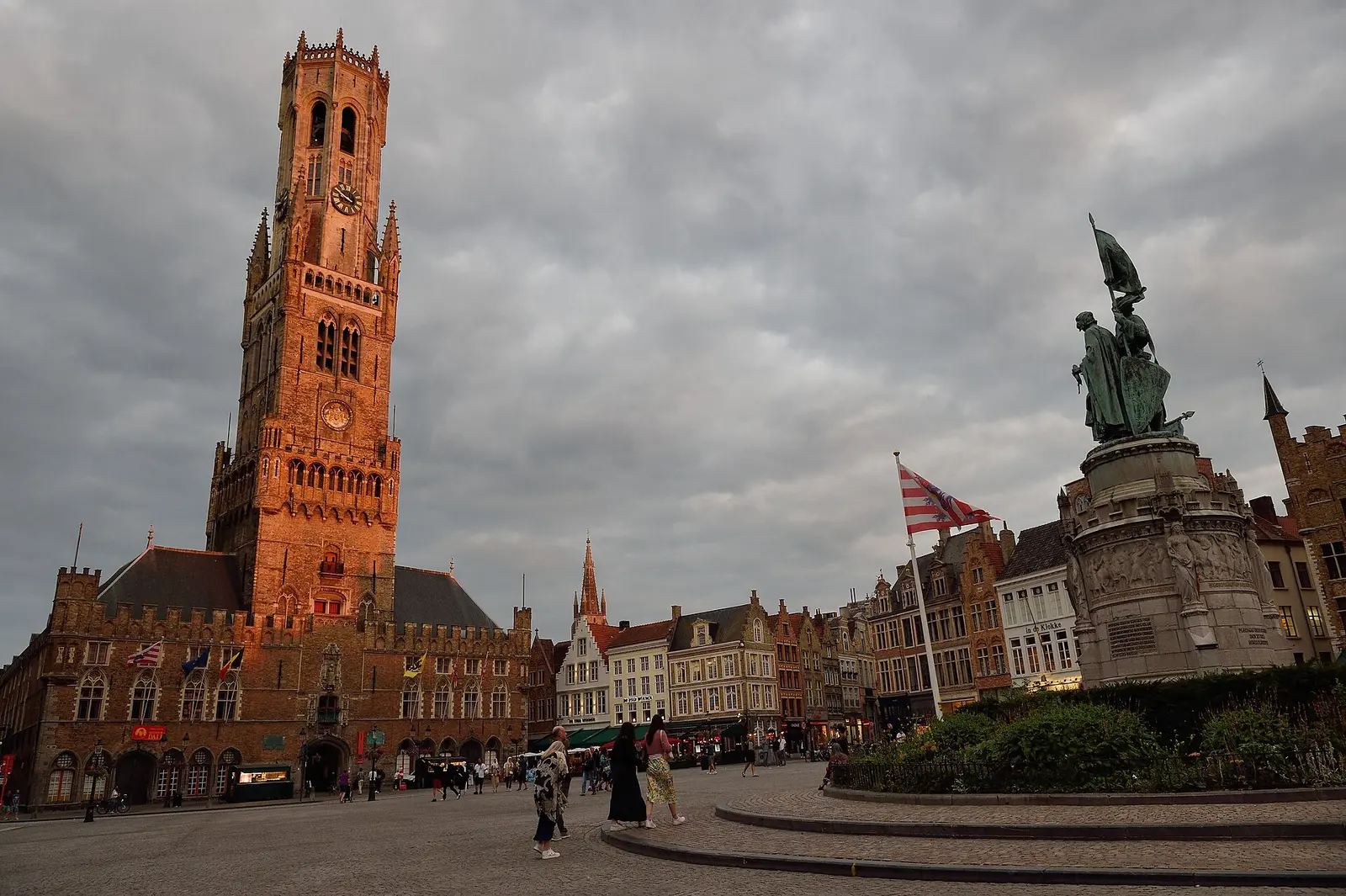
The "Venice of the North": the 83-metre Belfry presses down on the Market Square, and the gabled houses stand with swans along the canals — the wealth of medieval Burgundy, perfectly frozen in the 15th century.
Explore the local guide ↗Source leads: Bruges city tourism (official); UNESCO, Historic Centre of Bruges (2000).
Image source · Tim Adams · CC BY 3.0
Source leads are being checked individually; confirm travel details with local official notices.
How do you like this place?