
City guide · Hamburg
Hamburg
Along the Elbe past the port, the Speicherstadt and new cultural landmarks
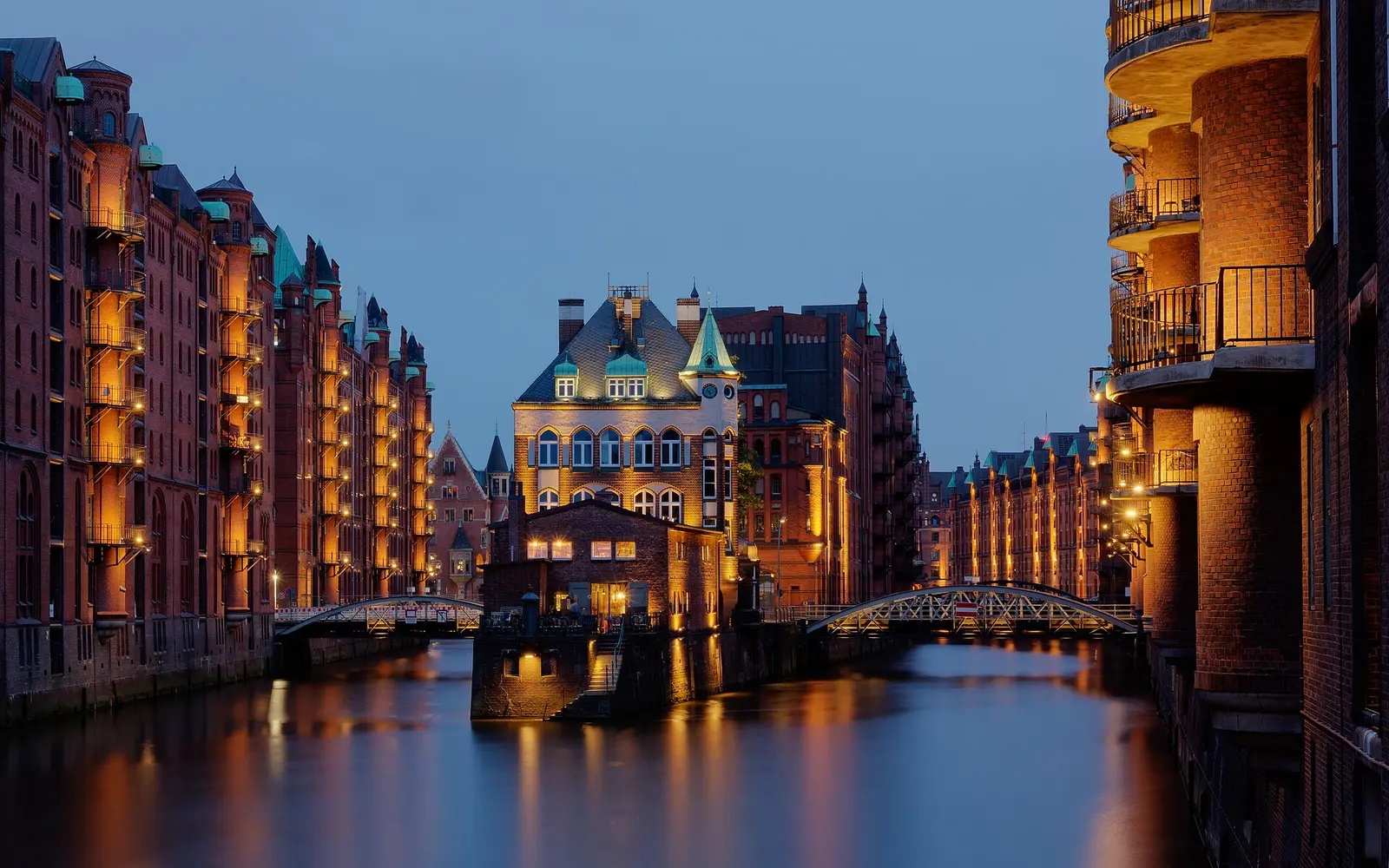
Hamburg's character is tied to its port on the Elbe. The old harbour preserves traces of trade and warehousing, and the red brick, canals and bridges of the Speicherstadt sit next to the new buildings of HafenCity. You can walk from the port to the Speicherstadt, then choose Miniatur Wunderland or the Elbphilharmonie as your interests take you; concert tickets and entry to the public viewing platform need to be confirmed separately. Worth a closer look in the city are the Speicherstadt, the Elbphilharmonie and Miniatur Wunderland. They lie in or near the old harbour, but each has its own visit, so the whole harbour district cannot be lumped together as a single indoor attraction.
History
How the city came to be
Hamburg lies near the Alster and the Elbe, and the city's official history traces an early fortress to the beginning of the 9th century. With the growth of river trade and civic self-government, Hamburg's cooperation with Lübeck in the 13th century made it an important link in the Hanseatic network of cities; the free port and maritime trade further shaped the city's identity. The Great Fire of 1842 destroyed many old-town buildings, and the city was then rebuilt. From the late 19th to the early 20th century, the large Speicherstadt warehouse district was built in the port, with brick warehouses standing on timber piles and canals, reflecting the trade and customs system of the time. The wars of the 20th century and changes in port logistics turned some old facilities to new uses. In 2015 the Speicherstadt, together with the neighbouring Kontorhaus district and the Chilehaus, was inscribed as a World Heritage Site; in 2017 the Elbphilharmonie officially opened, becoming a symbol of cultural life in the new harbour district. The focus of a visit today is to compare the still-working port, the preserved warehouse heritage and the new public spaces, rather than to treat all the harbour buildings as belonging to the same era.
- Early 9th centuryThe city's official history traces an early fortress to the area near the Alster and the Elbe.
- 1241Hamburg formed an alliance with Lübeck, which later became an important link in the Hanseatic network of cities.
- 1842The Great Fire of Hamburg destroyed many old-town buildings.
- 1883 to the early 20th centuryThe Speicherstadt was gradually built to serve port trade and storage.
- 2013The Speicherstadt's former free-port special economic zone status ended.
- 2015The Speicherstadt and the neighbouring Kontorhaus district were inscribed as a World Heritage Site.
- 2017The Elbphilharmonie officially opened.
Stories
Stories of the city
"Gateway to the World"
History · Port of Hamburg
Hamburg people like to call their port the "Gateway to the World". The guides on the harbour tour boats also have a nickname, "he lüchts", Low German for "he is lying", said to come from a call that dock workers used to shout at the boat commentary.
A warehouse city on wooden piles
History · Port of Hamburg
The Speicherstadt was built as the warehouse district of the free port established in 1888, its rows of red-brick warehouses standing on timber-pile foundations along the canals. Construction began in 1883 and went on in stages until 1927, and it is regarded as the largest warehouse district in the world.

Before you go
Rules to know in Hamburg
Germany: Keep quiet on Sundays and at night
Do
- Do noisy chores such as vacuuming, spin cycles and drilling on weekday daytimes
- At night (usually 10 pm to 6 or 7 am), keep sound low enough that neighbours can't hear it with the door shut
- When you move in, read the house rules (Hausordnung) posted in the building
- If you hold a party, tell your neighbours in advance and turn it down by 10 pm
Don’t
- Don't use power tools such as drills or lawnmowers on Sundays and public holidays
- Don't throw bottles into public glass bins on Sundays or at night (check the sign on the bin)
- Don't make noise during the midday quiet period (often 1 to 3 pm) where it applies
Quiet hours are set by state law, local bylaws and house rules rather than a single national law. Repeated disturbances can lead to complaints from neighbours, action by the public order office or police, and fines; amounts are as officially published.
Verified Oct 19, 2026Source: Germany Focus Guide: German Ruhezeit and Sunday etiquette
Germany: Pedestrians, stay out of cycle lanes
Do
- Before crossing or stopping for photos, check whether you are on the pavement or a cycle lane
- When cycling, keep right and overtake on the left
- On shared paths, give way to pedestrians and slow down
- Children under 8 must cycle on the pavement; those aged 8 to 10 may choose
Don’t
- Don't stand or walk in cycle lanes (a blue round sign with a bicycle marks a dedicated lane)
- Don't cycle on the pavement unless a sign allows it
Cycle lanes are part of the road: stepping into one can bring a fine and, more importantly, a collision with a fast-moving cyclist. Cycling on the pavement without permission is also fined; amounts are as officially published.
Verified Oct 19, 2026Source: Live in Germany: Cycling in Germany
Germany: Dress modestly in churches and remove your hat
Do
- Dress respectfully; formal wear isn't needed, but avoid revealing outfits
- Take off your hat, silence your phone and keep your voice low inside
- Carry a light scarf or jacket to cover your shoulders when needed
- Where a church posts its own rules at the door or online, follow them
Don’t
- Don't wear revealing clothes such as bikini tops or very short sports shorts
- Don't give loud commentary or take photos during a service
German churches are generally more relaxed about dress than those in southern Europe, and visitors in shorts are a common sight in Munich and Cologne. However, staff at places such as Berlin Cathedral may refuse entry to visitors in overly revealing clothing.
Verified Oct 19, 2026Source: Pieter on Tour: Church etiquette in Europe's sacred spaces
Germany: Greet with a handshake and use Herr or Frau with the surname
Do
- Greet new people with a firm handshake and eye contact
- Say Guten Tag in formal settings; Hallo is fine among friends
- Address people as Herr or Frau plus their surname
- Switch to first names only when the other person suggests it
- In Bavaria you can reply with Grüß Gott; in the north, Moin is common
Don’t
- Don't hug or kiss on the cheek at a first meeting
- Don't use first names before a relationship has been established
Getting it wrong is rarely a big deal, but being too casual at a first meeting can seem rude. Guten Tag is the safest choice in formal settings.
Verified Oct 19, 2026Source: Fly Homes: How to greet in Germany
Germany: Tell the server the total including tip; don't leave it on the table
Do
- When paying, tell the server the total you want to pay, tip included
- For example, on a €24.80 bill, say "28"
- Around 5%–10% is usual; for small bills, just round up
- By card, choose a tip on the terminal, or pay the bill by card and tip in cash
Don’t
- Don't leave the tip on the table
- Don't feel bound by the terminal's preset percentages
- Don't add 15%–20% as you might in the US
A tip is a voluntary thank-you: no one will reproach you for not tipping, and you can skip it for poor service. German restaurants generally don't add a separate service charge, and prices usually include tax.
Verified Oct 19, 2026Source: German to Go: In cafés and restaurants
How do you like this place?
More cities in Germany
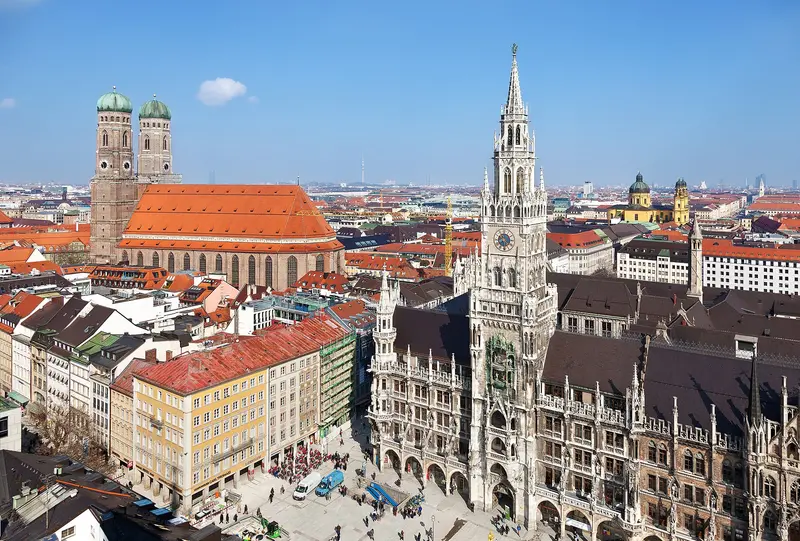
München
Munich
3 places
A royal capital grown from a 'place of monks': Marienplatz, Nymphenburg Palace and Oktoberfest
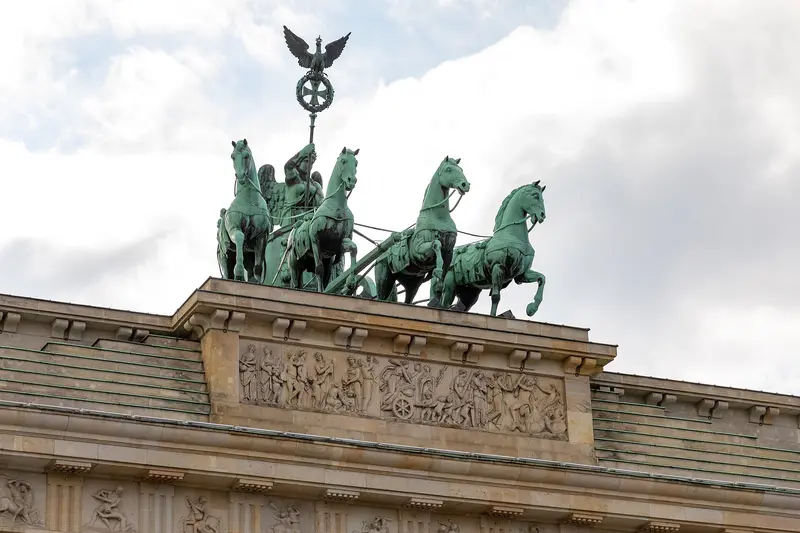
Berlin
Berlin
3 places
The scar and the rebirth of a wall — European history converges on Unter den Linden
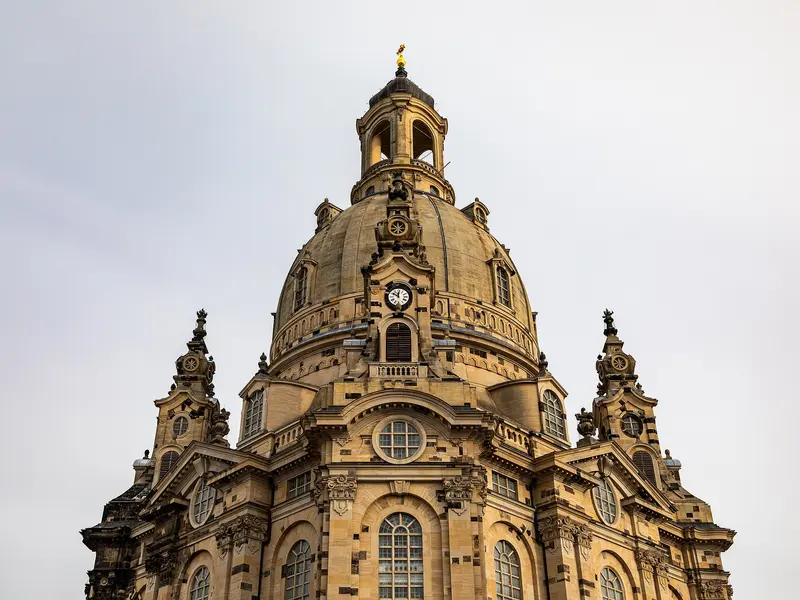
Dresden
Dresden
1 places
A Baroque city on the Elbe: the Frauenkirche, the Zwinger and the Green Vault
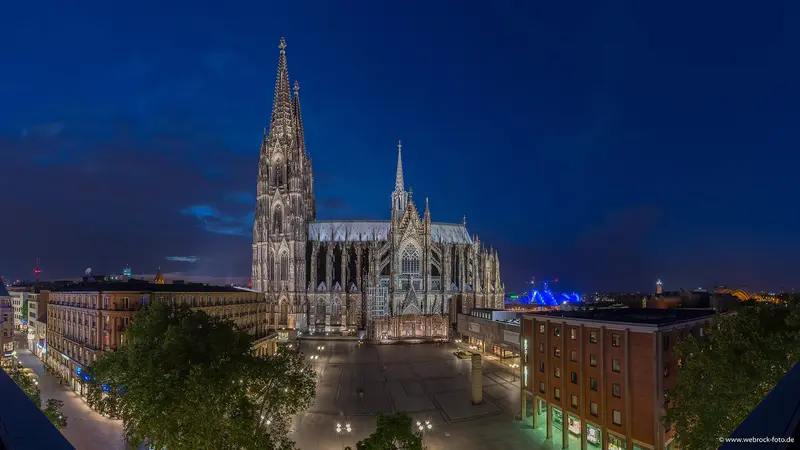
Köln
Cologne
2 places
From Roman remains to the cathedral, then modern art along the Rhine