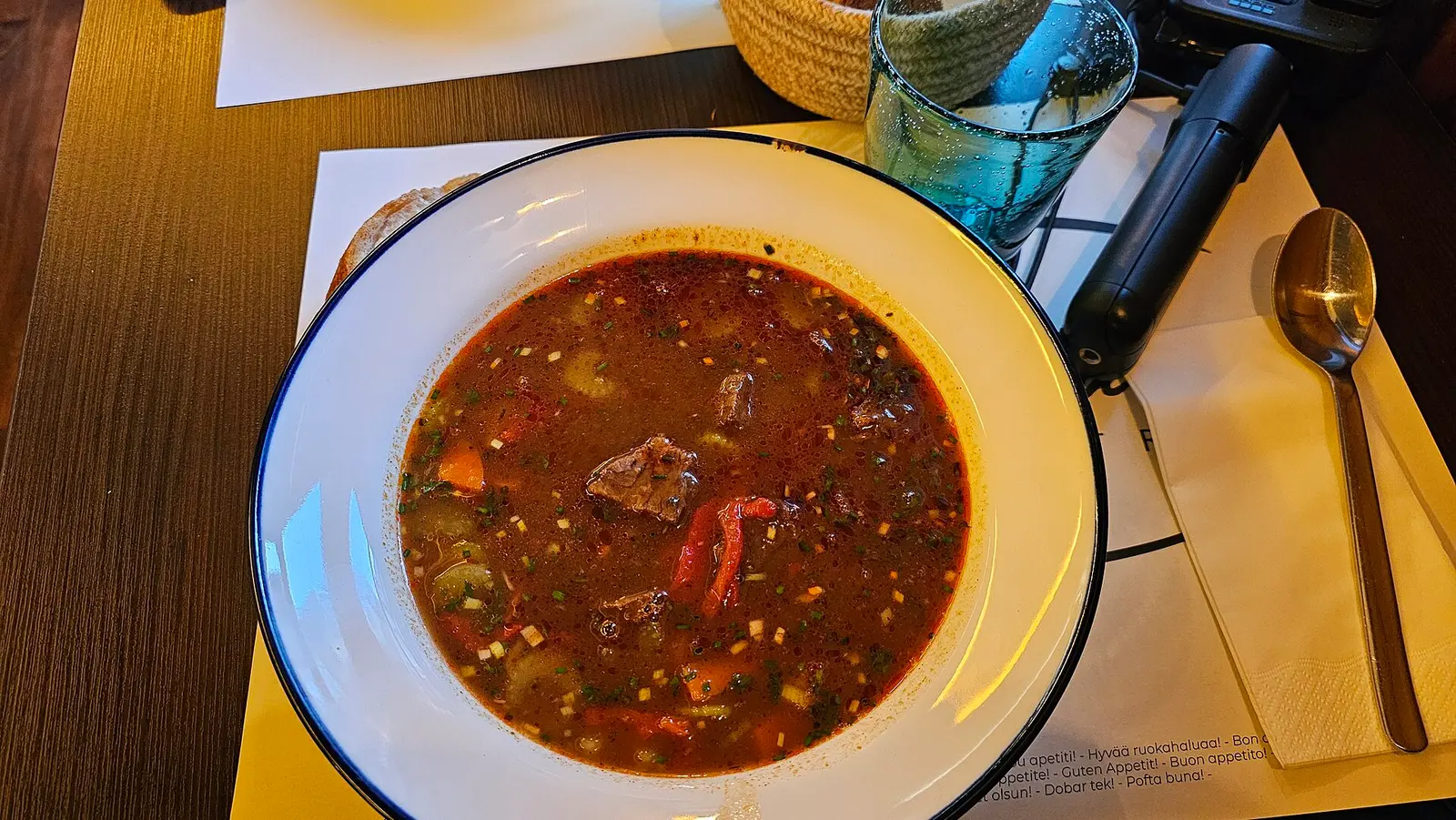
Hungarian Goulash
Gulyás · Budapest, Hungary
Its name comes from “herdsman”; in Hungary it is a soup, and in 2017 it was listed as a “Hungarikum”.
Know before you go
- Don't lump Hungarian goulash together with other countries' stew versions and then criticize it as “not authentic”
- don't add too much of the table chili paste or fresh chilies at once—some are very hot
- don't stand for a long time in front of the food stalls in the Great Market Hall without ordering and block the aisle.
This article is Not yet verified. Please check official announcements for prices, opening hours and dates.
Culture
Culture & customs
Background
Goulash is a dish of meat and vegetables seasoned with paprika and other spices. It originated in Hungary, is one of Hungary's national dishes and a national symbol, and is common throughout Central Europe. According to English Wikipedia, the name comes from the Hungarian “gulyás”: “gulya” means a herd of cattle, and “gulyás” means a herdsman. Its roots go back to the stews eaten by Hungarian herdsmen in the 10th century: the cooked and seasoned meat was dried and packed into bags made from sheep's stomachs, and water was simply added when it was eaten. Early goulash contained no paprika, because peppers only reached Europe in the 16th century. In Hungary, “gulyás” generally means a soup (gulyásleves); the thick stew commonly found abroad is closer to Hungarian “pörkölt”. In 2017 goulash soup was added to the list of “Hungarikums” (Hungarian national treasures).
Local customs
- Order "gulyásleves" at a Hungarian restaurant and you get a red soup with chunks of beef, potato and carrot, often served as a starter or light meal with bread
- at outdoor festivals it is cooked over a fire in a large iron kettle (bogrács)
- some places serve it in a hollowed-out bread loaf.
Religion & beliefs
- Goulash has nothing to do with religion
- it represents the culture of Hungarian herdsmen and national identity, and was championed as the national dish when national consciousness rose in the 19th century. Goulash is mostly made with beef, but some versions use pork or lard, so visitors with religious dietary requirements should check first.
Etiquette & taboos
Etiquette & taboos
Rules that apply here
Hungary: no flash, tripods or selfie sticks when taking photos in museums
Do
- With a ticket you may take photos and videos for personal use
- Check backpacks, umbrellas and oversized bags in the free cloakroom
- Carry small bags in your hand or on your front
- Some temporary exhibitions ban photography; follow the signs at the entrance
- Silence your phone and avoid loud calls
Don’t
- Don't use flash, monopods, tripods or selfie sticks
- Don't wear a bag of any size on your back in the galleries
- Don't eat or drink in the galleries; a small clear bottle of still water may be drunk only outside the exhibition areas
- Don't touch the exhibits
The cloakroom is compulsory, so you cannot take a backpack into the galleries; staff will stop rule-breakers. Rules vary between museums; follow each museum's regulations, such as those of the Museum of Fine Arts in Budapest, and the signs on site.
Verified Oct 19, 2026Source: Official site: Museum of Fine Arts, Budapest – Museum rules
Hungary: cover shoulders and knees in churches; worship comes first
Do
- Women: skirts or trousers at least to the knee, covered shoulders and no low necklines; carry a shawl
- Men: sleeved tops and trousers at least to the knee; remove hats inside
- During Mass or weddings, follow on-site directions and give way
- Speak softly, silence your phone and stop taking photos during ceremonies
Don’t
- Don't wear strappy tops, miniskirts or shorts
- Don't eat or drink alcohol inside
- Don't smoke inside Matthias Church or within 5 m of its gates
- Don't do professional photo or video shoots without permission
Matthias Church's rules state that unsuitable clothing can lead to refused entry, and visitors whose conduct conflicts with the church can be escorted out; liturgy takes priority over sightseeing and opening times may change at short notice.
Verified Oct 19, 2026Source: Official site: Matthias Church – Visitor regulations
Hungary: shower first and wear proper swimwear at thermal baths
Do
- Shower in the changing area before entering the pools
- Wear swimwear made for swimming
- Wear slippers around the pools and sit on a towel in saunas
- Wear a swim cap in the lap pool; other pools usually don't require one
- Leave the water and drink something if you feel dizzy or overheated
Don’t
- Don't enter the pools in everyday clothes, sportswear or underwear
- Don't bathe nude; it is not permitted
- Don't horse around, splash or dive in the indoor pools
- Don't take photos in changing areas, and keep other people out of your shots
Breaking the rules will get you stopped by staff or kept out of the pool. Bring your own towel, slippers and swimwear or buy them on site; each bath's published rules apply.
Verified Oct 19, 2026Source: Official site: Széchenyi Thermal Bath – FAQ
Don’t DON'T
- Don't lump Hungarian goulash together with other countries' stew versions and then criticize it as “not authentic”
- don't add too much of the table chili paste or fresh chilies at once—some are very hot
- don't stand for a long time in front of the food stalls in the Great Market Hall without ordering and block the aisle.
Locals appreciate DO
- Hungarians appreciate guests who know that goulash in Hungary is a “soup” and can tell it apart from paprika stew (pörkölt) and paprika chicken (paprikás csirke)
- praise the fragrance of the paprika and the cook will be delighted.
Plan your visit
Practical info
Travel tips
- Traditional restaurants (vendéglő) in Budapest, the snack stalls on the second floor of the Central Market Hall and many cafés serve goulash soup
- a bowl takes about half an hour and makes a good lunch. You can combine it with the Central Market Hall, Liberty Bridge, Fisherman's Bastion and a walk along the Danube. Dietary notes: goulash is usually made with beef, but there are pork versions too, so ask first if you don't eat pork
- some add pinched noodles (csipetke), which contain gluten and egg
- paprika comes in sweet and hot varieties, and if you dislike spice you can ask for no hot paprika. The Central Market Hall is closed on Sundays—check official announcements. Prices and opening hours are as set by each shop
- popular old establishments often have queues, so avoiding peak mealtimes is more relaxed.
Sources & verification notes
How do you like this place?
More nearby
Also in Budapest
Nearby sights
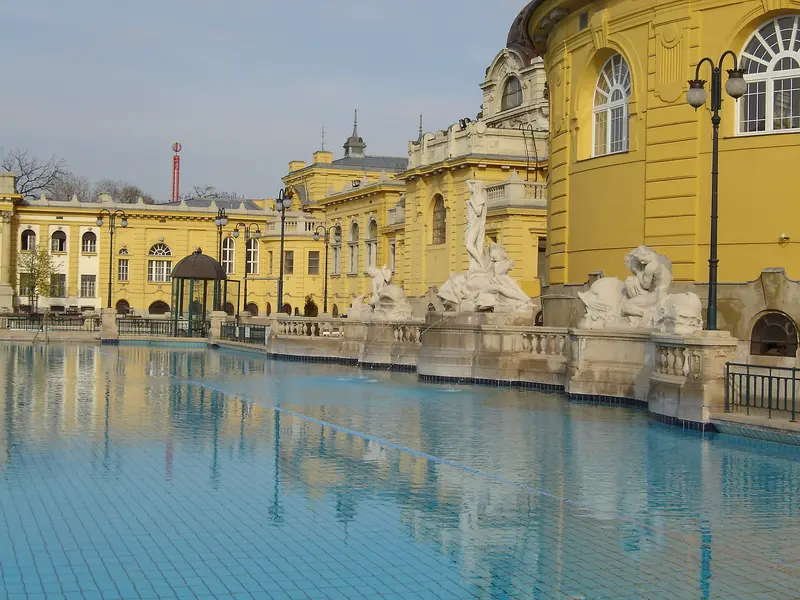
Széchenyi Thermal Bath
A yellow, palace-like Neo-Baroque bath in City Park, with 3 outdoor and 15 indoor pools — 18 in all — fed by two thermal springs at 74°C and 77°…
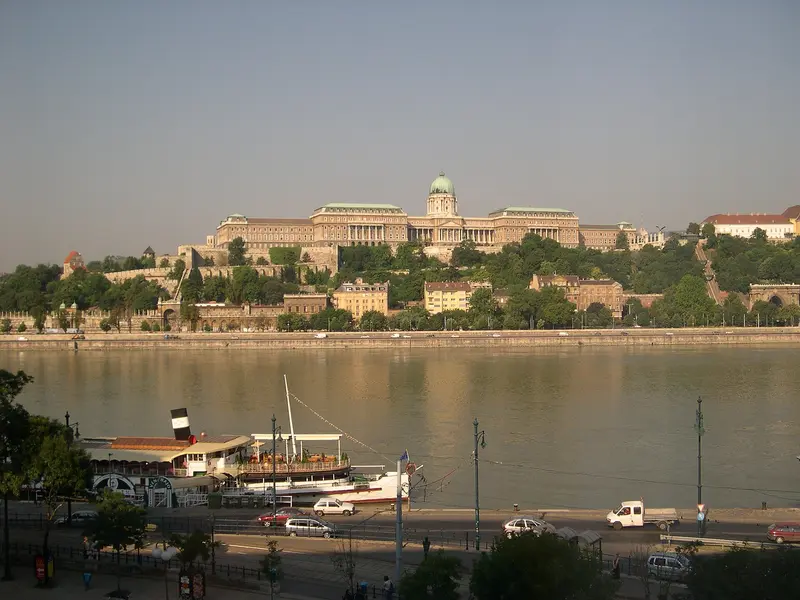
Buda Castle
The Hungarian royal palace complex at the southern end of Castle Hill, rebuilt layer upon layer from a medieval palace to a Neo-Baroque one; tod…