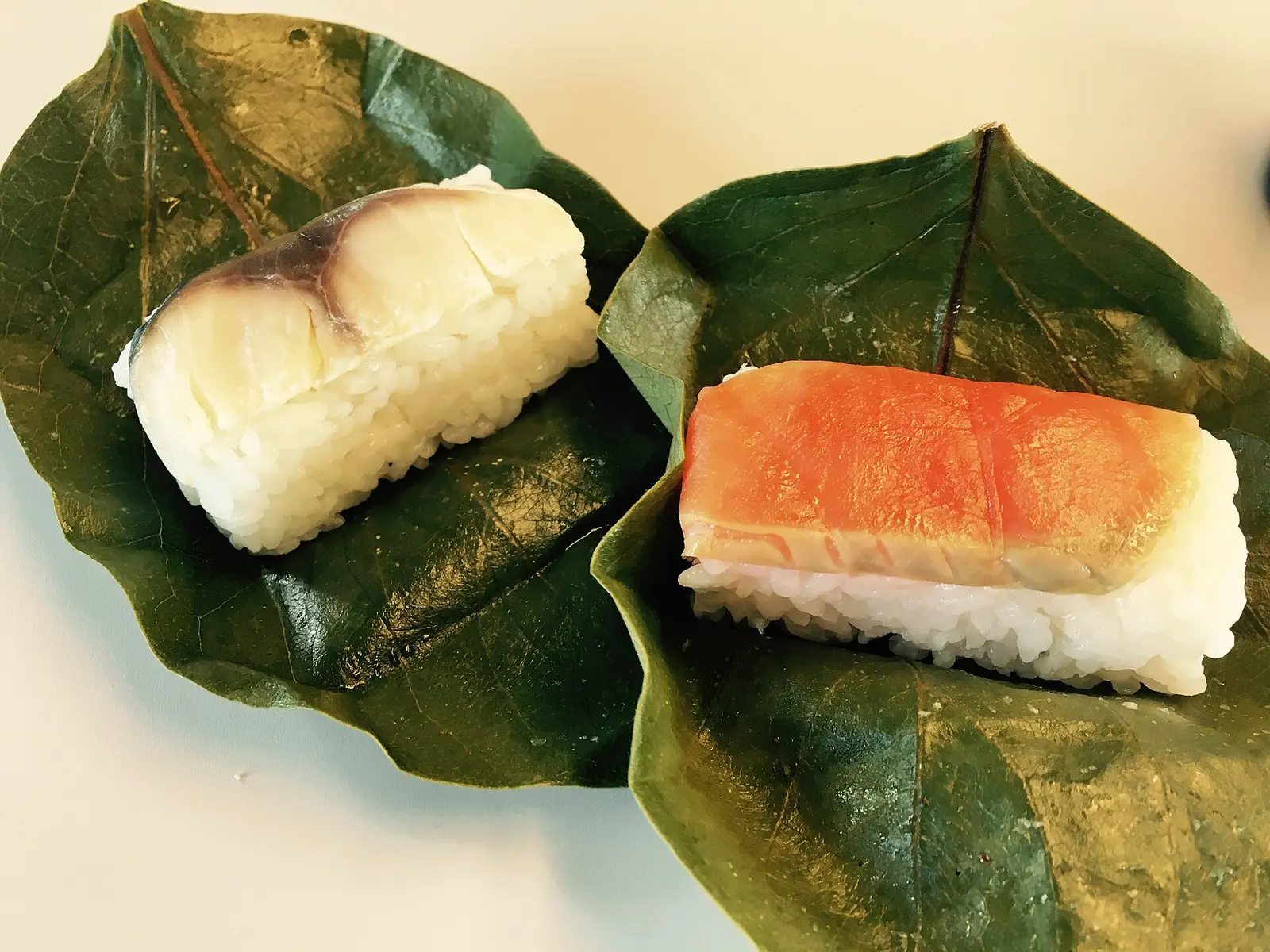
Kakinoha-zushi (persimmon-leaf sushi)
柿の葉寿司 Kakinoha-zushi · Nara, Nara Prefecture
Bite-sized pressed mackerel sushi wrapped in a persimmon leaf; the leaf is only for aroma and preservation and is not eaten.
Know before you go
- Don't swallow the persimmon leaf together with the sushi
- don't walk toward the deer in Nara Park holding food—they will snatch it and may even butt you
- don't eat while walking within temple grounds
This article is Not yet verified. Please check official announcements for prices, opening hours and dates.
Culture
Culture & customs
Background
Kakinoha-zushi is sushi made by topping bite-sized vinegared rice with slices of mackerel or salmon, wrapping it in a persimmon leaf and pressing it; it is a local dish of Nara and Wakayama prefectures. According to Japanese Wikipedia, it is generally thought to have originated in the Edo period around the upper reaches of the Kinokawa River: one theory holds that fishermen in Kishu carried mackerel stuffed with salt up the river to sell in Yamato, and since it was too salty on arrival, it was sliced thin and eaten with rice. At first it resembled narezushi, and only after brewed vinegar became widespread in the mid-Edo period did it switch to vinegared rice. Persimmon leaves are said to have an antibacterial effect, so wrapped sushi keeps for several days, and the leaves' aroma seeps into the sushi. Salmon kakinoha-zushi appeared only in the Meiji period, and today mackerel and salmon are the standard pair. Junichiro Tanizaki also praised it in his essay "In Praise of Shadows."
Local customs
- Peel off the persimmon leaf before eating—the leaf is not eaten
- most pieces are bite-sized and can simply be eaten with your hands. They are often bought as souvenirs or as a station bento
- pick up a box before or after a walk in Nara Park and sit down to eat it. When buying loose pieces, you can choose a few each of different flavors such as mackerel, salmon and sea bream.
Religion & beliefs
- Kakinoha-zushi was originally an indispensable feast for festivals and celebrations around Gojo and Yoshino, and the Ministry of Agriculture, Forestry and Fisheries also describes it as a delicacy of summer festivals
- it is not itself a religious food. The Yoshino and Omine area has long been frequented by Shugendo practitioners and pilgrims, and kakinoha-zushi was also passed down as a packed lunch for the pilgrimage road.
Etiquette & taboos
Etiquette & taboos
Rules that apply here
No photography and no eating or drinking in the permanent gallery of the Okinawa Prefectural Peace Memorial Museum
Do
- Put away your camera, food and drinks before entering the permanent gallery
- For the special exhibition gallery and the children's gallery, check the notices of the day to see whether photography is allowed
- If you need to eat or drink, go to the areas designated by the museum, such as the outdoor colonnade
Don’t
- Do not take photos or videos in the permanent gallery
- Do not eat or drink in the permanent gallery, and do not have meals in other areas of the museum either
- Do not extend the permanent gallery's photo ban into a photo ban across the entire park
The museum's 2026 visitor guide explicitly prohibits photography, eating and drinking in the permanent gallery and asks visitors to check the restrictions for other galleries separately; follow the museum's instructions on site.
Not yet verifiedSource: Okinawa Prefectural Peace Memorial Museum: FY2026 visitor guide, page 6
Japan: At fireworks festivals, don't tape off spots in advance, and never fly drones
Do
- Spread your sheet where there is actual space when you arrive, leaving room for neighbours
- Follow police and staff directions and move with the crowd
- Bring plenty of water and cooling gear to prevent heatstroke
- Riverbanks have lots of insects, so bring repellent
- Festivals usually go ahead in light rain, so bring a raincoat
- Take your rubbish home
Don’t
- Don't mark spots in advance with tape or spray paint on roads or in parks
- Don't fly drones
- Don't use selfie sticks in crowds; the Sumida River festival bans them
- Don't stop in the middle of the path to watch and block the flow
Spots marked in advance are cleared by the organisers, and flying drones is prohibited by law. City-centre festivals run one-way crowd flows, and going against the flow or stopping can cause dangerous crushes.
Verified Oct 19, 2026Source: Excite News: Sumida River Fireworks, access and viewing guide
Mixed, open-air and private baths: read the signs, don't stare, never take photos
Do
- Check the signs before entering; mixed baths are clearly marked, and joining is entirely your choice
- Most mixed baths are nude only, with no swimwear; some allow or lend special bathing wraps or towels, so follow the bath's rules
- If you prefer not to bathe mixed, use the separate men's and women's baths or a private bath
- Outdoor baths are slippery and the temperature changes sharply; hold the handrails when moving
- Use a private bath only within your booked slot and leave on time
- Tohoku and other regions still have many therapeutic hot springs with mixed bathing; for long therapeutic stays, follow the ryokan's and your doctor's advice
Don’t
- Don't stare at other bathers, strike up conversations, or linger to watch
- Don't take photos or videos in the bath area
- Don't overstay a private bath; the next group is waiting
Mixed bathing works only because bathers keep their eyes to themselves; staring or taking photos will get you asked to leave, and filming others in a bath may break local law.
Verified Oct 19, 2026Source: Wikipedia (Japanese): Konyoku
Nara: feed the deer only shika senbei, nothing else
Do
- Feed only the deer crackers (shika senbei) sold in the park
- Show your open hands when you have run out
- Keep plastic bags, paper bags, maps, and bags out of reach
- Take your rubbish with you; there are few bins in the park
- Stay beside children when they approach the deer
Don’t
- Do not feed bread, snacks, drinks, or your own food
- Do not tease deer by holding crackers out of reach
- Do not chase, corner, or ride the deer
- Do not approach or touch fawns; does guard them in spring and stags are edgy in autumn
- Do not bring dogs near the deer
Nara's deer are a national natural monument, and feeding them anything other than deer crackers is prohibited in the park. Human food and swallowed plastic make them ill, and startled or impatient deer may butt you or tug at your clothes.
Verified Oct 19, 2026Source: GLTJP: Interacting with the Nara Deer
Stay off private land, and ask before photographing children or people
Do
- Ask parents' permission before photographing their children
- Ask geiko, maiko, and other working people before photographing them
- Check for 撮影禁止 (no photography) signs, and ask staff if there are none
- Photograph trains and stations themselves without disrupting operations
Don’t
- Do not enter private homes or land for a shot
- Do not photograph the inside of homes
- Do not aim your camera at individual passengers on trains or buses
- Do not step into rice paddies, flower beds, or along railway tracks for photos
- Do not use selfie sticks or tripods in crowds or dangerous spots
- Do not chase or stop geiko or maiko
Trespassing on private land is illegal and can get you told to leave or to delete your photos. Shooting in no-photo areas will be stopped, and photographing children is seen as an invasion of privacy.
Verified Oct 19, 2026Source: Aichi Now: Sightseeing Manners
Bathe nude in the onsen and keep your towel out of the water
Do
- Bathe fully nude, without swimwear or underwear
- Rest your small towel on your head or the edge of the bath
- Tie up long hair so it stays out of the water
- Enter the bath slowly and keep quiet
- Leave your phone in the locker
- Keep your first soak short, and dry off before returning to the changing room
Don’t
- Do not dip your towel into the bath
- Do not swim, dive, or talk loudly in the bath
- Do not take photos anywhere in the bathing area
- Do not wrap your yukata right side over left; that is how the deceased are dressed
Most of these are written bathhouse rules. Breaking them gets you a reminder from staff, and in serious cases you may be asked to leave. Soaking too long can also make you dizzy.
Verified Oct 19, 2026Source: Authentic Local Japan: Onsen Etiquette
Don’t DON'T
- Don't swallow the persimmon leaf together with the sushi
- don't walk toward the deer in Nara Park holding food—they will snatch it and may even butt you
- don't eat while walking within temple grounds
- don't drop the peeled leaves anywhere in the park
- don't carry fresh varieties that must be eaten the same day in your suitcase for several days.
Locals appreciate DO
- People in Nara appreciate guests who savor kakinoha-zushi as a "taste of Nara"
- when buying souvenirs, ask about the difference between mackerel and salmon and which is more traditional, and staff are usually happy to explain. Tell the staff whether you will eat it the same day or take it home, and they will recommend suitable packaging and storage.
Plan your visit
Practical info
Travel tips
- Several kakinoha-zushi shops are around Nara Station, Kintetsu Nara Station and Higashimuki Shopping Street, and it is also sold at major Kintetsu and JR stations
- buy a box and eat it indoors or on a bench in ten minutes or so. It can be combined with Todai-ji, Kasuga Taisha and Naramachi. The Yoshino and Gojo area is the traditional production region, and you can also buy it when viewing cherry blossoms on Mount Yoshino. Dietary notes: the main ingredient is raw mackerel or salmon cured with salt and vinegar, not fully cooked, so pregnant women and people with weakened immunity should take care
- mackerel is a common allergen and may carry anisakis parasites, so people with sensitive stomachs may prefer salmon or other flavors. Prices and opening hours are as set by each shop
- popular old shops often have queues, so going off-peak is more relaxed.
How do you like this place?
More nearby
Also in Nara
Nearby sights
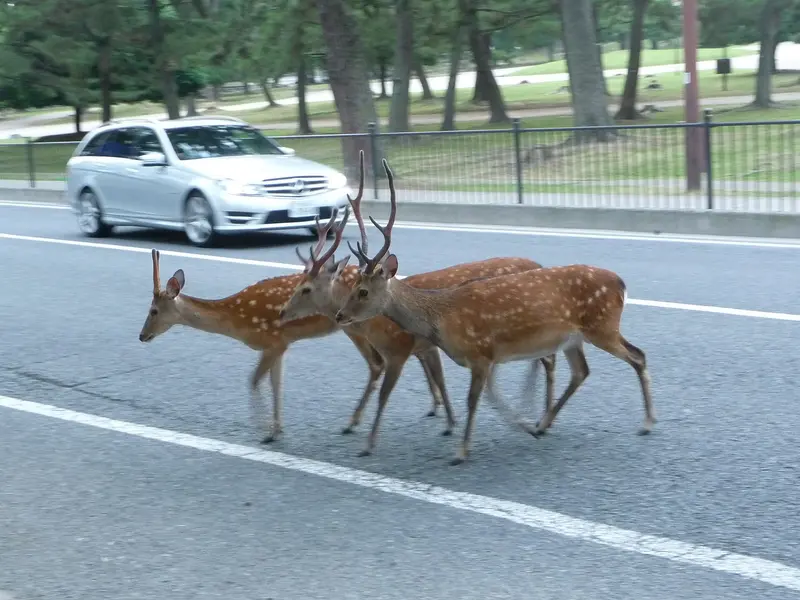
Nara Park
An ancient capital where 1,200 sacred deer roam: the thousand-year Heijō-kyō guarded by deer and the Great Buddha
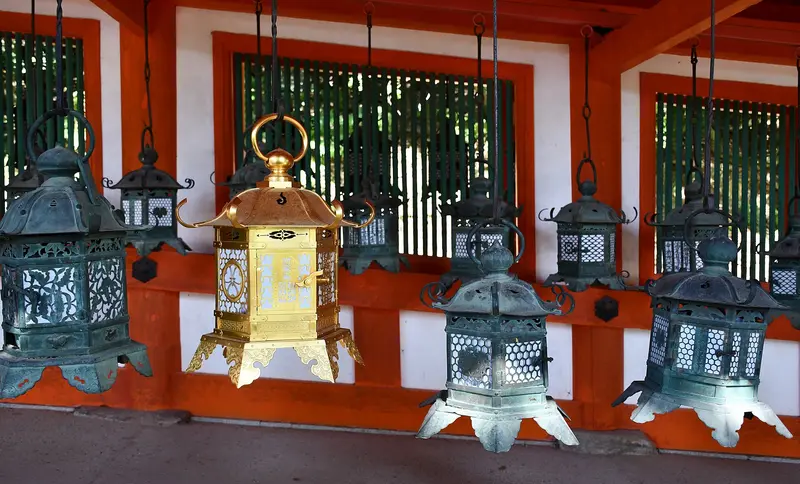
Kasuga Taisha
Vermilion Kasuga-style sanctuaries set against the Kasugayama Primeval Forest, approaches lined with stone lanterns, and more than three thousan…
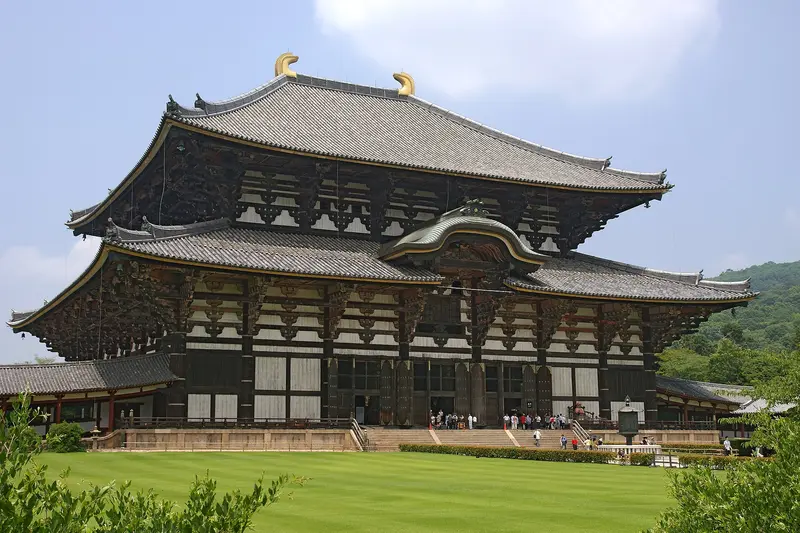
Tōdai-ji
The Great Buddha cast with the resources of a whole nation by Emperor Shōmu: the world's largest bronze Vairocana, seated in a huge wooden hall.