
Central & Eastern Europe · National park / natural heritage
Plitvice Lakes National Park
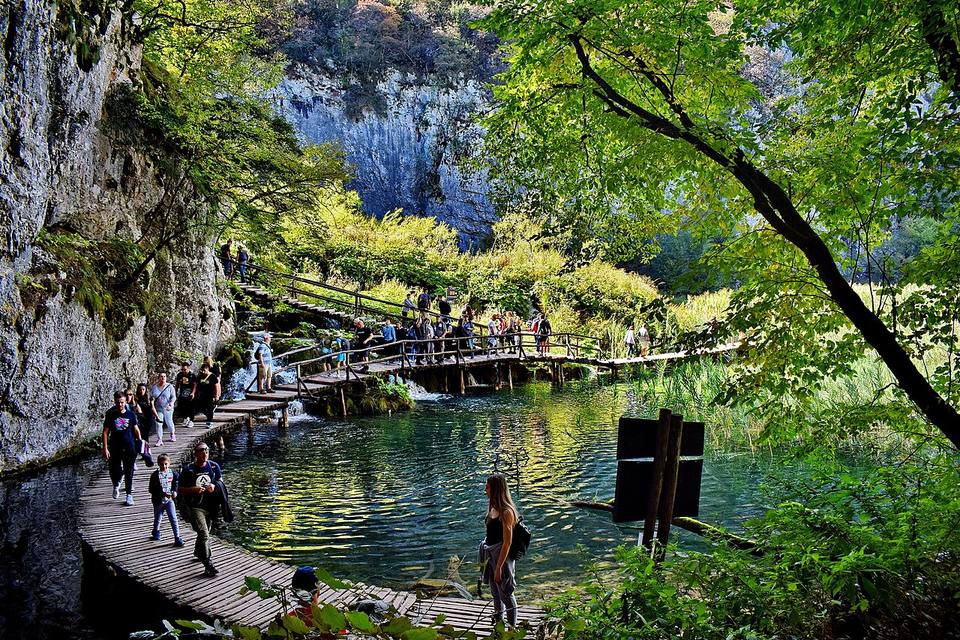
Sixteen stepped lakes strung together by travertine dams, with more than ninety waterfalls building new stone barriers day and night — listed as World Natural Heritage in 1979, this is Croatia's national-treasure waterscape.
Location
Lika-Senj County / Karlovac County, Croatia
Stories and legends
The legend of the Black Queen (Crna Kraljica), who prayed for rain and thereby made the lakes, is the park's classic tale.
History and context
The park covers about 295 square kilometres; it was made a national park in 1949 and listed as World Heritage in 1979 (among Croatia's first). The lake system divides into the Upper Lakes (12) and the Lower Lakes (4), dammed by travertine deposited from the headwaters of the Korana river; the tallest waterfall, Veliki slap, drops 78 metres, and the largest lake, Kozjak, is crossed by electric boat. Entry now runs on timed reservations along one-way routes (routes A–K and others — follow the park authorities).
Local life
Plitvice's character is "wildness under a strong sense of order": boardwalks, boats and sightseeing buses weave a tight circulation, so that even in peak season the crowds are many but never chaotic. The surrounding region of Lika — high plain, sheep-herding and the inland temperament of ćevapi grilled meat — is quite distinct from coastal Croatia, and the frozen waterfalls of winter and the green waterfalls of summer make it two parks in one.
Customs
There are no festival customs; swimming is banned throughout the park (unlike Croatia's other lakes and rivers — here it is an iron rule).
Beliefs
No particular religious association; its main cultural identity is karst hydrology and travertine geology.
Local etiquette
Never swim or step onto the travertine dams (travertine is extremely fragile and grows by millimetres a year); do not stop on the boardwalks and block the way for selfies; drones are banned; feeding the fish and ducks is forbidden.
Visiting notes
Best in spring and autumn and on summer mornings; book your entry time slot in advance on the official website (sell-outs are common in high season); the full highlights route (Route H, about 4–6 hours) combines boat and bus; stay in the villages outside the gates (Mukinje and the like) to enjoy first entry; by car it is about 2 hours from Zagreb and 1.5 hours from Zadar.
What to eat nearby
Lika roast lamb (Janjetina, a roadside roast-lamb tradition); ćevapi (Ćevapi); trout (farmed in the rivers outside the park); Lika potatoes and cheese (škripavac cheese); rakija, a fruit brandy (an after-dinner drink — keep it shallow)
Village restaurants outside the park gates, and the town of Korenica
Ask the price of roast lamb by the kilogram or portion first; rakija is a spirit of around 40% — taste a little and do not get into drinking contests
A sit-down meal €18–35 (approx. RMB 140–273, for reference only)
Food outlets inside the park are few and expensive — bring your own provisions (and carry the litter out); after rain the boardwalks are extremely slippery, so shoes must have grip.
Source leads: Plitvice Lakes National Park (official); UNESCO, Plitvice Lakes (1979).
Image source · Miroslav.vajdic · CC BY-SA 4.0