
Wakayama · Historic town / Castle
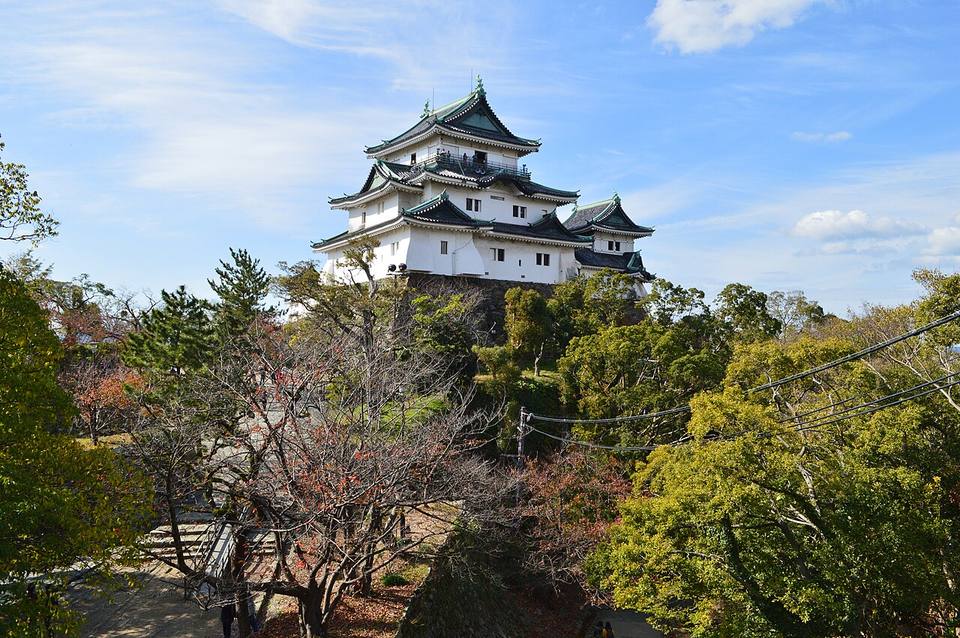
Wakayama Castle
The seat of the Kishu Tokugawa, one of the Tokugawa's three collateral houses (Gosanke); the white-walled keep stands on Mount Torafusu, and the 8th shogun, Yoshimune, walked from here into Edo.
Location
Wakayama City, Wakayama Prefecture
Stories and legends
Anecdotes about the castle's builder Toyotomi Hidenaga and the master builder Tōdō Takatora are largely embellished; the details belong to the layer of legend.
History and context
In 1585, after Toyotomi Hideyoshi pacified Kii, he ordered his younger brother Hidenaga to build the castle, with Tōdō Takatora taking part in the layout (nawabari); in 1619 Tokugawa Yorinobu entered Kishu with a domain of 550,000 koku, making it the Gosanke house of Kishu Tokugawa. The present keep is a 1958 reinforced-concrete reconstruction (the original keep burned in a wartime air raid), its linked-keep complex reproducing the old appearance; the Momijidani Garden in the grounds is a surviving daimyo garden.
Local life
Wakayama Castle is a "cradle of shoguns": Yoshimune and the 14th shogun Iemochi both came from the Kishu domain, and the narratives of castle and castle town always circle back to Edo politics. Compared with Himeji's edge, this place feels like an approachable regional castle: citizens jog in the Ninomaru in the morning, view blossoms in the Nishinomaru in cherry season, and the small zoo inside the grounds is the childhood memory of generations of Wakayama people.
Customs
Cherry season (about 650 cherry trees) and the autumn lighting of the Momijidani Garden are civic festivals; ninja-costumed guided tours are a recent tourism service (per the official schedule).
Beliefs
No specific religious association; its main cultural identity is an early-modern daimyo seat and Tokugawa political history.
Local etiquette
Follow the signs for no-photo areas inside the keep; do not climb the stone walls; do not feed the zoo animals your own food.
Visiting notes
Best in cherry season (late March–early April) and November for maples; entering at opening in the early morning is emptiest; from Wakayama Station / Wakayama City Station, take a bus to "Wakayama Castle-mae"; combine with Kimiidera on a half-day line.
What to eat nearby
Wakayama ramen (the Ide school: soy-sauce pork-bone broth, with haya-zushi); Kishu plums and plum udon; port flavors such as ash-dried mackerel (haiboshi); Wakayama mikan citrus sweets; chagayu (茶がゆ, tea porridge, Kishu's hometown porridge culture)
Around Wakayama City Station / Nankai, the Burakuri-cho shopping street in the castle town, in front of Wakayama Station
At ramen shops, the haya-zushi sits on the table for self-service — take what you eat and pay by the count when settling; do not take the sushi away; chagayu with umeboshi is a light way of eating, so those who prefer strong flavors should try a small bowl first
Ramen + haya-zushi 1,100–1,500 yen (about 52–70 yuan, for reference only)
Combined tickets for the keep and garden exist (per the official site); the grounds have many slopes, so with a stroller use the main Ōtemon route.
Source leads: Wakayama City official tourism, Wakayama Castle official site (Wakayama City).
Image source · Saigen Jiro · CC0