City guide · Bergen
Bergen
Starting from the Bryggen wooden houses and the Fish Market, get to know a merchant port on Norway's west coast
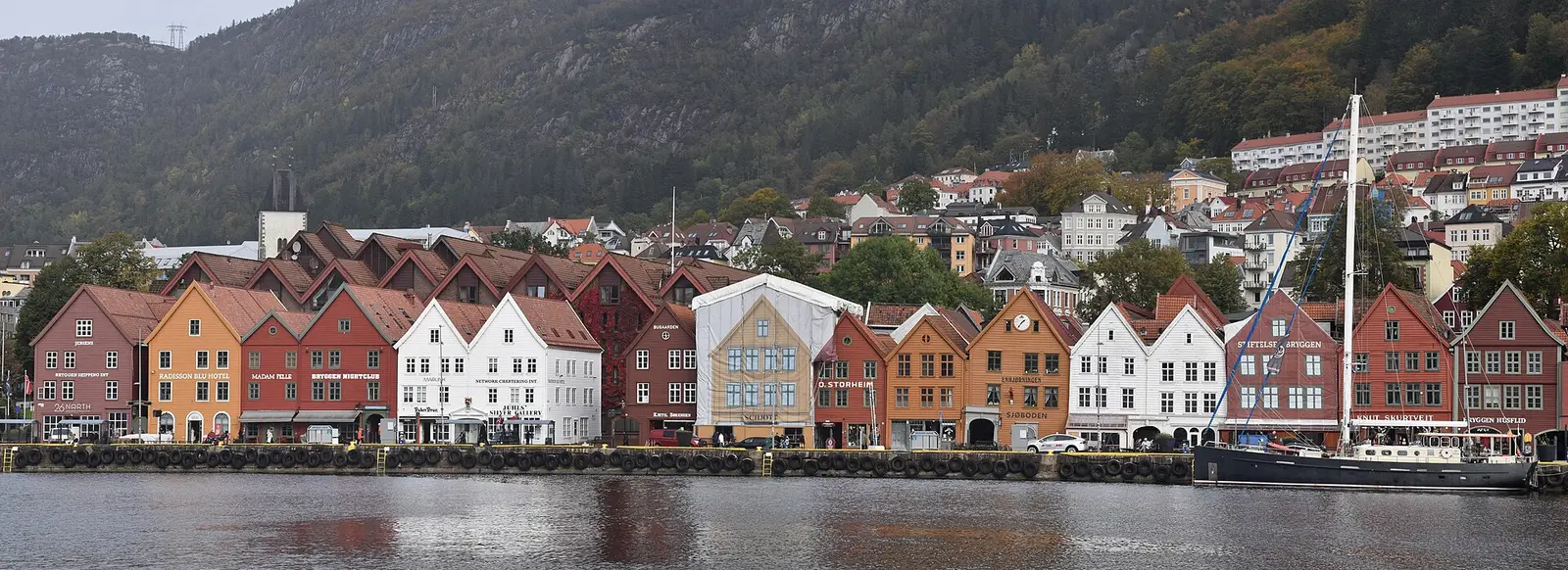
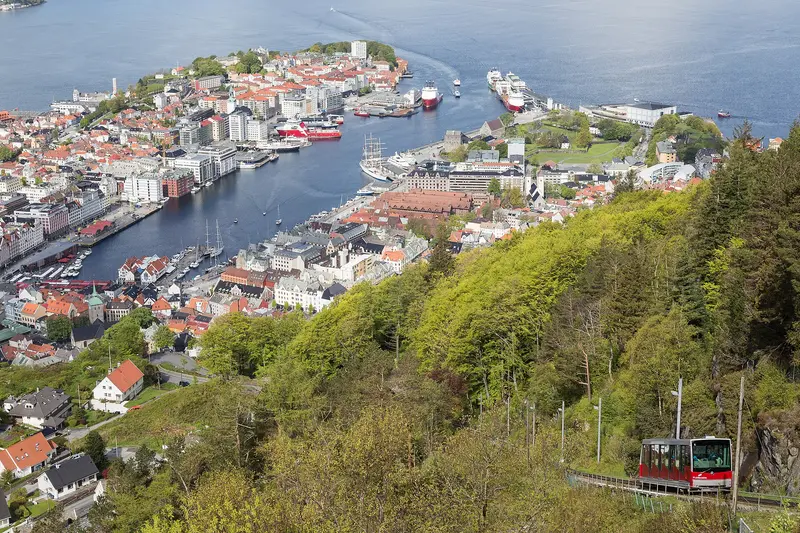
Bergen's old harbour links the wooden houses of Bryggen, the Fish Market and the lower station for Mount Fløyen. Walk the narrow wooden alleys of Bryggen first, then look at the harbourside trade and the mountain terrain, and you will understand the city's maritime trading tradition; fjord boat routes depart from here, but the various fjord destinations are not within the city of Bergen. Also worth visiting in the city: Mount Fløyen and its funicular, and the harbourside Fish Market. The indoor hall and outdoor stalls of the Fish Market operate in different seasons, so check opening information for the day before you go.
History
How the city came to be
Bergen's founding is usually dated to 1070, and its harbour facing the west coast gradually made it an important maritime trading city in Norway. The tourist office describes it as an early capital of Norway; by the 13th century the Fish Market had become a place where fishermen, farmers and townspeople exchanged goods. Around 1350 Hanseatic merchants established an overseas trading post at Bryggen, through which northern stockfish and other goods entered a wider European network. The timber trading post suffered fires many times, and today's Bryggen mainly follows the layout rebuilt after the great fire of 1702; protection was strengthened after a fire in 1955. In 1979 the historic wharf of Bryggen was inscribed as a World Heritage Site, but the protected area covers only a specific group of harbourside buildings, not the whole of Bergen. The Fløibanen funicular, opened in 1918, links the hillside with the old harbour, and the Fish Market's indoor hall came into use in 2012. Today the harbour is still the city's starting point for contact with the outside world, and on your visit you can understand the World Heritage site, the everyday Fish Market and the mountain transport together on one walking route.
- c. 1070The traditional founding date of Bergen.
- 13th centuryThe harbourside Fish Market became a local place of trade.
- c. 1350Hanseatic merchants established an overseas trading post at Bryggen.
- 1702After a great fire, Bryggen was rebuilt on its existing layout, shaping its main appearance today.
- 1918The Fløibanen funicular began operating.
- 1955Bryggen was again damaged by fire.
- 1979Bryggen was inscribed as a World Heritage Site.
- 2012The Fish Market's indoor hall came into use.
Regional deep dives
Read deeper into each place
The Nordics · Historic wharf / World Heritage
Bryggen, Bergen
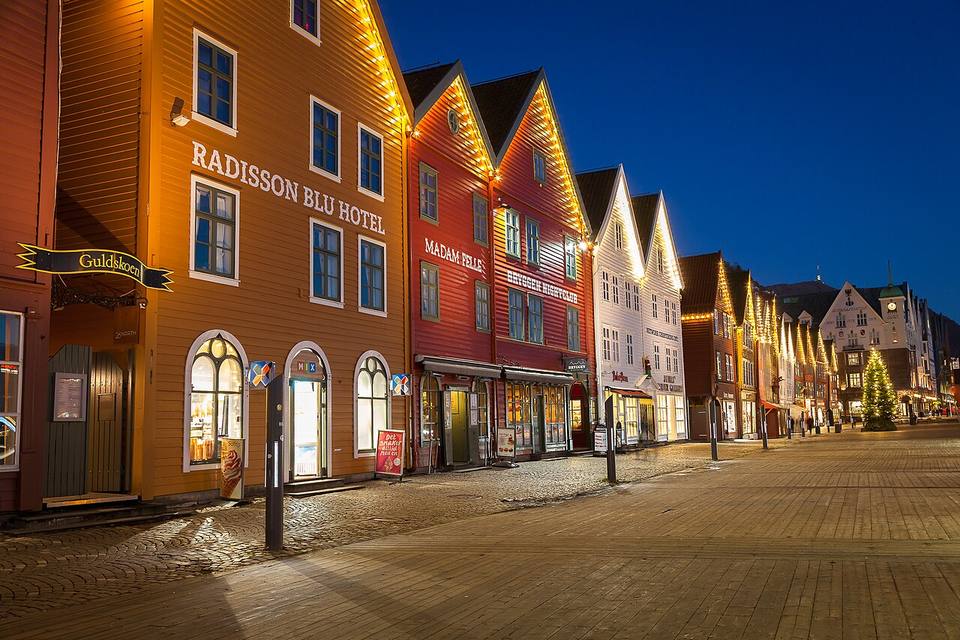
The Hanseatic League's row of painted timber houses lines the harbour, and the stockfish trade was carried on here for four hundred years — a living fossil of North Sea trade, listed as World Heritage in 1979.
Explore the local guide ↗Source leads: Bergen city tourism / the Bryggen Foundation; UNESCO, Bryggen (1979).
Image source · Smtunli · CC BY-SA 4.0
Source leads are being checked individually; confirm travel details with local official notices.
How do you like this place?