
City guide · Oslo
Oslo
Along the fjord shore, linking the medieval town site, Akershus Fortress and modern art architecture
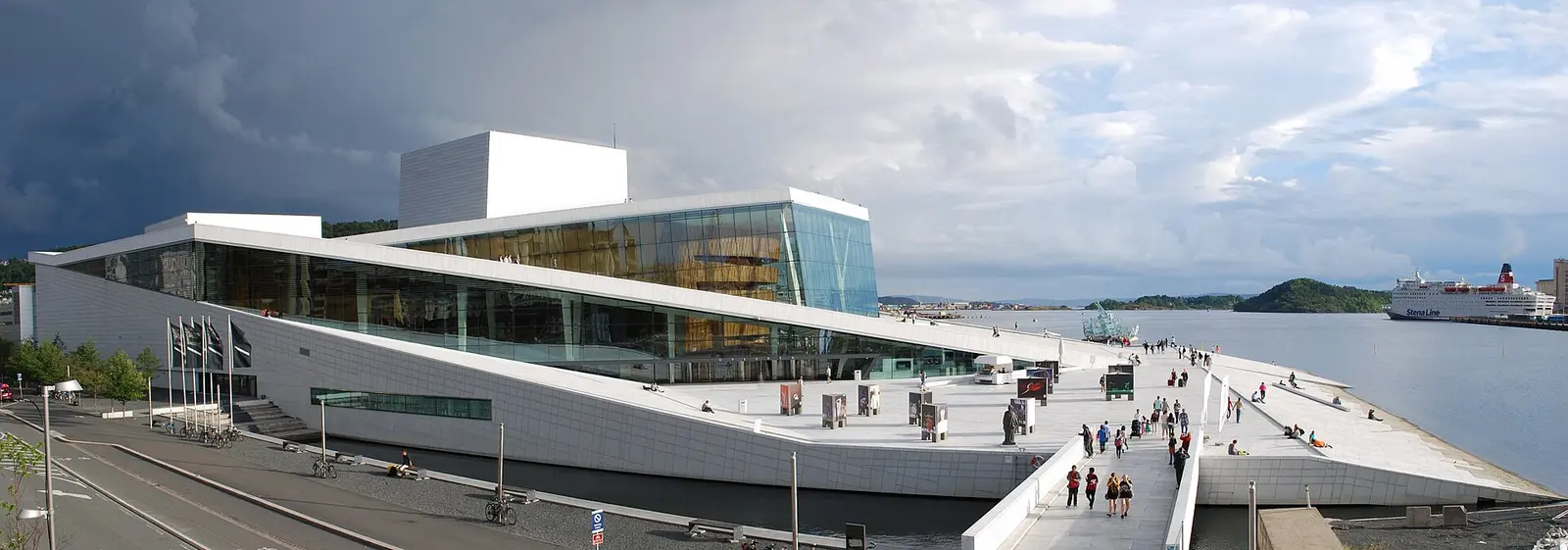
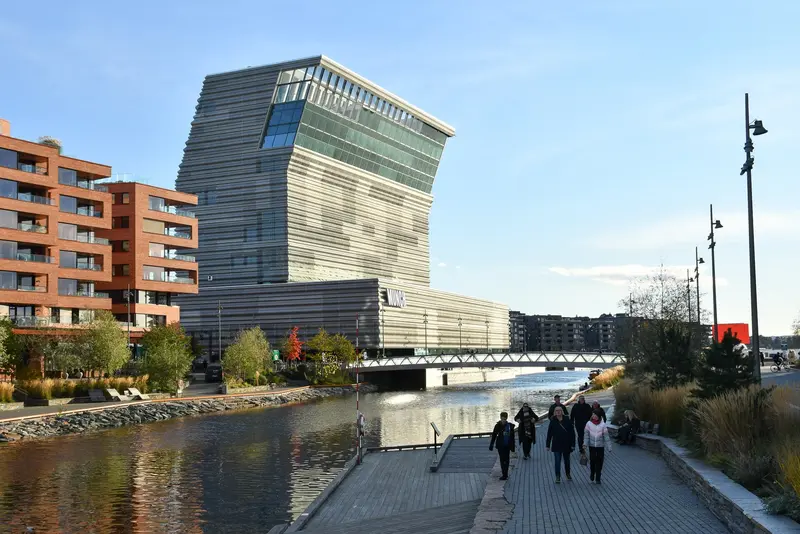
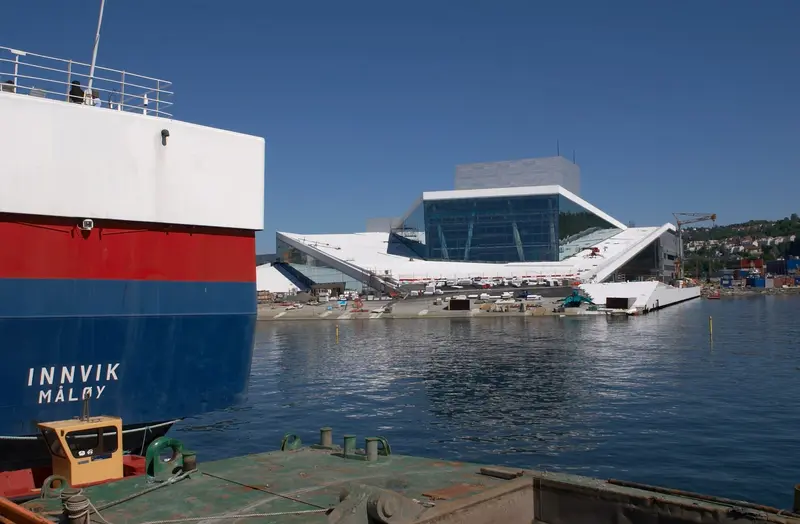
In Oslo you can start from the Bjørvika waterfront, see the Opera House and the MUNCH museum, then walk along the shore to Akershus Fortress. The Vigeland Sculpture Park offers a separate art route, best scheduled at a different time from the city centre. Also worth visiting in the city: the MUNCH museum, Akershus Fortress and the area around City Hall. The former Viking Ship Museum is currently closed for rebuilding, and the Museum of the Viking Age is planned to open at the end of 2027; it must never be listed as a sight you can buy tickets for and visit today.
History
How the city came to be
Oslo's urban settlement dates back to the Middle Ages about a thousand years ago, and the early town site lay in the Old Town (Gamlebyen) area southeast of today's Bjørvika. From the end of the 13th century Akershus Fortress served as a royal residence and defensive stronghold. After a great fire in 1624, Christian IV ordered the city moved to the other side of the bay near the fortress; the new town was called Christiania, so the old and new towns became two distinct historic spaces. The capital's development in the 19th century drove the expansion of municipal institutions, neighbourhoods and transport infrastructure. In 1925 the city took back the name Oslo, and in 1948 it merged with neighbouring Aker, further enlarging today's administrative area. The waterfront redevelopment of the 21st century made the Opera House, opened in 2008, and the new museums into contemporary landmarks. Walking today from the medieval remains to the fortress and on to the waterfront cultural buildings, you can link the city's relocation, nation-building and public art, but the present-day bay scenery cannot stand in for the history of the earlier old town.
- c. 1000 ADA town settlement appeared in the Oslo area.
- From 1299The history of Akershus Fortress began.
- 1624After a great fire the city moved near Akershus, and the new town was called Christiania.
- 1925The city took back the name Oslo.
- 1948Oslo merged with neighbouring Aker.
- 2008The Opera House in Bjørvika opened.
- 2021The new MUNCH museum building opened on the waterfront.
Stories
Stories of the city
A fountain meant for Parliament
History · Oslo Opera House and Vigeland Sculpture Park
Vigeland's fountain was first planned for Eidsvolls plass, in front of the Parliament building, but was later moved to Frogner Park. The site was ready for the fountain in 1924, and the final plan was released in 1932. The sculptures grew around the fountain into what is described today as the world's largest sculpture park by a single artist.
A Monolith fourteen years in the carving
History · Oslo Opera House and Vigeland Sculpture Park
The Monolith is carved from a single block of granite, 14.12 metres high, with 121 human figures. Vigeland began modelling it in 1924, and the stone arrived from a quarry in Halden in 1927; three masons spent 14 years transferring the design to the stone. The Monolith was first shown to the public at Christmas 1944.
Must see
Places you shouldn’t miss
How do you like this place?

Sources
- Oslo City Archives: City history
- City of Oslo: Extent of the Old Town and the 1624 relocation
- Visit Oslo: Akershus Fortress
- Norwegian National Opera and Ballet: The Opera House
- MUNCH: 2023 annual report on the 2021 opening of the new museum
- Museum of Cultural History, University of Oslo: Museum of the Viking Age project
- Wikidata: Oslo city coordinates Q585