

City guide · København
Copenhagen
A harbour capital of design: the coloured houses of Nyhavn, Tivoli and a city of cyclists
Copenhagen is the capital of Denmark, a city built by the sea. You can walk from the colorful houses of Nyhavn to the Little Mermaid statue, then cycle through the lake district to Nørrebro for coffee, and see a mix of monarchy, design, and everyday life: between Christiansborg Palace, Rosenborg Castle, and Tivoli Gardens lies one of the streets with the most bicycles in the world. The city is compact; three to four days are enough for the main sights, with a day left over for Roskilde or Malmö. Also worth visiting in the city: the Little Mermaid statue, Christiansborg Palace, Rosenborg Castle, Amalienborg Palace, Kastellet fortress, the Round Tower, Strøget pedestrian street, the National Museum of Denmark, Ny Carlsberg Glyptotek, the National Gallery of Denmark, Freetown Christiania, the Design Museum and Thorvaldsens Museum.
History
How the city came to be
Copenhagen grew from a fishing and trading port on the western shore of the Øresund, known in old Danish as the "merchants' harbor." Traditionally, the founding of the city is marked by Bishop Absalon's fortress on the small island of Slotsholmen in 1167, built to defend against Wendish pirates; remains of the fortress can still be seen beneath Christiansborg Palace. Copenhagen gained city status in 1254 and became the Danish capital and royal residence in the mid-15th century. During the reign of Christian IV (1588–1648), many landmarks were built, including Rosenborg Castle and the Kastellet fortress. After the great fires of 1728 and 1795, the city was rebuilt to a new plan. Tivoli Gardens opened in 1843 and is one of the oldest amusement parks still operating in the world. Since the 20th century, Copenhagen has been known for its cycling culture, harbor baths, and modern design, and in 2023 it was named World Capital of Architecture by UNESCO.
- 11th centuryA fishing and trading port settlement appears on the western shore of the Øresund, centered on today's old waterfront area.
- 1167Bishop Absalon builds a fortress on Slotsholmen island, traditionally regarded as the founding year of Copenhagen.
- 1254Copenhagen gains city status and related privileges.
- Mid-15th centuryCopenhagen becomes the Danish capital and royal residence.
- 1588–1648During the reign of Christian IV, landmarks such as Rosenborg Castle and the Kastellet fortress are built.
- 1728, 1795After two great fires, the city is rebuilt.
- 1843Tivoli Gardens opens.
- 2000The Øresund Bridge opens, linking Copenhagen and Malmö in Sweden by bridge and tunnel.
- 2023Copenhagen is named World Capital of Architecture.
Stories
Stories of the city
One line that won over the king
History · Tivoli Gardens
When the former army officer Georg Carstensen asked King Christian VIII for a charter, he argued: "When the people are amusing themselves, they do not think about politics." The king granted him a five-year charter and a plot of land, and Tivoli opened on 15 August 1843.
Tivoli in wartime
History · Tivoli Gardens
In June 1944, Nazi sympathisers blew up the concert hall and other buildings in the park, and the wooden roller coaster was damaged too. The park reopened within a few weeks, and the coaster was repaired and running again the same year.
Andersen and "The Nightingale"
Legend · Tivoli Gardens
Hans Christian Andersen is said to have visited Tivoli when it opened, and the visit is said to have inspired his fairy tale "The Nightingale".

Trips beyond the city
These places can be explored from this city but lie outside it. See each place for transport and visiting guidance.

Regional deep dives
Read deeper into each place
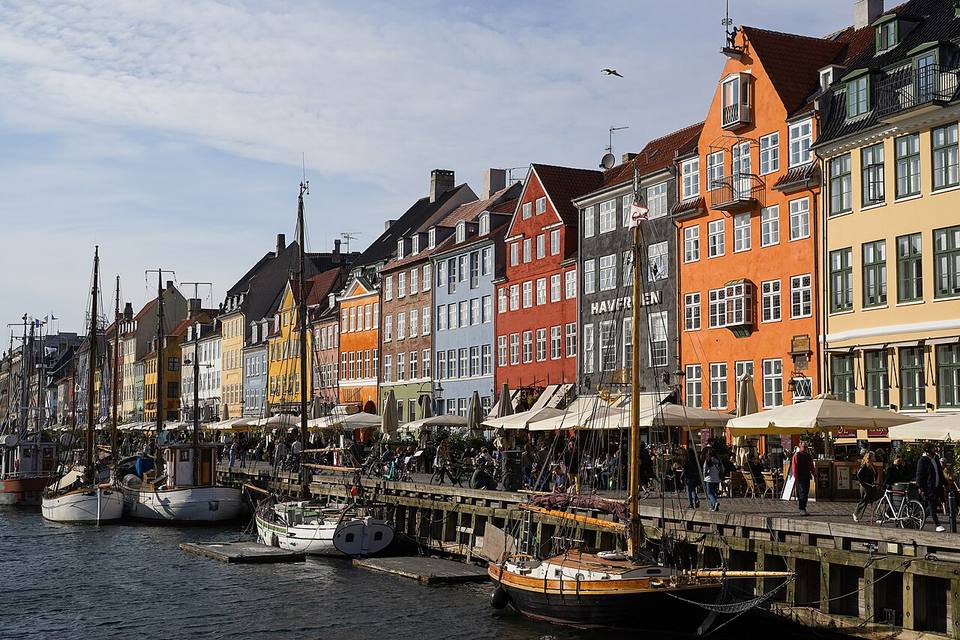
The Nordics · Harbour district / city character
Nyhavn, Copenhagen
Rows of coloured gables along a hand-dug 17th-century canal; Hans Christian Andersen lived at Nos. 18, 20 and 67 — every beer at Nyhavn is drunk beneath the windows of the fairy-tale writer.
Explore the local guide ↗Source leads: Copenhagen city tourism (Visit Copenhagen, official); historical materials on Nyhavn.
Image source · OleNeitzel · CC BY 4.0
Source leads are being checked individually; confirm travel details with local official notices.