
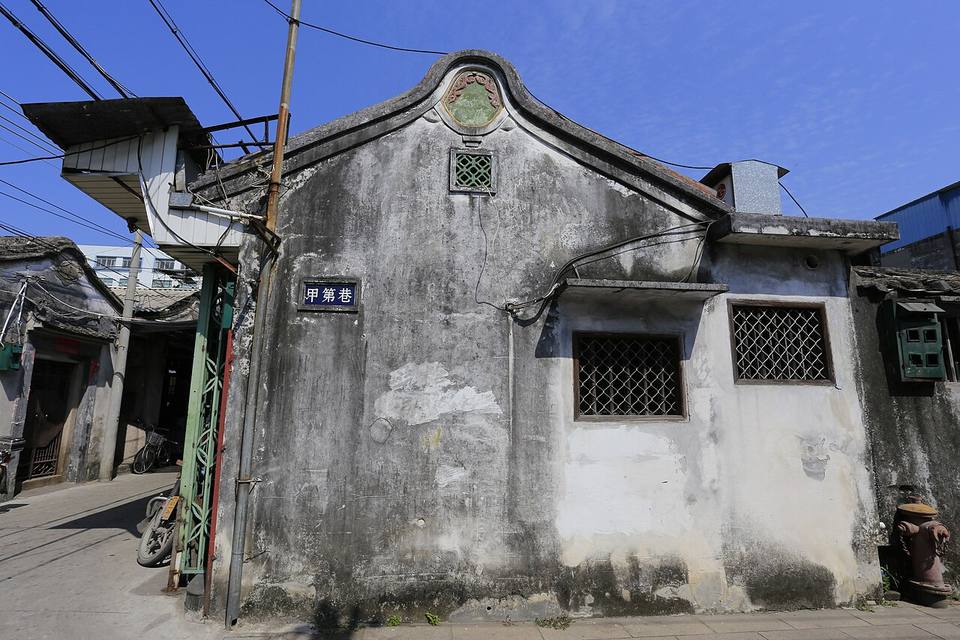
Xiangqiao District, Chaozhou, Guangdong Province · Old Capital / Chao (Teochew) Culture
Chaozhou Old Town
Guangji Bridge carries traffic by day and draws its boats in to open at night, while 22 memorial archways along Paifang Street form a Ming-Qing register of honours — the people of Chaozhou have turned a whole city into a gongfu tea session: slow work, fine craft.
Location
Xiangqiao District, Chaozhou, Guangdong Province
Stories and legends
The tales of Guangji Bridge's "eighteen shuttle boats and twenty-four islets" and of Han Yu governing Chaozhou (the crocodile proclamation) are widely told; Han Yu's crocodile sacrifice is a historically recorded event, its details polished by literature.
History and context
Guangji Bridge was first built in 1171 (the seventh year of Qiandao in the Southern Song) as a combined beam-and-pontoon "opening" bridge whose middle pontoon section can open for shipping; Liang Qichao praised it as the first bridge of eastern Guangdong (his inscription is widely transmitted). In 1958 it was converted to full-length passage, and in the 2000s its opening function was restored to the Ming layout; it now opens and closes on a daily schedule (per the management's announcements). The old archways of Paifang Street were mostly Ming-Qing memorials of honour and have been restored and re-erected in recent years. Kaiyuan Temple (Tang), the Han Yu Memorial Hall and the Guangjimen gate tower form the old town's skeleton; Chaozhou was designated a National Famous Historical and Cultural City in 1986, and its cultural profile has risen steadily in recent years.
Local life
Chaozhou's temperament is "fastidious to the bone": the twenty-one forms of gongfu tea, Chaozhou embroidery and drawn-thread work, woodcarvings of prawns and crabs, the headdresses of Chaozhou opera — the density of intangible heritage in one city is astonishing (Chaozhou holds many national-level intangible heritage items). Locals serve tea before talking business with any guest, and the beef-hotpot cut chart is precise down to diaolong and shibing; this refinement is not a performance but a life operating system.
Customs
Gongfu tea is the first courtesy of social life (thin tea, thick feeling); the lunar-festival Ying Laoye (parading the gods) is a great Chaoshan festival (details per each community temple's arrangements — outside visitors should watch without blocking the gods' path).
Beliefs
Folk beliefs in Mazu, the Laoye (local gods) and the like are strong; the Buddhism of Kaiyuan Temple coexists with the Sanshan Guowang faith (the ancestral gods of the Chaoshan homeland).
Local etiquette
During Ying Laoye / sacrificial events, do not cross the procession of god-palanquins or the offering tables; at a gongfu tea session, do not grip the rim of the cup directly with your hand (hold the cup wall / saucer); most old-town houses have residents — do not enter uninvited.
Visiting notes
Best in spring, autumn and winter (beef season); experience Guangji Bridge twice — crossing it by day and watching its lights after dark; stay around Paifang Street and everything is walkable; Chaoshan Station has dedicated buses into town, about 1 hour.
What to eat nearby
Chaozhou beef hotpot (cuts sliced fresh from the slaughter); gongfu tea (Phoenix Dancong); Chaozhou braised goose; oyster omelette (haolao); kueh (shukekuo / savoury water kueh); spring rolls and preserved-fruit in liquorice juice
Paifang Street, Ximalu snack street, and around Kaiyuan Temple
Blanching times in beef hotpot vary by cut (about 8–10 seconds for diaolong, as it is said) — follow the staff's guidance; at the gongfu tea's first pour (the "Lord Guan patrols the city / Han Xin counts the troops" techniques), simply watch the ceremony, and receive tea offered by the host with both hands
Beef hotpot 120–200 yuan (for reference only); snacks 30–60 yuan per person (for reference only)
Dancong tea prices vary enormously; visitors should buy small tasting packs from proper tea shops; Guangji Bridge's crossing fee and opening hours follow the bridge management's announcements.
Source leads: Chaozhou Municipal Bureau of Culture and Tourism; Guangji Bridge cultural-heritage protection materials; Chaozhou Kaiyuan Temple official introduction.
Image source · Zhangzhugang · CC BY-SA 4.0