
Kaiping City, Jiangmen, Guangdong Province · Overseas-Chinese Architecture / World Heritage
Kaiping Diaolou
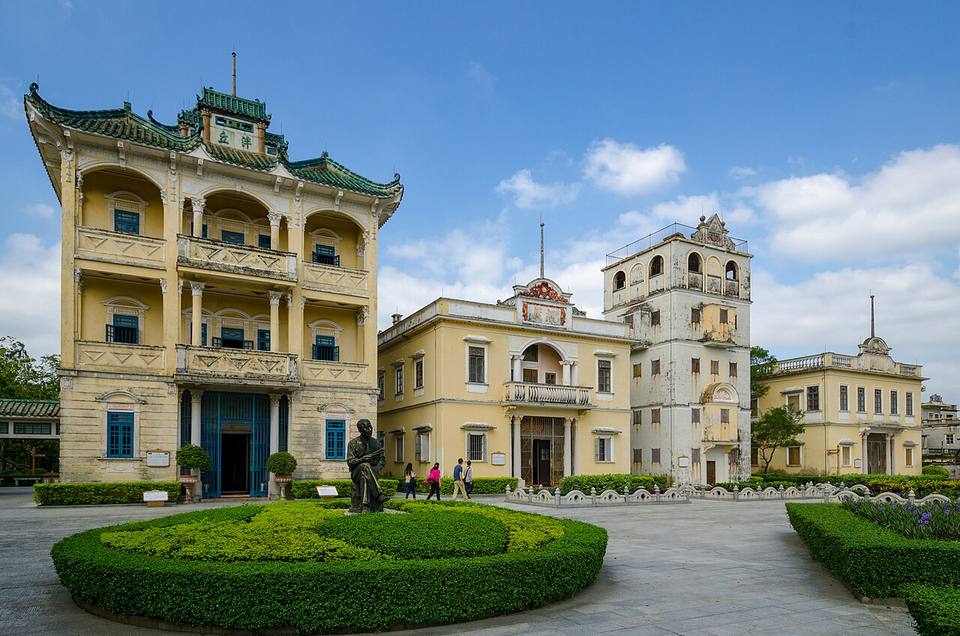
1,833 diaolou towers scattered across the rice fields, Chinese roofs mounted on Western columns — overseas Chinese built their hometowns a cluster of bandit-proof "safes of nostalgia" out of remittances.
Location
Kaiping City, Jiangmen, Guangdong Province
Stories and legends
There is no myth or legend; the diaolou's flood-and-bandit-defence function is historical fact, while individual famous tower owners' rags-to-riches stories have been embellished in oral transmission.
History and context
Kaiping lies in a land of frequent floods and banditry; prototype diaolou existed in the Ming, and in the late Qing and early Republic overseas Chinese remitted money home to build on a large scale. The registered surviving diaolou number 1,833 (per the World Heritage nomination statistics). The buildings fuse Roman columns, Gothic pointed arches and Islamic domes with Chinese hard-gable roofs, using mostly imported cement and steel. In 2007 "Kaiping Diaolou and Villages" was inscribed as World Cultural Heritage (villages including Zili Village, Chikan, Majianglong and Jinjiangli). The representative Ruishi Lou (built in 1923, nine storeys) is called "Kaiping's No. 1 Tower."
Local life
The diaolou villages' temperament is "hollowness and watching": the grander the tower, the longer its owner spends overseas, and the women and children left behind relied on the towers to pass the nights safe from bandits — splendour and separation in one body. The qilou (arcade) street of Chikan old town (now revitalised and operating, per scenic-area announcements) and the Vanguard Bookstore in Tangkou (converted from a granary) add a new literary layer to the old villages. Kaiping people's overseas-hometown identity is strong; genealogies, overseas-Chinese publications (the Xinning magazine system) and the diaolou annotate one another.
Customs
The villages still hold traditional weddings, funerals and ancestor worship; the diaolou mostly belong to clans / private owners, and visits are limited to the opened towers.
Beliefs
Ancestor worship (ancestral-hall culture) is the villages' core belief layer; Catholic / Christian churches are also found in the overseas-Chinese homeland.
Local etiquette
Unopened diaolou are private property — never enter or climb them without permission; do not make loud noise in the villages and disturb the elderly left behind; keep drone flights away from ancestral-hall worship hours and follow scenic-area rules.
Visiting notes
Best in spring and autumn (rice seasons are prettiest); the villages are scattered, so charter a car / self-drive, and take the two cores — Zili Village + Chikan — in half a day to a day; combined tickets follow official pricing; Taishan and Enping hot springs make a natural two-day extension.
What to eat nearby
Kaiping Magang goose (Magang goose is a geographical-indication product); Chikan tofu corners; yellow-eel claypot rice (a famous dish of the Taishan / Kaiping area); farmhouse dishes of the Kaiping salted-water-song banquet tradition; laifen noodles
The Chikan old-town dining area, farmhouses around Zili Village, and along Dongxing Avenue in Kaiping city
Magang goose is ordered by the bird (whole / half) — small groups should choose smaller preparations such as goose casserole; the crispy rice crust is the essence of claypot rice — scrape and eat it while hot
A full meal 70–140 yuan (for reference only)
Chikan old town's operating hours and ticket policy change frequently — check its official announcements before setting out; the stairs inside the diaolou are steep and narrow, so the elderly and children should climb only as able.
Source leads: UNESCO World Heritage "Kaiping Diaolou and Villages" (2007); Kaiping Municipal Bureau of Culture and Tourism / diaolou scenic area official site.
Image source · xiquinhosilva · CC BY 2.0