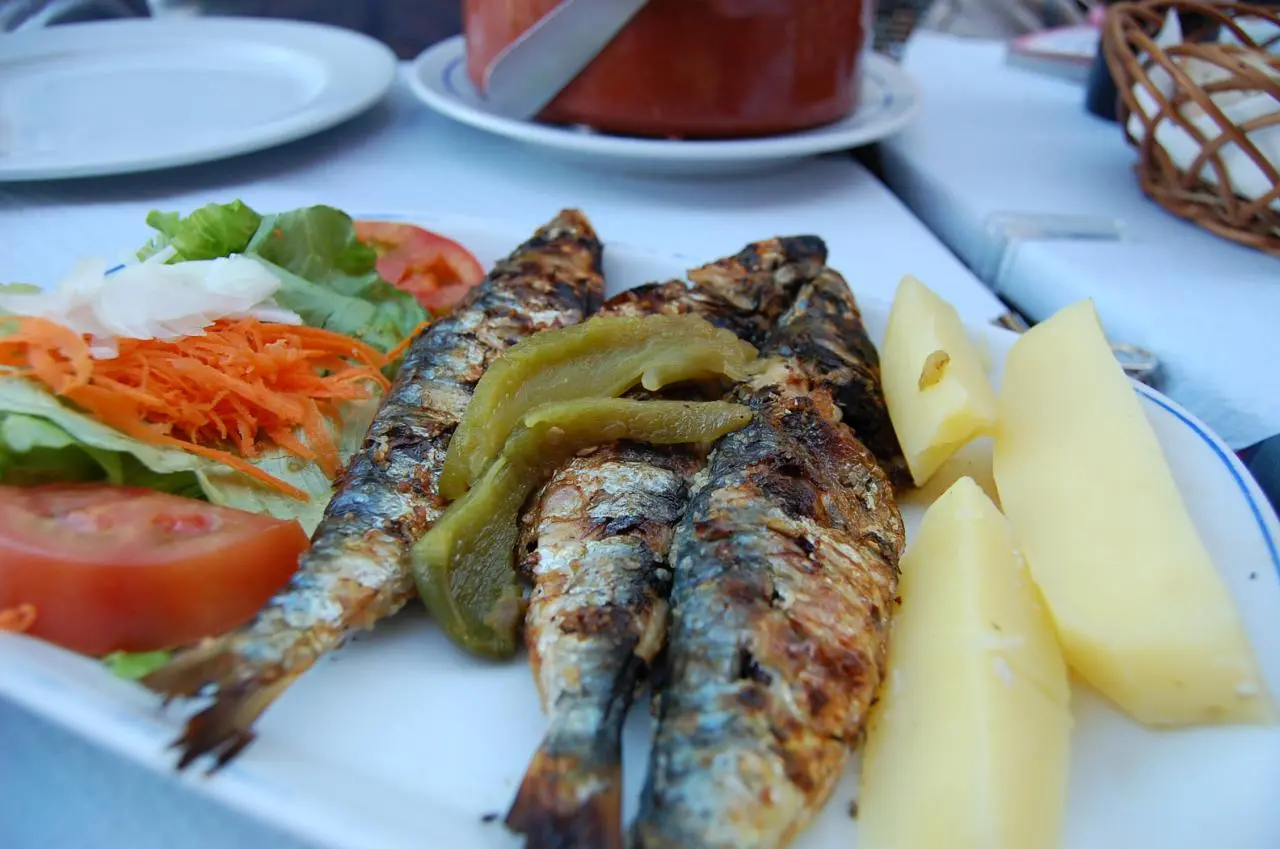
Lisbon charcoal-grilled sardines
Sardinhas assadas · Lisbon, Portugal
On the night of the Feast of St. Anthony in June, the alleys of Alfama fill with the aroma of grilled sardines and basil.
Know before you go
- Do not push through festival crowds holding food from grill stalls, and watch out for the charcoal
- do not leave fish bones or plastic cups on the steps of the old neighborhoods
- do not make noise late at night under residents' windows (they are residential areas outside the festival too)
This article is Not yet verified. Please check official announcements for prices, opening hours and dates.
Culture
Culture & customs
Background
Chargrilled sardines are a traditional Portuguese dish, chosen as one of the "Seven Wonders of Portuguese Gastronomy". Portuguese Wikipedia explains that the Portuguese customarily grill sardines during popular festivals, and a chargrilled sardine feast is called a "sardinhada"; although they are usually called "assada" (roasted), they are actually grilled over charcoal on a grill, and the more accurate name is "sardinha na grelha". In Lisbon, sardines are inseparable from the Festas de Lisboa every June. Visit Lisboa explains that in June the most characterful old neighbourhoods, Alfama, Bica, Bairro Alto, Castelo and Mouraria, keep up the tradition of playing music in the streets and grilling sardines over charcoal; Visit Portugal explains that the climax comes on the night of 12 June, when people parade along Avenida da Liberdade to celebrate St Anthony, and on the 13th there is a religious procession around the cathedral, with the smell of grilled sardines and potted basil filling the streets.
Local customs
- Whole sardines, skin and bones included, are sprinkled with coarse salt and grilled, often served on a slice of bread or cornbread so the bread soaks up the fish oil
- they come with roasted green pepper salad, boiled potatoes and wine or beer. Use a knife and fork to peel the flesh off along the backbone, though some people simply use their hands.
Religion & beliefs
- The Festas de Lisboa are tied to the feast of St. Anthony (Anthony of Padua, who was born in Lisbon)
- around 13 June there are religious processions and a mass wedding, the "Brides of St. Anthony"
- St. Anthony is regarded as a "matchmaker saint," and people give each other pots of basil bearing love poems.
Etiquette & taboos
Etiquette & taboos
Don’t DON'T
- Do not push through festival crowds holding food from grill stalls, and watch out for the charcoal
- do not leave fish bones or plastic cups on the steps of the old neighborhoods
- do not make noise late at night under residents' windows (they are residential areas outside the festival too)
- do not ignore the risk of pickpockets in the streets.
Locals appreciate DO
- Lisboetas appreciate visitors who join everyone in line for grilled sardines in the festival streets and dance along to the music
- ask the owner of a small restaurant in the old quarters "Are today's sardines fresh?" and you will often get an enthusiastic recommendation.
Plan your visit
Practical info
Travel tips
- During the Lisbon Festivities in June, old neighborhoods such as Alfama, Mouraria and Bica are full of grilled sardine stalls
- the night of 12 June is the liveliest and extremely crowded
- at other times you can also eat them in small restaurants and seafood houses in the old town, and a meal takes about an hour. You can combine it with São Jorge Castle, Lisbon Cathedral, the Church of St. Anthony and the Lisbon Museum – St. Anthony. Festival dates and events are as announced by Turismo de Lisboa. Dietary notes: sardines have many bones, so take care with children
- not suitable for those with fish allergies
- hygiene at street stalls varies, so choose freshly grilled hot food
- the accompanying wine and beer contain alcohol. Prices and opening hours are set by each restaurant
- popular old shops often have queues, so going outside peak mealtimes is more relaxed.
Sources & verification notes
How do you like this place?