
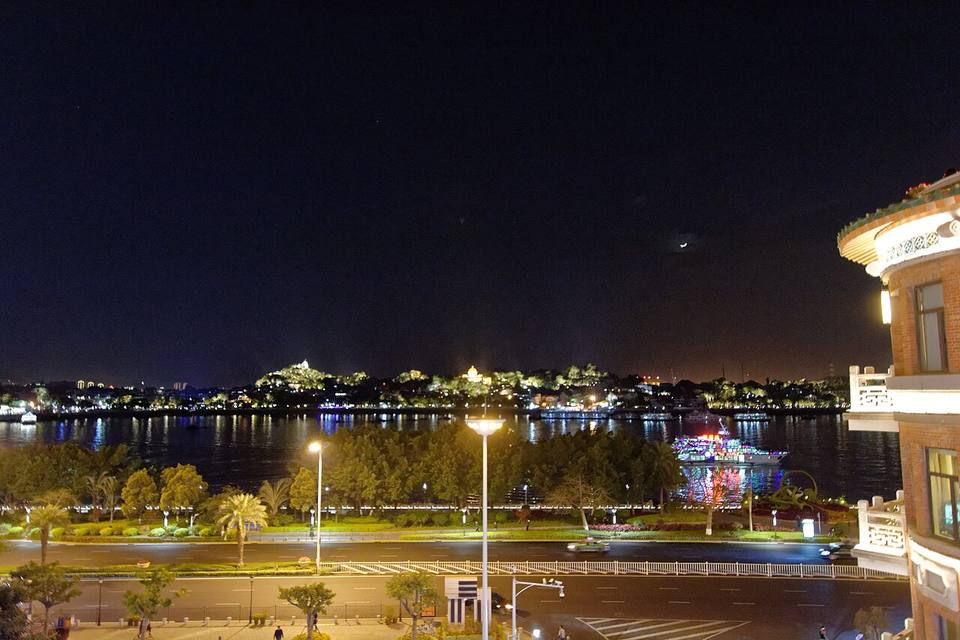
Siming District, Xiamen, Fujian Province · Island / Historic District
Gulangyu Island
Inscribed on the World Heritage List in 2017 as a "historic international settlement": a small island with no motor vehicles, holding every layer of international architecture, piano music and Minnan red-brick houses.
Location
Siming District, Xiamen, Fujian Province
Stories and legends
The island's name is said to come from the reef on its southwest shore, which sounds like a drum when struck by waves (Gulang Stone) — a place-name legend.
History and context
After Xiamen was opened as a treaty port in 1842, Gulangyu became a public-concession-style community of foreign residents, complete with consulates, churches, schools and hospitals, while returned overseas Chinese built villas (Shuzhuang Garden was built by Lin Erjia in 1913, among others). Piano ownership was once so high that it was called the "Island of Pianos / Island of Music." In 2017 "Kulangsu: A Historic International Settlement" was inscribed as World Cultural Heritage. Visitors now board under a system of ferry-ticket reservations and combined tickets for the core sights (per Xiamen Ferry / culture-and-tourism officials).
Local life
Gulangyu's temperament is a "conspiracy of slowness and oldness": with motor vehicles banned (except special vehicles), the island holds only footsteps, birdsong and piano music (the Piano Museum and Organ Museum are its cultural anchors). The Minnan daily life of old residents — the wet market, church bells, noodle-paste stalls at alley mouths — runs parallel to visitors' artistic check-ins; the island belongs to the former in the early morning and after nightfall.
Customs
Walking the island ring and hunting out old villas is the proper way; the mission-school buildings witness the history of Chinese-Western education (Yuyuan commemorates Lin Qiaozhi, among others).
Beliefs
Christian and Catholic churches coexist with Minnan folk beliefs — a layer of treaty-port multiculturalism with no single dominant faith.
Local etiquette
Motor vehicles are banned on the island, and bicycles are not to be ridden carelessly in the core area (per island rules); most old buildings are private homes — do not enter courtyards to take photos and disturb residents; the seaside reefs are slippery, so do not climb them.
Visiting notes
Best in spring and autumn and on weekdays; reserve ferry tickets in advance through official channels (the Cruise Terminal Xiagu Pier is the main one); only by staying a night can you enjoy the empty island at dawn; enter Sunlight Rock first thing at opening, and take Shuzhuang Garden for sea views and piano music on the same route.
What to eat nearby
Shacha noodles (satay noodles); oyster omelette (haolijian); sea-worm jelly (tusundong — a jelly made from sea worms; those who mind the ingredient should choose carefully); Ye's glutinous rice cakes (an old stall on Longtou Road); Huang Sheng Ji dried meat and pies (a time-honoured souvenir brand)
Longtou Road snack street, the local market at Neicuo'ao, and around Sanqiutian Pier
The sea-worm jelly's raw material is a marine worm, a Minnan tradition — order knowingly; shacha noodle toppings are self-selected and priced accordingly, so fix the staple first, then add toppings
Snacks 40–80 yuan per person (for reference only)
Full meals on the island are mediocre value; a mix of snack-hopping plus one proper seafood meal is the most sensible ratio; check the last ferry off the island first, and allow an hour for peak-season departure queues.
Source leads: UNESCO World Heritage "Kulangsu: A Historic International Settlement" (2017); Xiamen Municipal Bureau of Culture and Tourism / Gulangyu Management Committee.
Image source · Slyronit · CC BY-SA 4.0