
Celtic mythology · Irish mythology, the Tuatha Dé Danann
The Dagda
A club that kills and revives, a cauldron that never empties, and a harp that sets the seasons in order.
Stories and legends
The Dagda is the leader of the Tuatha Dé Danann, called the "Good God" and the "Father of All", in charge of plenty, farming, druidic magic and the order of the seasons. He owns three treasures. One is a great club, one end of which can kill nine men at a single blow while the other end can bring the dead back to life. Another is a cauldron of plenty that never runs empty, so that no one who gathers around it leaves empty-handed. The third is an oak harp named Uaithne, which only sounds when called by its two other names, and whose three tunes of joy, sorrow and sleep can sway hearts and hold the seasons in place. Before the Second Battle of Mag Tuired, the Fomorians stole his harp, and he broke into their camp and called to it, and the harp flew back to his hands by itself. He played the three tunes until the enemy could not move, and led his people to victory. He lives at Brú na Bóinne on the River Boyne, his wife is the Morrígan, his lover is Boann, goddess of the River Boyne, and his children include Aengus and Brigid.
Origins of the story
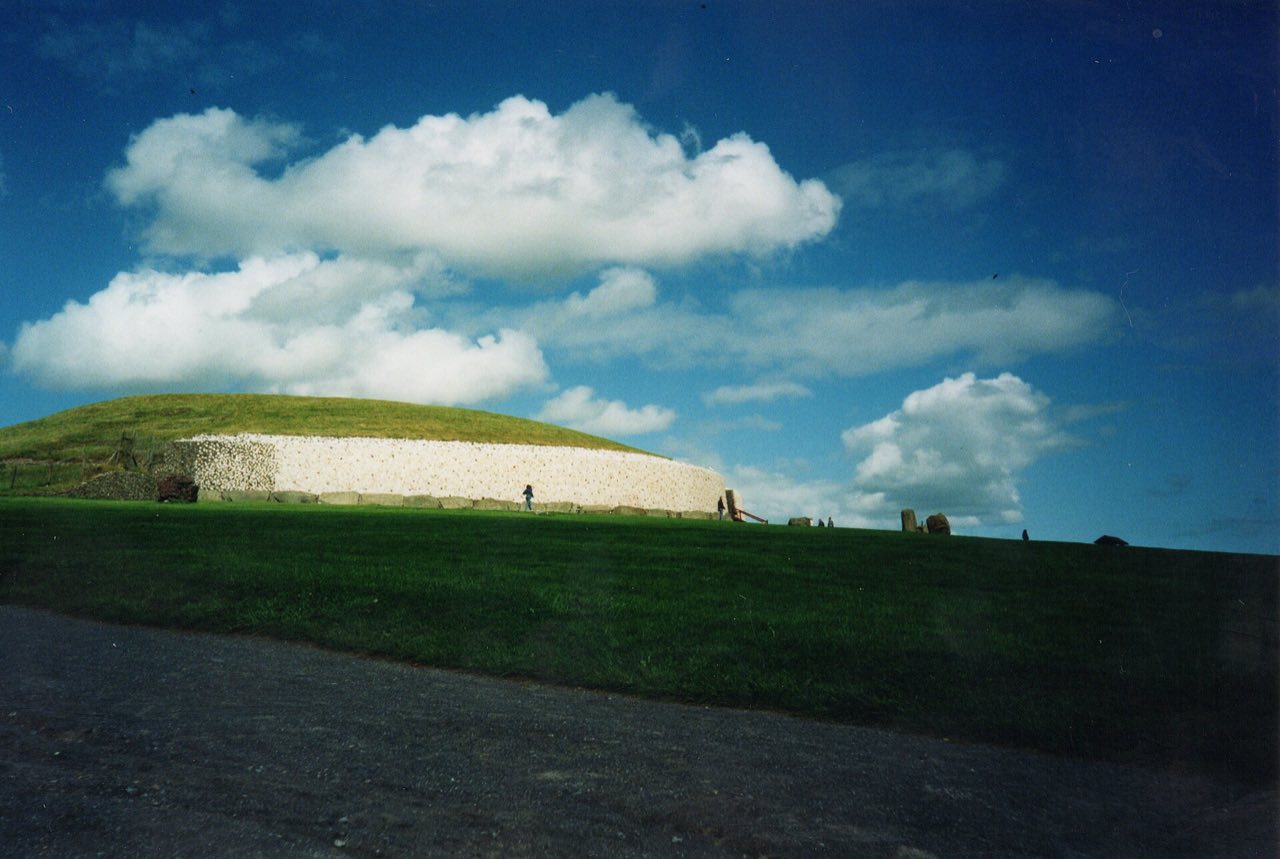
The Dagda is a mythical figure in medieval Irish manuscripts, not a historical person, and the harp, the cauldron of plenty and the club are legendary treasures. Newgrange is in fact a Neolithic tomb built around 3200 BCE, thousands of years earlier than the medieval manuscripts that preserve the stories of the Dagda, and archaeology gives no evidence that it was originally a temple of the Dagda, so the claim that it was his dwelling belongs to later mythical association. In writings by Christian monks he is often shown in shabby clothes and clumsy in manner, and some researchers hold that this was deliberate mockery, although the point remains open. Whether the harp truly "commands the seasons" is not stated consistently in the sources, and one version says only that it can sway the course of battle and the hearts of listeners.
Places you can visit
When you are in County Meath, you can visit the Newgrange tomb at the Brú na Bóinne World Heritage site, where around the winter solstice the sunrise beam shines into the passage, and visits must be booked through the visitor centre. The Hill of Uisneach and the stone fort of Grianan of Aileach, both linked in legend to the Dagda, can also be visited on the way.
Image source · Newgrange passage tomb · Stanley Howe · CC BY-SA 2.0