
Celtic mythology · Irish and Scottish Gaelic legend, the Fenian Cycle
Fionn mac Cumhaill (Finn McCool)
He gained wisdom by sucking a burnt thumb; later tellers turned him into the giant who built the Giant's Causeway.
Stories and legends
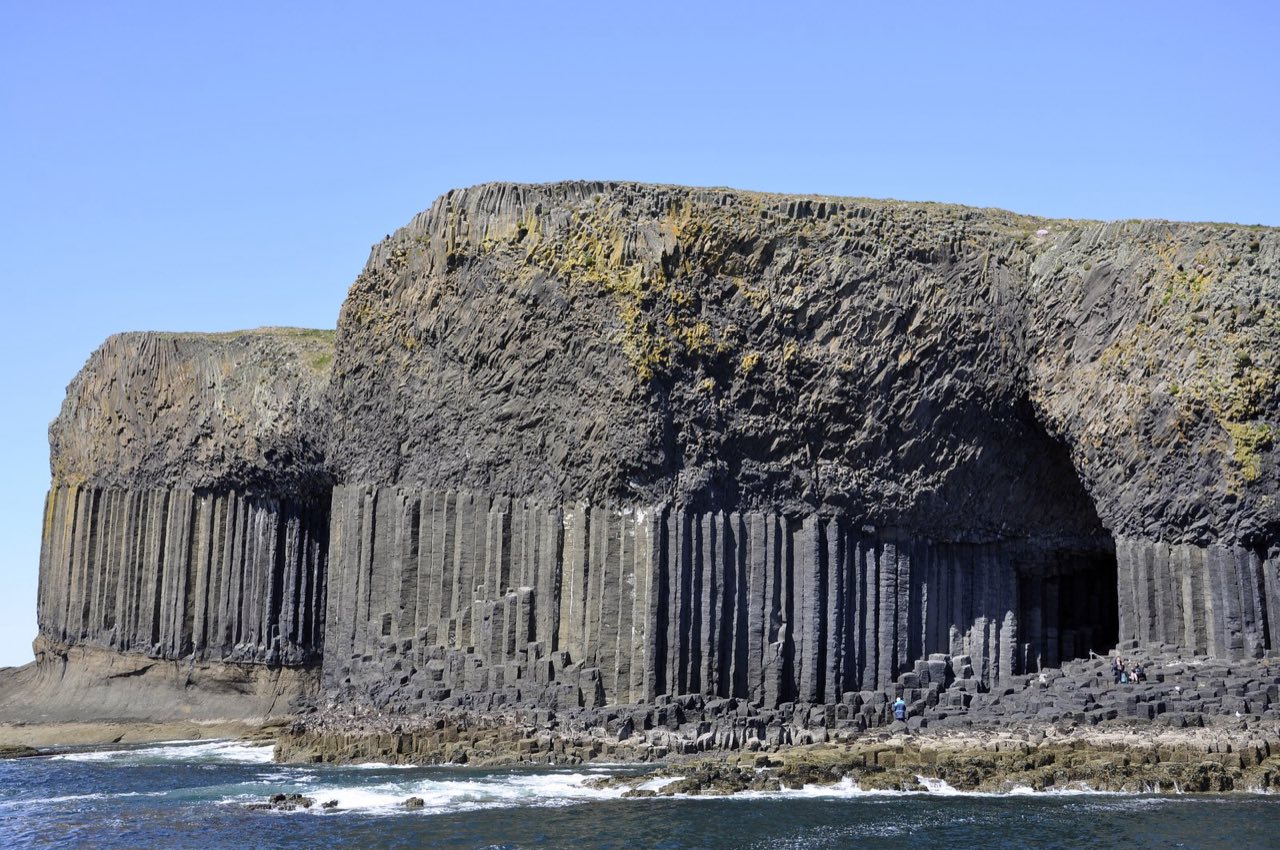
Fionn mac Cumhaill was the leader of the Fianna, the band of warriors of the Fenian Cycle, and that after his father Cumhall died in battle he was brought up in secret. As a boy he cooked the Salmon of Knowledge for the poet Finnéces, burned his thumb on it and sucked the thumb, and by accident gained poetic inspiration, so that afterwards biting his thumb would bring him insight. The Fianna under him served the High King Cormac, and among his men were the poet Oisín and Diarmaid. Gráinne was meant to marry the ageing Fionn, but at the betrothal feast she fell in love with Diarmaid and bound him by oath to elope with her. Fionn pursued them all the way, and the two men were finally reconciled, but when Diarmaid was mortally wounded while hunting a boar, Fionn delayed bringing the healing water that could have saved him, and the delay turned into tragedy. In later life Oisín was taken by the golden-haired Niamh to Tír na nÓg, the land of eternal youth, and when he returned to the world of men hundreds of years later, he aged three hundred years in the instant his foot touched the ground, and lived long enough to meet Saint Patrick. Another widely told story says that Fionn built a road of stone across the North Channel to fight the Scottish giant Benandonner, but when he saw how tall his opponent was he fled home, and his wife dressed him as a baby. Benandonner saw the "baby" so huge that he reasoned the father must be greater still, fled back to Scotland in fright and tore up the road, leaving only the stone columns on the two shores.
Origins of the story
The Fenian Cycle survives in medieval Irish and Scottish Gaelic manuscripts and in later oral songs. In twelfth-century manuscripts Fionn is a superhuman human warrior and sage, not a giant from the start, and the giant figure and the road-building story about the Giant's Causeway belong to later layers of folk legend. The Giant's Causeway is in fact basalt columns formed when volcanic lava cooled some 50 to 60 million years ago, and it was inscribed as a World Heritage site in 1986. Fingal's Cave on the Isle of Staffa in Scotland comes from the same ancient lava flow, and the likeness of the columns in the two places shaped the legend. Whether Fionn can be given an exact historical date goes beyond the evidence of the texts, and the point remains open.
Places you can visit
When you are on the Antrim coast in Northern Ireland, you can walk among the stone columns of the Giant's Causeway, where the visitor centre tells the legend of Fionn and Benandonner. By boat to the Isle of Staffa in Scotland you can see the basalt columns of Fingal's Cave, facing the Giant's Causeway across the sea. Across Ireland, hills and lakes named after Fionn often carry plaques telling his stories.
Image source · Fingal's Cave, Staffa, Scotland · Stuart Wilding · CC BY-SA 2.0
