
Celtic mythology · Folk legend of the Northern Isles of Scotland and Ireland, Orkney and Shetland
Selkies
Shed the sealskin and a seal becomes human: the saddest tale of the northern isles is that of the selkie wife whose skin was hidden.
Stories and legends
Selkies are seal folk who can shed their seal skins and take human form, on Midsummer night in one version, or every ninth night in another. The most common story is that of the "seal wife". On a moonlit night, a fisherman on the shore sees seal women slip off their skins and dance, and he hides one skin. The woman who has lost her skin cannot return to the sea, so she marries him and bears his children, but her eyes always turn toward the sea. Years later she finds the hidden skin, kisses her children farewell, puts the skin on again and returns to the waves, and in some versions she still comes back to the shore on stormy nights to look after her children. Male selkies lure women on shore with beauty and song, and Orkney lore says that a woman who wishes to meet a seal lover may drop seven tears into the sea at calm tide. The Shetland ballad of The Great Silkie of Sule Skerry tells of a seal father and a farm girl whose child, grown up, is taken back to the sea by his father, and both perish in the waves. In the Faroe tale of Kópakonan, a seal woman whose skin was stolen to force her into marriage takes her skin back and swears revenge, and many drown as a result.
Origins of the story
Selkies belong to oral folk legend, and there is no single authoritative version. They were recorded by collectors in the nineteenth and twentieth centuries, and details differ from island to island, family to family and teller to teller. The claim that the legend shares an origin with similar seal-transformation stories of Viking-age Norse, Icelandic and Faroese tradition can only be held as open on the question of date. Selkies must be distinguished from the finfolk. The finfolk are another people in Orkney legend, sea sorcerers who are rich and fearsome and carry people away, while selkies are gentle and sorrowful and only wish to return to the sea. Modern romantic retellings often soften the fact that "stealing the skin to force a marriage" is coercion, and the point should be kept as it stands when the story is told.
Places you can visit
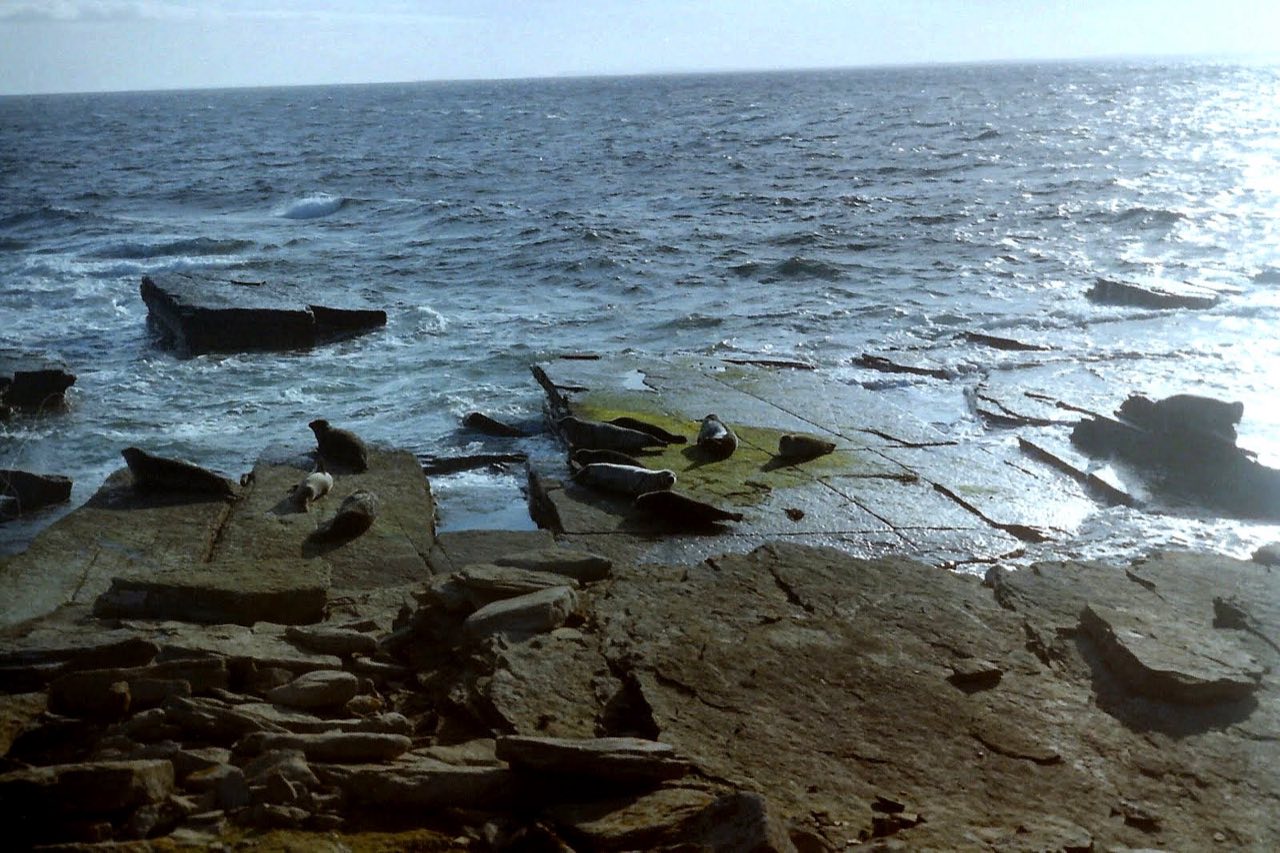
When you are around the island of North Ronaldsay in Orkney, you can see the coasts where grey seal colonies haul out, and seal-watching points in Shetland and Orkney often show seals basking ashore in summer. The rocks of Sule Skerry can only be seen from the shore or from a boat at a distance, and the sea around them is where the ballad story takes place.
Image source · Grey seals on North Ronaldsay, Orkney · Dai O'Nysius · CC BY-SA 3.0