
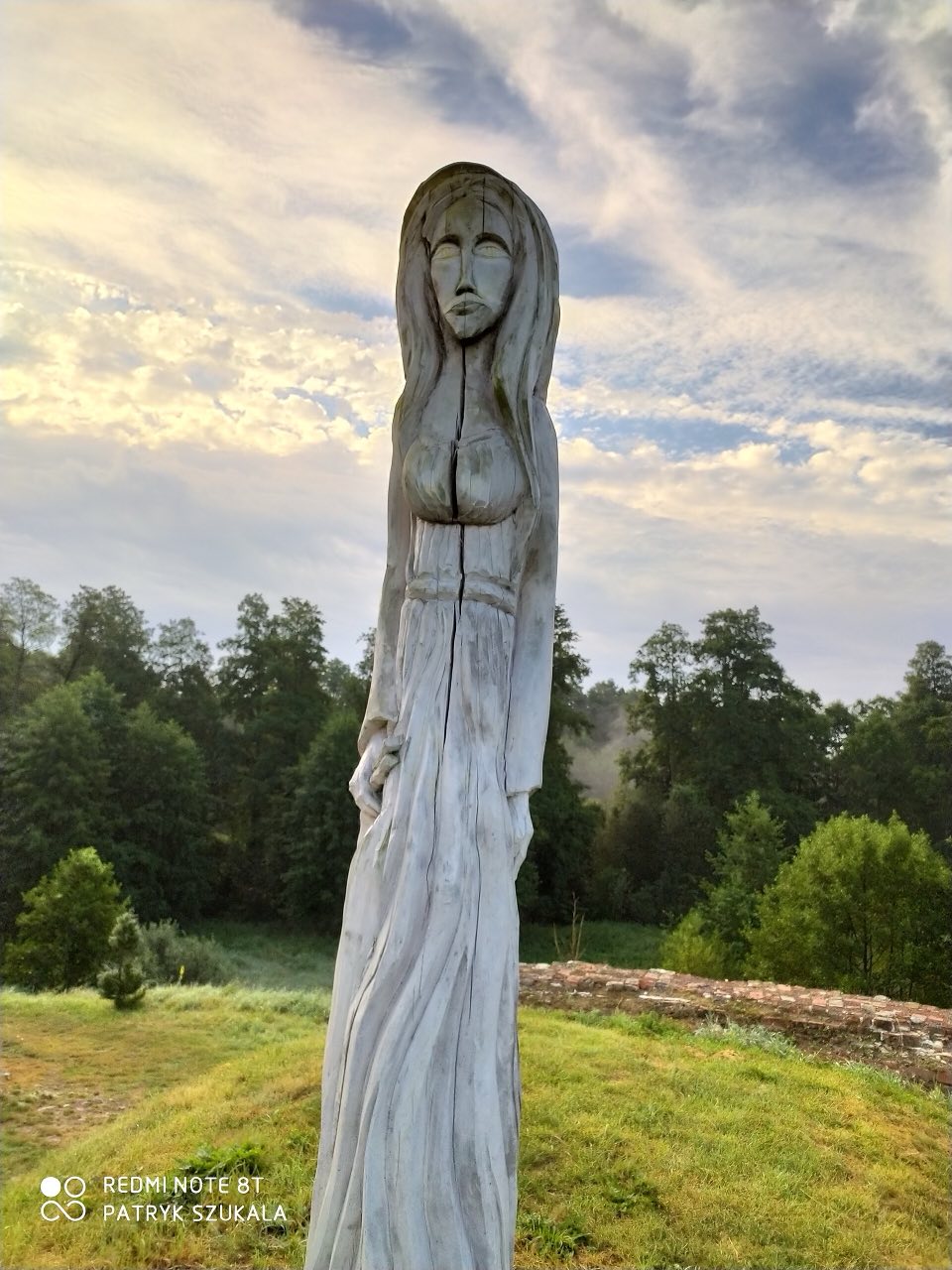
Slavic mythology · Goddess of water, earth and spinning
Mokosh
The only goddess among the Kyiv idols of 980, her name is related to the word for "wet".
Stories and legends
Mokosh is the goddess of water, land, and fertility, and also the guardian of spinning and women's household work. She holds a spindle and spins the threads of human fate. Wells and springs are connected with her, and people threw spun wool and linen cloth into wells as offerings to her. Legend says that she was the only goddess in the pantheon of Vladimir, and women did no spinning on Fridays, leaving that day to her. After the harvest, girls gathered to make porridge and prepare a chicken feast, using the occasion to tell fortunes about future marriages and fates.
Origins of the story
What can be verified is the name and standing. The Primary Chronicle records Mokosh among the idol group set up in Kyiv in 980, and she was the only goddess among them. Anti-pagan sermons also mention her name many times, but none of them tells a complete story about her. Her name is related to the Old Slavic word for wet, and scholars therefore interpret her as a goddess of water and fertility. The claims about spinning, threads of fate, and the Friday taboo mostly come from later folk material and remain conjectural. Some scholars hold that her worship was later taken up by the folk Christian figure of Saint Paraskeva of Friday, while other scholars point out that the links of Paraskeva with spinning, water, and Friday have Christian sources of their own and need not come from Mokosh. Both views are presented side by side here. No ancient myth about Mokosh has survived, and the vivid images now in circulation are mostly reconstructions, so you should not take them as ancient texts.
Places you can visit
You can see spinning wheels, spindles, and embroidery in the textile sections of folk museums in Eastern Europe, and learn where the spinning symbolism in the Mokosh legend comes from. Village wells and springs are the kinds of places where offerings were said to be made in legend. When you visit, please only look from a distance and do not throw anything into a well. In folk activities around harvest time, you can still see surviving customs of girls gathering for a meal and fortune-telling.
Source leads: https://en.m.wikipedia.org/wiki/Moko%C5%A1;https://www.mifologia.com/pantheons/slavic-pantheon-2/mokosh/
Image source · A modern carving of Mokosh · Polandhero · CC BY-SA 4.0