
Roman mythology · Founding legend
Romulus and Remus
Twins suckled by a she-wolf, a quarrel over vultures, and a city named after the winner.
Stories and legends
After King Numitor of Alba Longa was overthrown by his younger brother Amulius, Numitor's daughter Rhea Silvia, a Vestal Virgin, gave birth to twin sons by the war god Mars: Romulus and Remus. Amulius ordered the infants to be thrown into the Tiber, but the river washed their basket ashore at the foot of the Palatine Hill, where a she-wolf suckled them, and the shepherd Faustulus later found them and raised them. When the brothers grew up and learned who they were, they overthrew Amulius and restored Numitor to the throne, then set out to found a new city by the Tiber. They quarrelled over the site and over who should be king: Remus saw six vultures first, Romulus then saw twelve, each side claimed the omen for itself, and Remus was killed in the conflict. Romulus became the sole founder, the city was named Rome after him, and tradition dates its founding to 21 April 753 BC.
Origins of the story
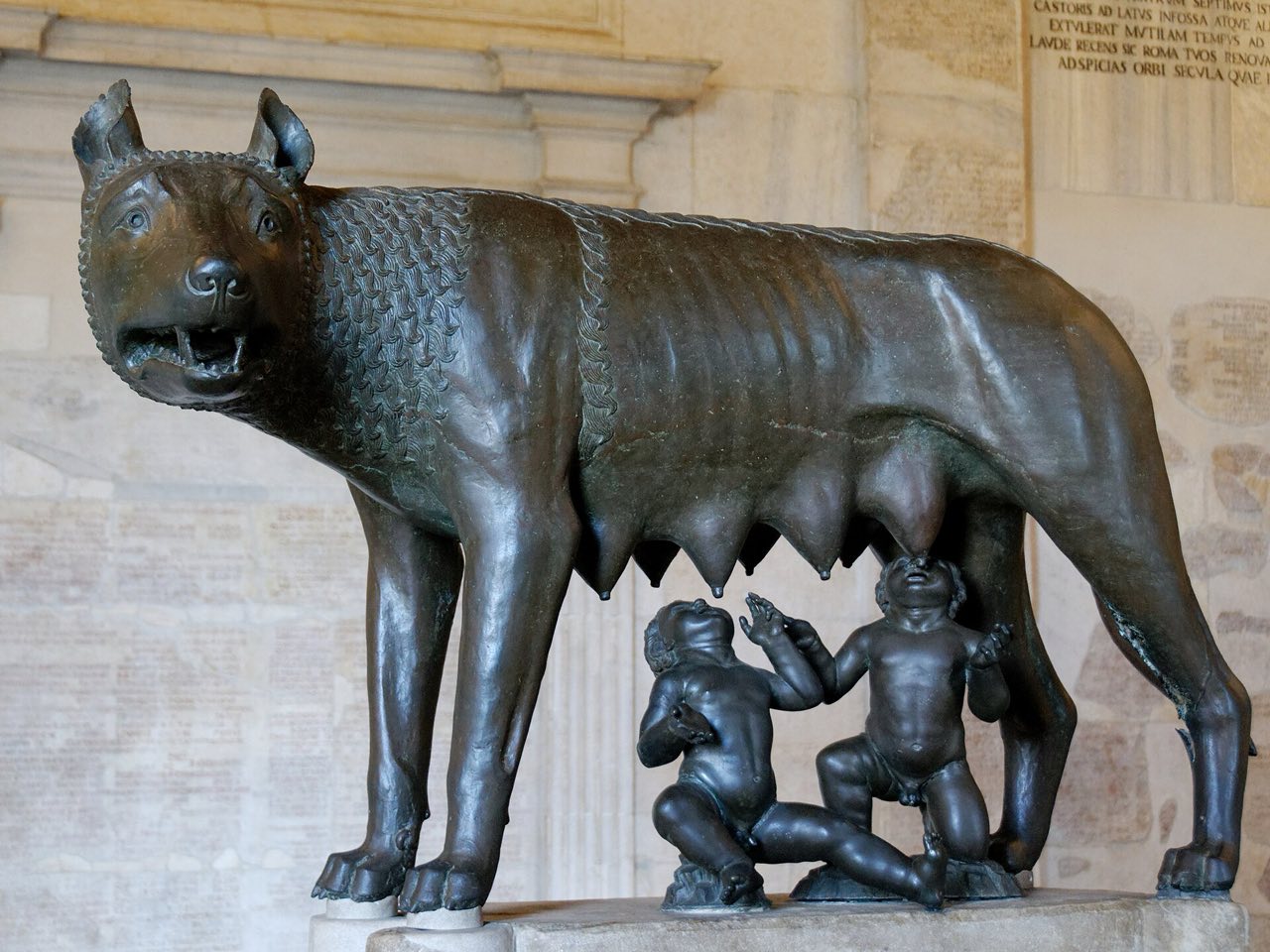
What can be verified is the written record: Livy (about 59 BC to AD 17) and Plutarch (about AD 46 to 120) both record this story, but both lived centuries after the supposed founding, so their accounts are traditional narratives compiled long afterwards, not contemporary records. The death of Remus already appears in more than one version in ancient sources: some say Romulus killed him with his own hand, some say the attendant Celer did it, and some say he fell in a clash between the two parties; the three versions stand side by side, and it cannot be settled which one is true. Archaeologically, the Palatine area does hold remains of early Latin villages, and Rome grew from the gradual merging of several settlements by the Tiber, profoundly influenced from the north by the Etruscans in the seventh to sixth centuries BC, which is quite different from a city founded in a single day. The origin of the name Rome is also disputed: some scholars derive it from a Greek or Etruscan root, not necessarily from the name Romulus, and this remains open. The date of the Capitoline she-wolf bronze is likewise uncertain: the traditional view holds it to be an Etruscan work of the fifth century BC, while recent scientific testing has raised the possibility of a medieval date; the twin infants beneath the wolf were added in the fifteenth century or later, which is more firmly established.
Places you can visit
You can see the Capitoline she-wolf bronze in person in the She-Wolf Hall of the Capitoline Museums in Rome, where the suckling twins beneath the wolf are the Renaissance additions; the Palatine Hill is the hill of the legend, where the brothers were said to have been rescued and where the city was founded, and it holds remains of the early settlement as well as later imperial palaces, with a view over the Roman Forum from the top; the banks of the Tiber provide the geographical setting of the story and pair well with a visit to the she-wolf and the Palatine.
Source leads: https://www.unrv.com/culture/romulus-and-remus.php;https://europe.factsanddetails.com/article/entry-299.html
Image source · The Capitoline Wolf bronze · Jastrow · Public domain
