
Roman mythology · Hearth fire and the Vestals
Vesta and the Vestal Virgins
Six Vestal Virgins guarded a fire that must never go out: as long as it burned, Rome endured.
Stories and legends
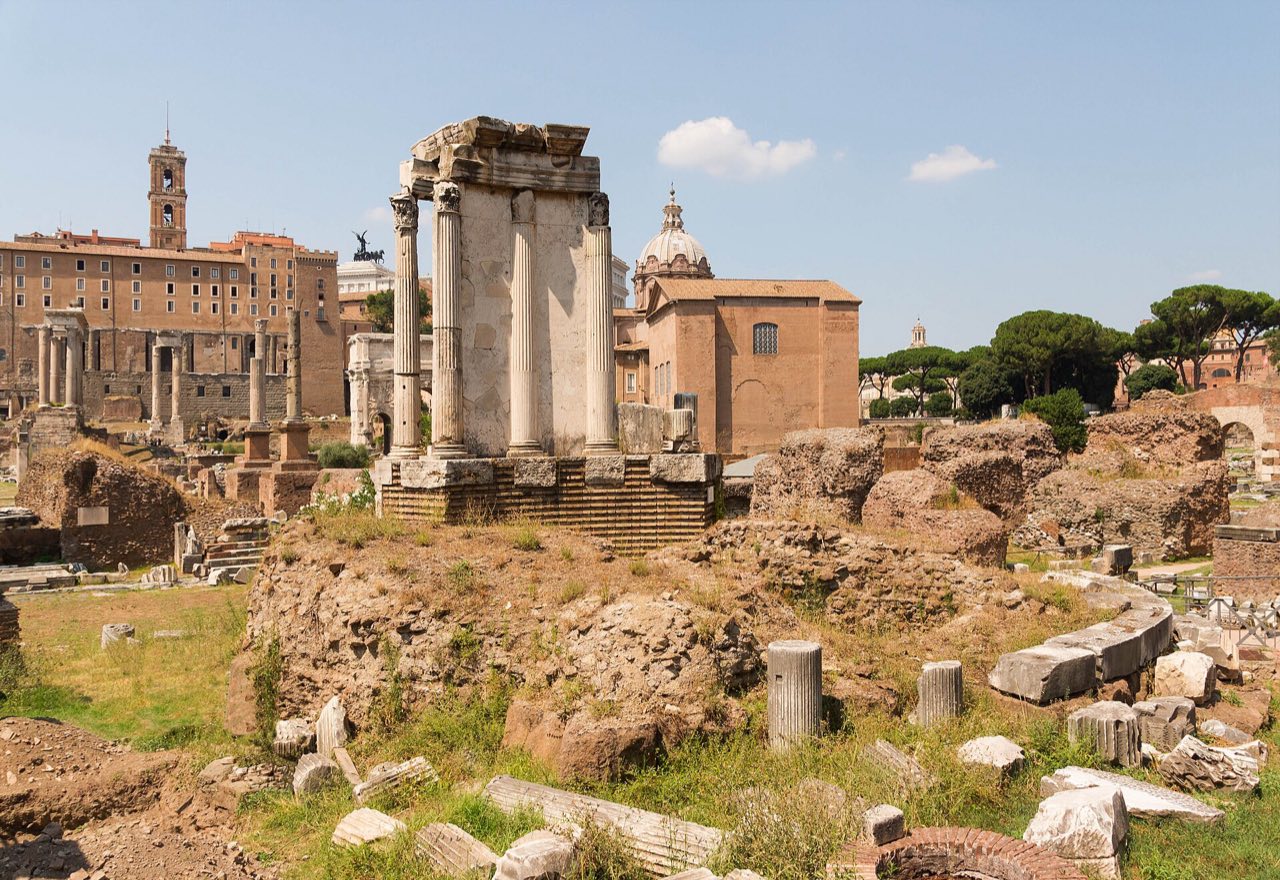
Vesta is the goddess of the hearth and the home, and that Rome's hearth fire was kept in her round temple at the eastern end of the Forum, tended in turns by six Vestal Virgins, and that if the flame went out it foretold disaster for Rome. The Vestals were chosen as young girls and, once they entered the temple, had to remain chaste for thirty years: ten years learning, ten years serving, and ten years teaching newcomers, and they could not marry during that time; in return they enjoyed rights that ordinary Roman women did not have, including making wills and owning property, travelling with attendants, and receiving great respect in public. Romans also said that a shrine room inside the temple of Vesta held the Palladium, the guardian image that Aeneas had brought from Troy, which was the pledge of the Empire's fortune.
Origins of the story
What can be verified is the institutional and archaeological record: the temple of Vesta and the Vestal system appear in several ancient writers, including Livy, Plutarch, and Dionysius of Halicarnassus, and the temple's round plan, central hearth, podium about 15 metres across, and twenty Corinthian columns are confirmed by the remains; the Vestals numbered two at first and later rose to six (most ancient writers place this in the regal period), the thirty-year term and the chastity rule are factual, and the punishment of live burial outside the city at the Campus Sceleratus for breaking the vow is recorded in ancient sources, reflecting how directly Romans linked a Vestal's chastity with the safety of the state. Attributing the temple's founding to the second king, Numa Pompilius, is the traditional claim of Roman antiquarians, not an archaeologically proven founding date; the structure visible today is mainly the rebuilding of about AD 191 under Julia Domna, with partial restoration in the 1930s. The claim that Aeneas brought the Palladium and that it was kept in the temple's shrine room belongs to legend, and according to Ovid the temple in fact held no image of Vesta herself. The sacred fire went out in AD 394, when Theodosius I banned pagan sacrifice, and the Vestal system ended with it.
Places you can visit
You can see the round podium and the three surviving columns of the temple of Vesta at the eastern end of the Roman Forum, together with the ruins of the neighbouring House of the Vestals, where the bases and fragments of several Vestal statues still stand in the courtyard; the temple's round plan, rather than the usual rectangular form, is very rare among Roman temples, and standing before the ruins gives you a direct sense of how it imitated the hearth of an early hut; and the layout of the rooms in the House of the Vestals lets you picture the daily life of the six Vestals who lived there and tended the sacred fire.
Image source · Temple of Vesta, Roman Forum · Jebulon · CC0
