
Roman mythology · Ancestral goddess
Venus
Caesar claimed descent from her: in Rome the goddess of love was also the ancestral mother of a whole people.
Stories and legends
Venus is the goddess of love and beauty and also the ancestral goddess of the Romans. Aeneas, the Trojan prince, was her son by the mortal Anchises; after the fall of Troy, Venus protected her son on his voyage across the sea to Italy, and Aeneas's descendants later founded Rome, while the Julian family claimed descent from Aeneas, so Caesar honoured Venus as the family's ancestral goddess, Venus Genetrix (the Mother who gives birth), and vowed to her on the eve of the Battle of Pharsalus, building her a temple after his victory. Romans also said that Venus could bring both love and fertility and protect victory in battle, a goddess combining gentleness with majesty.
Origins of the story
What can be verified is the literary and architectural record: Virgil's Aeneid (written about 29 to 19 BC) is the most systematic literary version of the Aeneas legend, but it belongs to the epic poetry of the Augustan age, not to reliable history, and the descent from Aeneas to the founders of Rome cannot be treated as a real genealogy. The temple of Venus Genetrix built by Caesar is, however, a historical fact: the temple stood at the northern end of the Forum of Caesar, was dedicated on 26 September 46 BC, was rebuilt after a fire in AD 80, and was dedicated again by Trajan on 12 May AD 113, while the three surviving Corinthian columns belong to the later rebuilding. The early character of Venus was also different from her later image: she began as a native Italian goddess associated with gardens and fields, and only later was identified with the Greek Aphrodite, as Roman religion absorbed Greek influence. The account of a cult image of Venus being brought from Eryx in 217 BC belongs to Roman traditional narrative, and the details of the ritual differ between sources, so this remains open.
Places you can visit
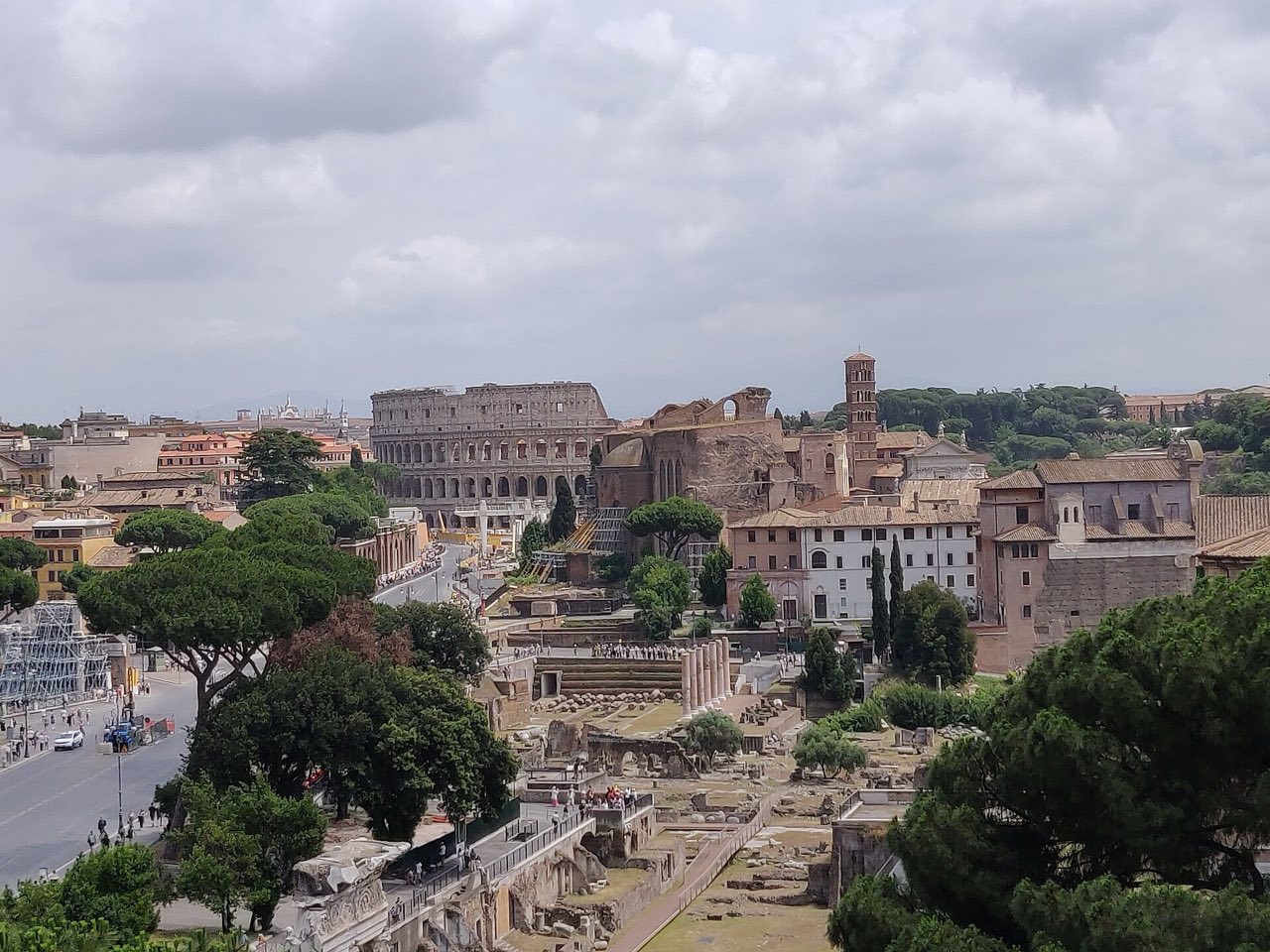
You can see the three tall surviving columns and the podium base of the temple of Venus Genetrix in the Imperial Fora archaeological area in Rome, at the northern end of the Forum of Caesar, which is exactly where the temple once stood; the Museum of the Imperial Fora holds fragments of a small Cupid relief from the temple; and the Capitoline Venus marble statue in the Palazzo Nuovo of the Capitoline Museums is another famous image of Venus, worth a look on the same visit for the Romans' ideal image of the goddess.
Image source · Temple of Venus Genetrix, Forum of Caesar · Kurt Kaiser · CC0