
Chenghua District, Chengdu, Sichuan Province · Animal Conservation / Family Science Education
Chengdu Research Base of Giant Panda Breeding
One of the world's most important institutions for captive giant panda breeding — in the early morning the young pandas roll on the lawns and eat bamboo; seeing pandas means arriving early, and that is Chengdu's lesson number one.
Location
Chenghua District, Chengdu, Sichuan Province
Stories and legends
The giant panda's ancient names such as "white bear" and "mo" appear in old texts; folk tales of a divine beast belong to the legendary layer.
History and context
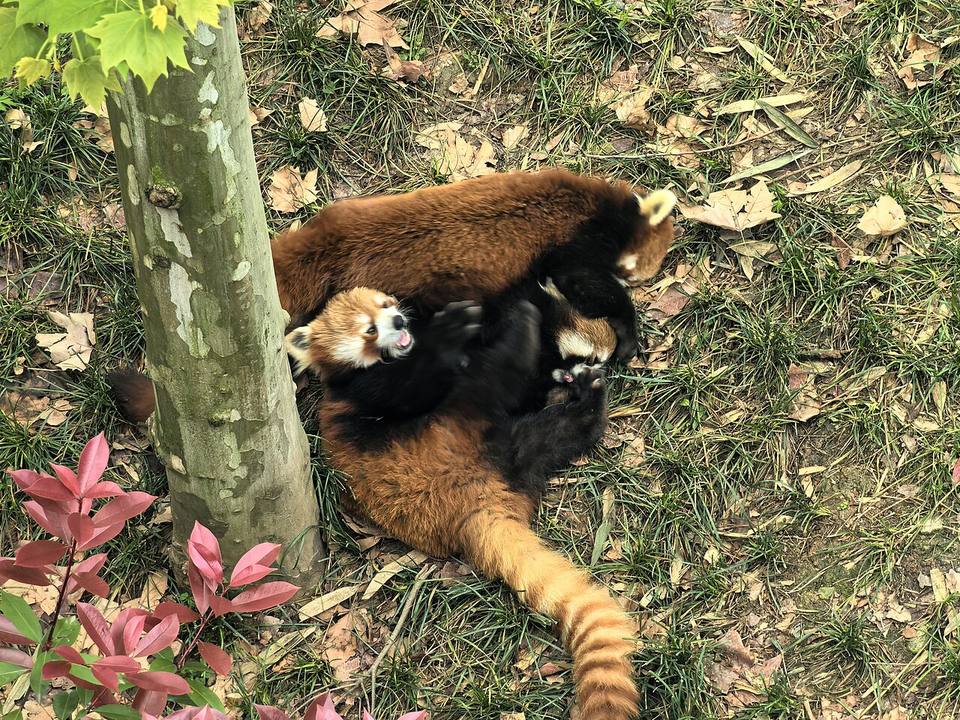
The base was founded in 1987, starting with 6 giant pandas moved from Chengdu Zoo, and is now a world-class giant panda research, breeding and public-education institution with a captive population among the world's largest (exact numbers per the base's annual releases). Star individuals such as "Huahua" (Hehua, born in 2020) have made the base's south-gate area famous. The base includes the panda villas, the Moonlight Nursery House, the Sunlight Nursery House and the red panda activity areas, and runs full-online reservations with timed entry (per official rules).
Local life
The panda base's temperament is "Chengdu-style doting, systematised": the keeper ("nanny dad and mum") culture, panda naming and birthday parties, and the finesse of the surrounding cultural-creative products all show Chengdu people's gift for turning affection into an industry. Locals hold annual passes and see the pandas like a morning workout, while visitors from elsewhere learn one truth — the pandas are active before 10 a.m., and in the afternoon you mostly see sleeping backs.
Customs
Entering at opening time in the early morning is the connoisseur's way; watching quietly through the nursery windows and keeping absolute silence in the cub areas are iron rules.
Beliefs
No specific religious association; its main cultural attributes are wildlife-conservation research and science education.
Local etiquette
Feeding is strictly forbidden, as are knocking on the glass, using flash and shouting the pandas' names to startle them; drones are banned; never cross the railings for close shots.
Visiting notes
Best in spring and autumn and in the early morning (in summer the pandas are mostly in the indoor halls — see the indoor sessions); entering by the south gate, rush first to the young panda villas and the Moonlight Nursery House; choose the earliest reservation slot; Metro Line 3's Panda Avenue Station has shuttle connections.
What to eat nearby
Hotpot (Chengdu's signature full meal, in the commercial areas outside the base); Zhong dumplings and Long wontons (time-honoured snacks); dandan noodles; panda-themed pastries (cultural-creative food — try for fun)
The commercial area at the base's south gate, the Jianshe Road snack street in Chenghua District (a locals' canteen belt), and the Chunxi Road commercial district (on the way back)
The Chengdu way for a hotpot dip is an oil dish with garlic paste and coriander; a yin-yang pot is the legitimate choice for those who cannot eat spicy — no need to force yourself through the red pot
Snacks 30–60 yuan per person (for reference only); hotpot 120–200 yuan (for reference only)
The base is large — a full walk runs to over ten thousand steps, so a sightseeing-bus ticket saves energy (per the park's ticket system); the queue for "Huahua's" team runs to hours — weigh it up, as the other halls are equally wonderful.
Source leads: Chengdu Research Base of Giant Panda Breeding official site; Chengdu Municipal Bureau of Culture and Tourism.
Image source · MSK · CC BY-SA 3.0