
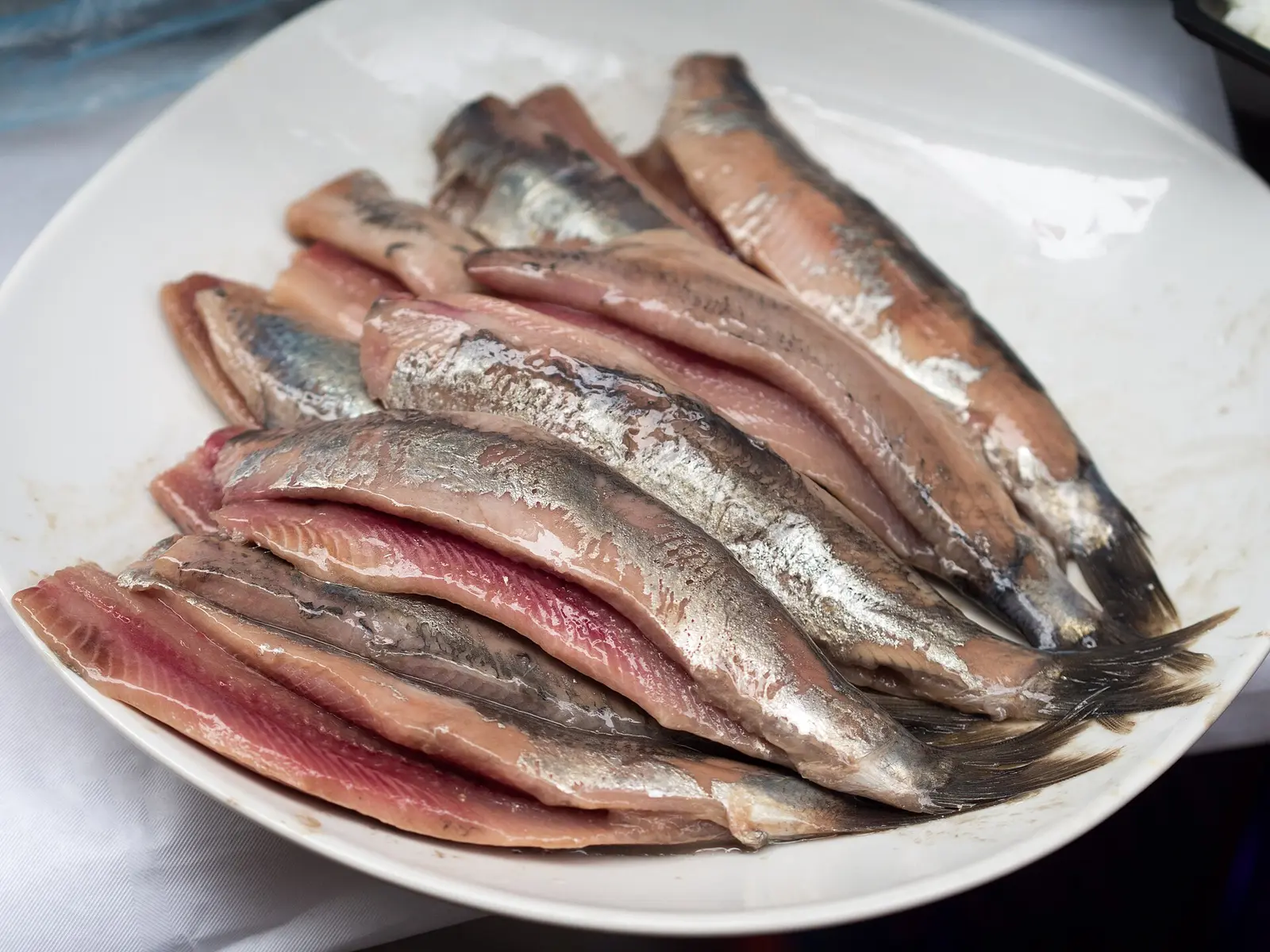
Dutch new herring (Hollandse Nieuwe)
Hollandse Nieuwe · Amsterdam, Netherlands
Raw herring caught in early summer and lightly salted, served with chopped onion and pickles, eaten in one bite at a street stall.
Know before you go
- Don't treat a herring stand as a restaurant to linger in—give up your spot when you have finished
- don't toss toothpicks or paper plates into the canals
- don't stop on the bike lane to eat (Amsterdam has a great many bicycles)
This article is Not yet verified. Please check official announcements for prices, opening hours and dates.
Culture
Culture & customs
Background
'Hollandse Nieuwe' (Dutch new herring) is lightly salted raw herring and an EU-protected 'Traditional Speciality Guaranteed' product. English Wikipedia explains that the method of removing the gills and part of the innards before salting (gibbing) was invented by the Dutch in the Middle Ages; the herring is caught in the North Sea from late May to early July, before the spawning season begins, when its fat content is at its highest (over 15%) and the roe and milt have not yet developed. The brine used for Dutch new herring is much weaker than for similar German products, giving it a mild taste. To prevent Anisakis parasites, EU rules require the fish to be frozen at minus 20 degrees for at least 24 hours, so it can now be eaten all year round, but it is most sought after when the new season arrives each early summer. Dutch Wikipedia explains that under the product specification, the name 'Hollandse Nieuwe' may only be used for the traditional product sold within a certain period of the year.
Local customs
- In Amsterdam the herring is often cut into small pieces, served with toothpicks topped with little Dutch flags, chopped raw onion and pickles
- it can also come in a small bun (broodje haring)
- another way is to hold the fish by the tail, tilt your head back and lower the whole fish into your mouth.
Religion & beliefs
- Herring has no direct connection with religion, but it is closely tied to the history of Dutch fishing and maritime trade
- the arrival of new herring each year is a national seasonal event in the Netherlands. Around the arrival of the new season's herring, fishing ports such as Scheveningen in The Hague hold Flag Day (Vlaggetjesdag) celebrations, a secular festival.
Etiquette & taboos
Etiquette & taboos
Rules that apply here
Netherlands: A café is not a coffeeshop – don't smoke cannabis in the street or take it abroad
Do
- If you just want coffee, go to a café or koffiehuis
- A coffeeshop sells cannabis and does not serve alcohol
- You must be 18 or over and carry ID to enter a coffeeshop
- Whether tourists may enter varies by city – ask the staff
Don’t
- Don't smoke cannabis on the street in Amsterdam's Red Light District, Dam Square or Nieuwmarkt
- Don't buy anything from street dealers
- Don't take cannabis on planes or trains or across the border
- Don't cycle or drive after using it
Since May 2023, smoking cannabis on the street in those central Amsterdam areas gets you a warning and then a fine if you ignore it; cannabis is only tolerated, not legal, in the Netherlands, and taking it abroad is illegal in most countries.
Verified Oct 19, 2026Source: Official site: Government of the Netherlands: Toleration policy regarding soft drugs and coffee shops
Netherlands: Signal your turns, use lights after dark and keep your phone out of your hand when cycling
Do
- Keep right, and ring your bell before overtaking on the left
- Stick out your arm to signal before turning
- Turn on front and rear lights at dusk, in the dark or in poor visibility
- Pull completely out of the lane before stopping to check a map or take photos
- Cross tram tracks as close to a right angle as you can
Don’t
- Don't hold your phone to call, text or navigate while riding
- Don't stop suddenly in the middle of the lane
- Don't ride after drinking or using cannabis
Since July 2019 holding a phone while cycling has been illegal and, like riding without lights, can get you fined (amounts as officially published); sudden stops and unsignalled turns also cause collisions.
Verified Oct 19, 2026Source: Official site: Maastricht Bereikbaar – Cycling rules
Don’t DON'T
- Don't treat a herring stand as a restaurant to linger in—give up your spot when you have finished
- don't toss toothpicks or paper plates into the canals
- don't stop on the bike lane to eat (Amsterdam has a great many bicycles)
- don't mock the custom of eating raw fish
- don't leave herring in the heat for long before eating it.
Locals appreciate DO
- The Dutch appreciate visitors willing to try a bite at a street herring stand
- ask the vendor when this year's new herring arrives or whether you want onions, and they are usually happy to chat. The first time, try a small piece first, then learn to eat a whole one the local way, holding it by the tail with your head tipped back
- locals will cheer you on kindly.
Plan your visit
Practical info
Travel tips
- Along the canals, in the markets and at the ends of bridges in central Amsterdam there are many herring stands (haringhuis)
- a serving takes only a few minutes and combines well with a canal walk, the Flower Market and the Albert Cuyp Market. The new season's herring usually arrives in early summer
- the exact date is announced each year. Dietary notes: Dutch new herring is raw fish, only salted and frozen, so pregnant women, young children and people with weakened immunity should not eat it raw and can order cooked options such as fried fish (kibbeling) instead
- not suitable for those with fish allergies
- the bread contains gluten
- raw onion has a strong taste. Prices and opening hours are set by each shop
- popular old stands often have queues, so eating outside peak mealtimes is more relaxed.
Photos
Photos
Takeaway · CC BY-SA 3.0
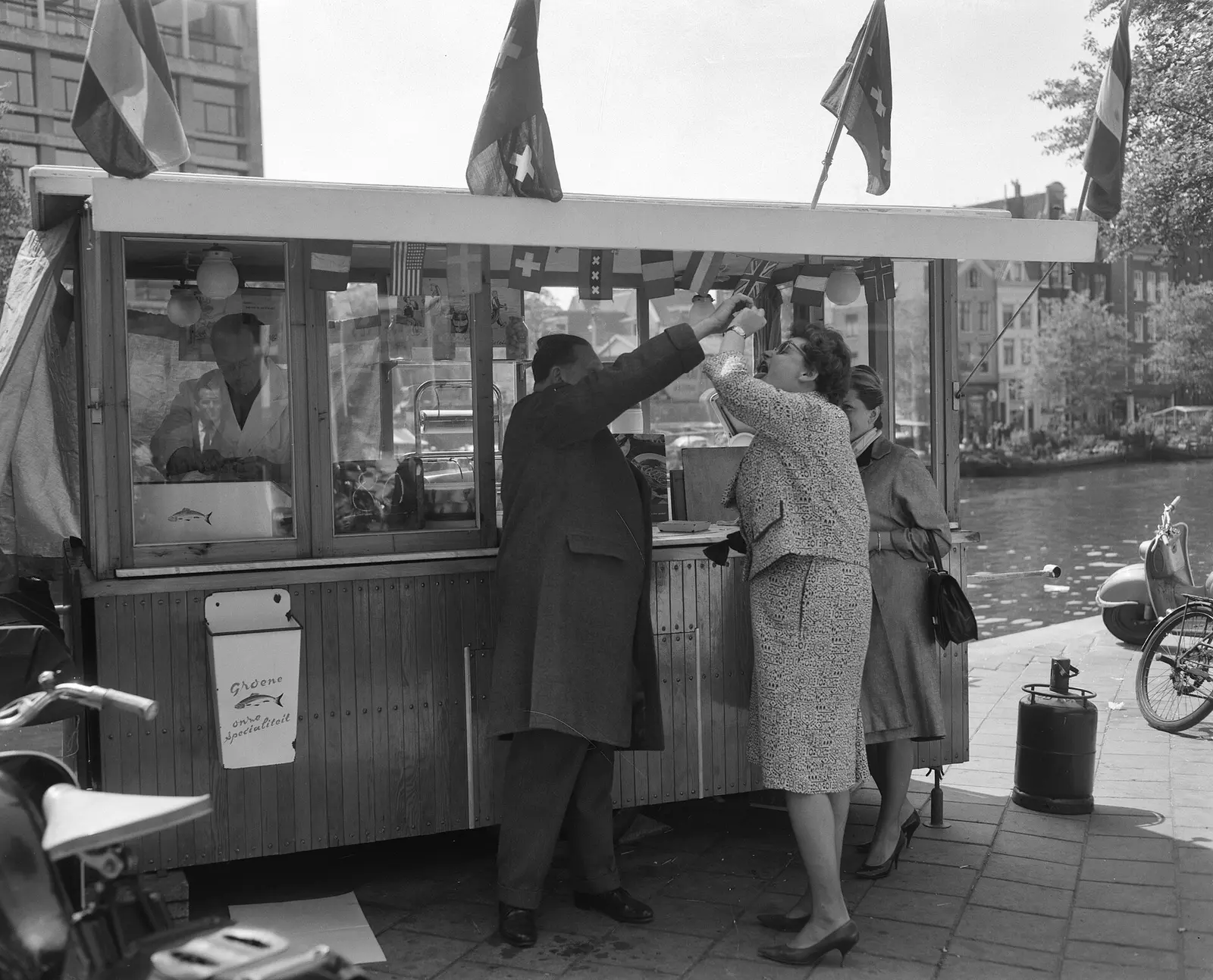
Joop van Bilsen(Anefo) · CC0
How do you like this place?
More nearby
Also in Amsterdam
Nearby sights
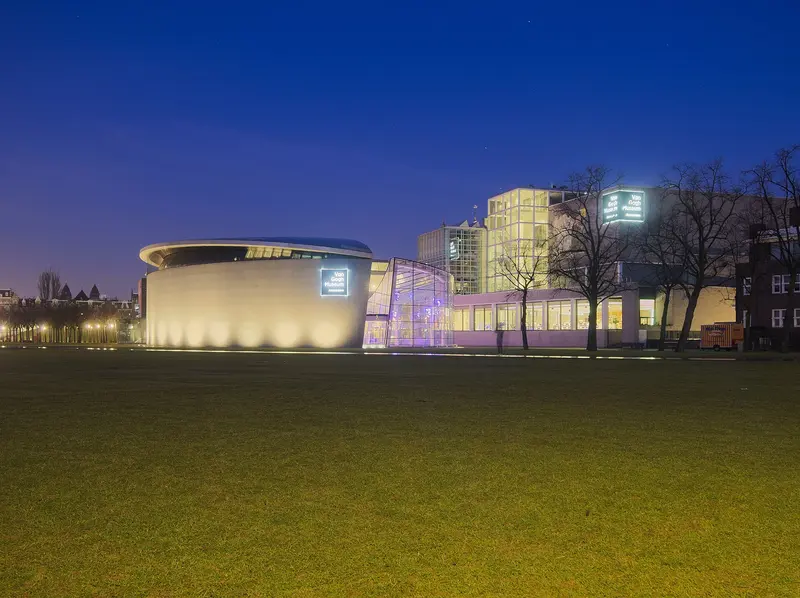
Van Gogh Museum
Two hundred oil paintings and seven years of collecting: the world's most complete Van Gogh, laid out here along the course of his life
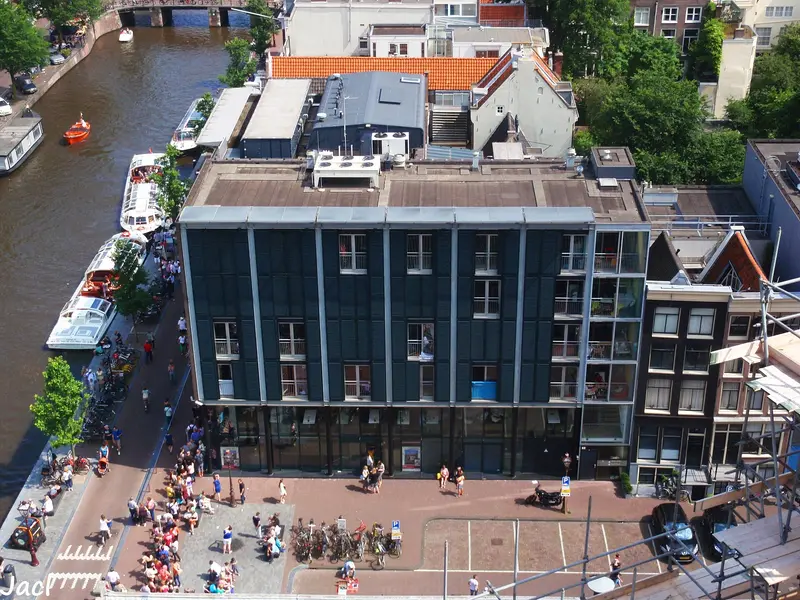
Anne Frank House
The secret annexe behind a bookcase where Anne Frank's family hid for two years and she wrote her diary.
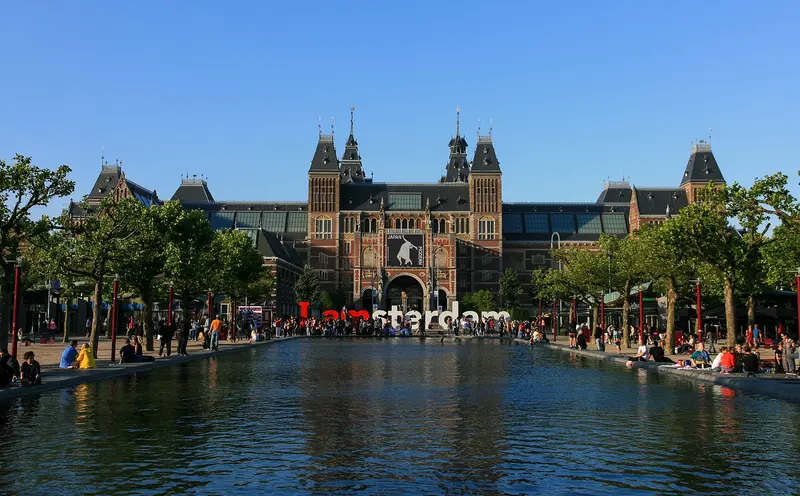
Rijksmuseum
Treasure house of the Dutch Golden Age: Rembrandt's Night Watch and masterpieces by Vermeer and Hals are all here.
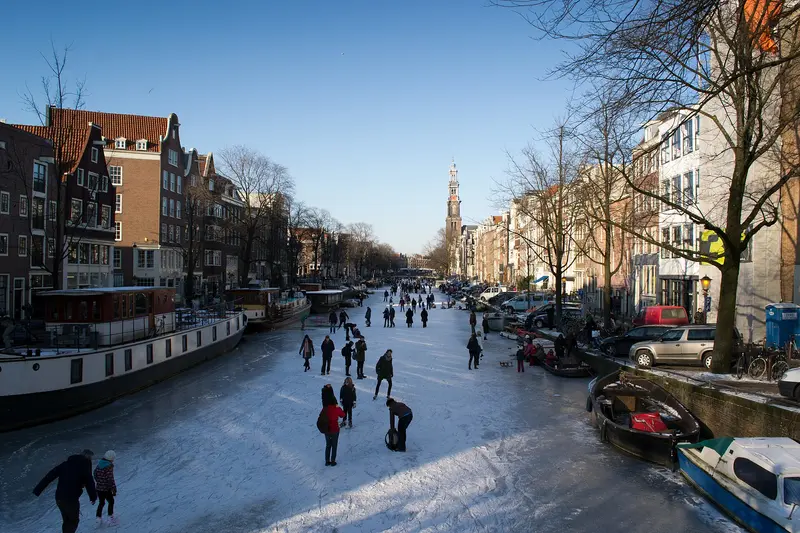
The Amsterdam Canal Belt
Concentric half-rings of canals planned in the 17th-century Golden Age: the Herengracht, Keizersgracht and Prinsengracht, lined with gabled hous…