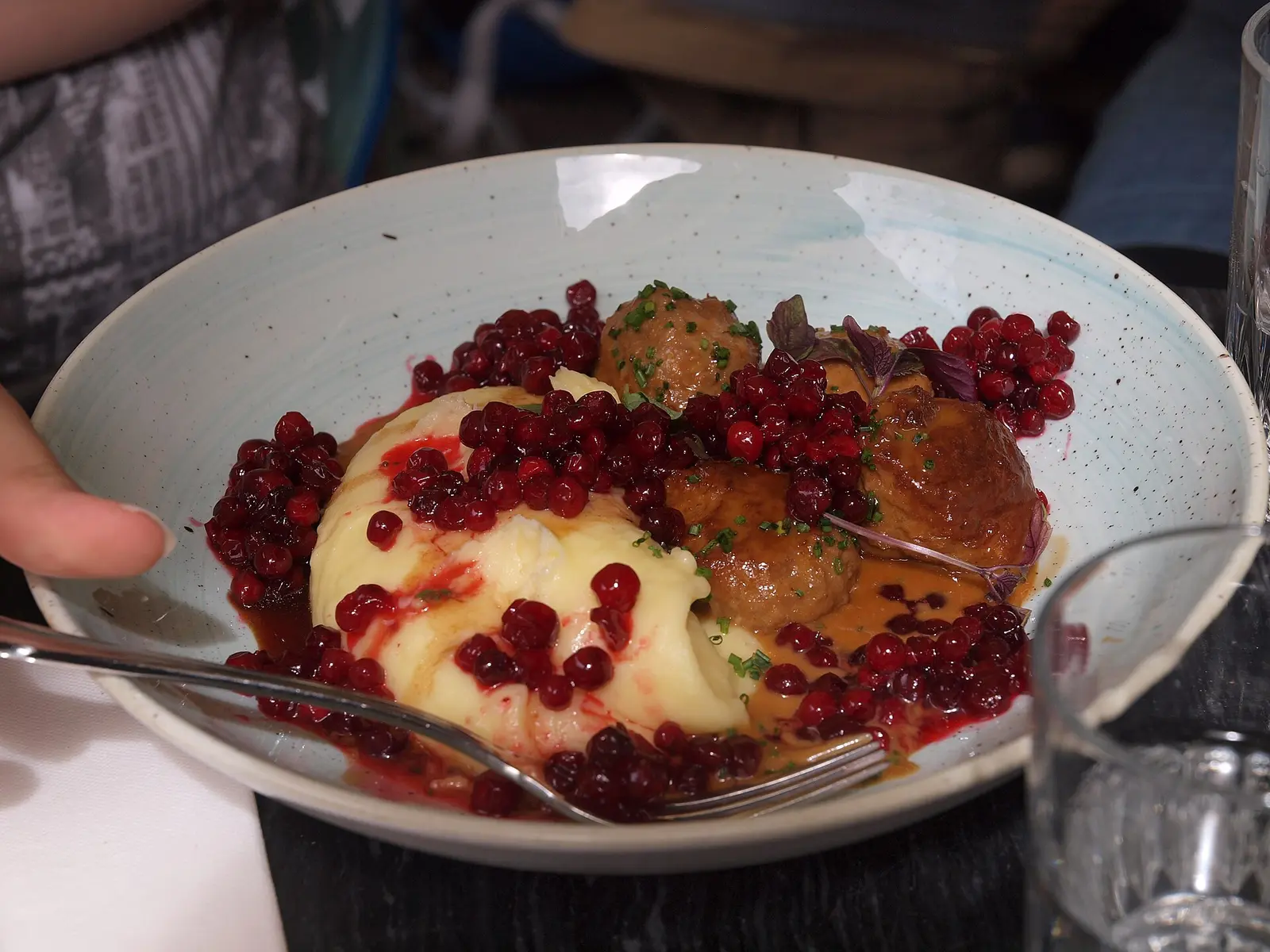
Swedish meatballs
Köttbullar · Stockholm, Sweden
Served with mashed potatoes, cream sauce and lingonberry jam, a classic of Swedish "husmanskost" (home cooking).
Know before you go
- Do not talk loudly in restaurants, as Swedes tend to eat quietly
- do not jump the queue, as many places in Sweden require you to take a number first
- do not take more than you can finish at a self-service lunch (dagens lunch) and waste it
This article is Not yet verified. Please check official announcements for prices, opening hours and dates.
Culture
Culture & customs
Background
Swedish meatballs are small balls of minced meat (often beef and pork), breadcrumbs, egg, onion and cream, usually pan-fried, and belong to traditional Swedish home cooking (husmanskost). According to Swedish Wikipedia, the word "köttbulle" first appeared in Cajsa Warg's cookbook of 1755; her book records meatballs made of veal (or mutton or beef), breadcrumbs and egg, seasoned with pepper, salt and nutmeg. Meatballs only became popular in the mid-19th century as meat grinders and wood-fired stoves spread through Swedish homes; before that, meatballs were called "frikadeller", a word later reserved for meatballs boiled in soup. Swedish meatballs spread worldwide through IKEA's restaurants, and IKEA sold 1 billion meatballs globally in 2019.
Local customs
- The standard way to eat them is meatballs with mashed or boiled potatoes, cream sauce, lingonberry jam (lingon) and pickled cucumber
- the sweet-tart lingonberry jam balances the richness of the cream sauce, and dabbing a little on every bite is common. In Sweden, meatballs also often appear as a sandwich filling or a smörgåsbord side dish.
Religion & beliefs
- Swedish meatballs have nothing to do with religion
- they often appear on festive tables such as the Christmas buffet (julbord) and Midsummer, and are an everyday dish in Swedish homes and school canteens. They are not bound by any particular religious dietary rule, but versions containing pork are unsuitable for some religious dietary needs.
Etiquette & taboos
Etiquette & taboos
Don’t DON'T
- Do not talk loudly in restaurants, as Swedes tend to eat quietly
- do not jump the queue, as many places in Sweden require you to take a number first
- do not take more than you can finish at a self-service lunch (dagens lunch) and waste it
- do not eat the lingonberry jam on its own as a dessert.
Locals appreciate DO
- Swedes appreciate guests who eat meatballs, potatoes, gravy and lingonberry jam together
- saying "just like home-made" is high praise in an old-style restaurant. Saying "Tack" (thank you) in Swedish will please the staff
- you are also welcome to try the pairing of meatballs with lingonberry jam.
Plan your visit
Practical info
Travel tips
- Traditional restaurants in Stockholm's Old Town, Södermalm and the city center all serve meatballs, and many offer a weekday "dagens lunch" (lunch of the day) including a drink, salad and bread that is cheaper than dinner. A meal takes about an hour. You can combine it with the Old Town, the Royal Palace and the Vasa Museum
- the food hall in Östermalm also has old-fashioned delis. Dietary notes: meatballs usually contain pork and beef, so ask first if you don't eat pork
- breadcrumbs contain gluten, and eggs and cream are allergens
- the cream sauce is often thickened with flour. Some places let you order extra meatballs and offer takeaway. Prices and opening hours are as set by each restaurant
- popular old establishments often have queues, so eating off-peak is more relaxed.
Sources & verification notes
How do you like this place?
More nearby
Also in Sweden
Nearby sights
Vasa Museum
A warship that sank in 1628 sees daylight again: a time capsule of Sweden's age of empire
Visby
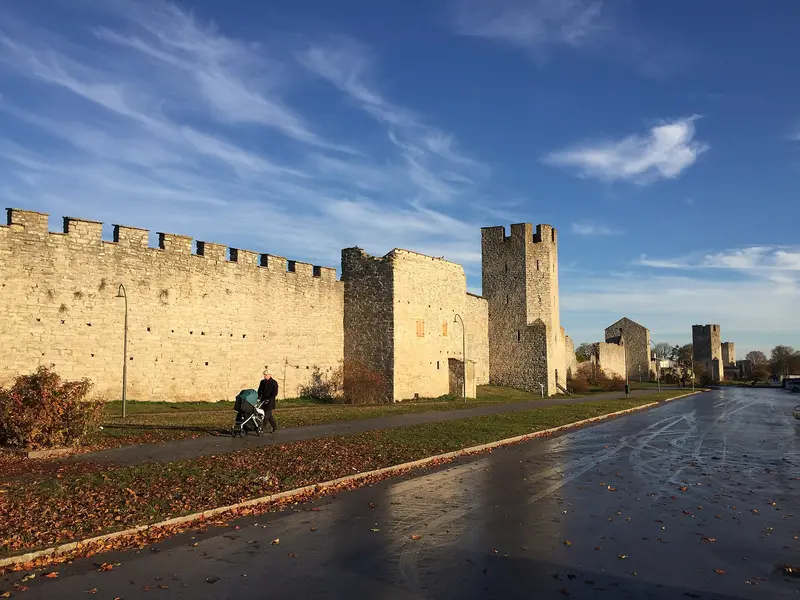
A medieval wall about 3.4 km long encircles the old town, where church ruins meet rose-lined stone lanes: Visby is one of the best-preserved med…
Icehotel
Art suites, an ice bar and an ice church rebuilt every winter from Torne River ice and snow: a night on reindeer skins in a sub-zero ice room is…
Abisko National Park
A lakeside national park 195 km north of the Arctic Circle, free of light pollution, at the start of the King's Trail.