
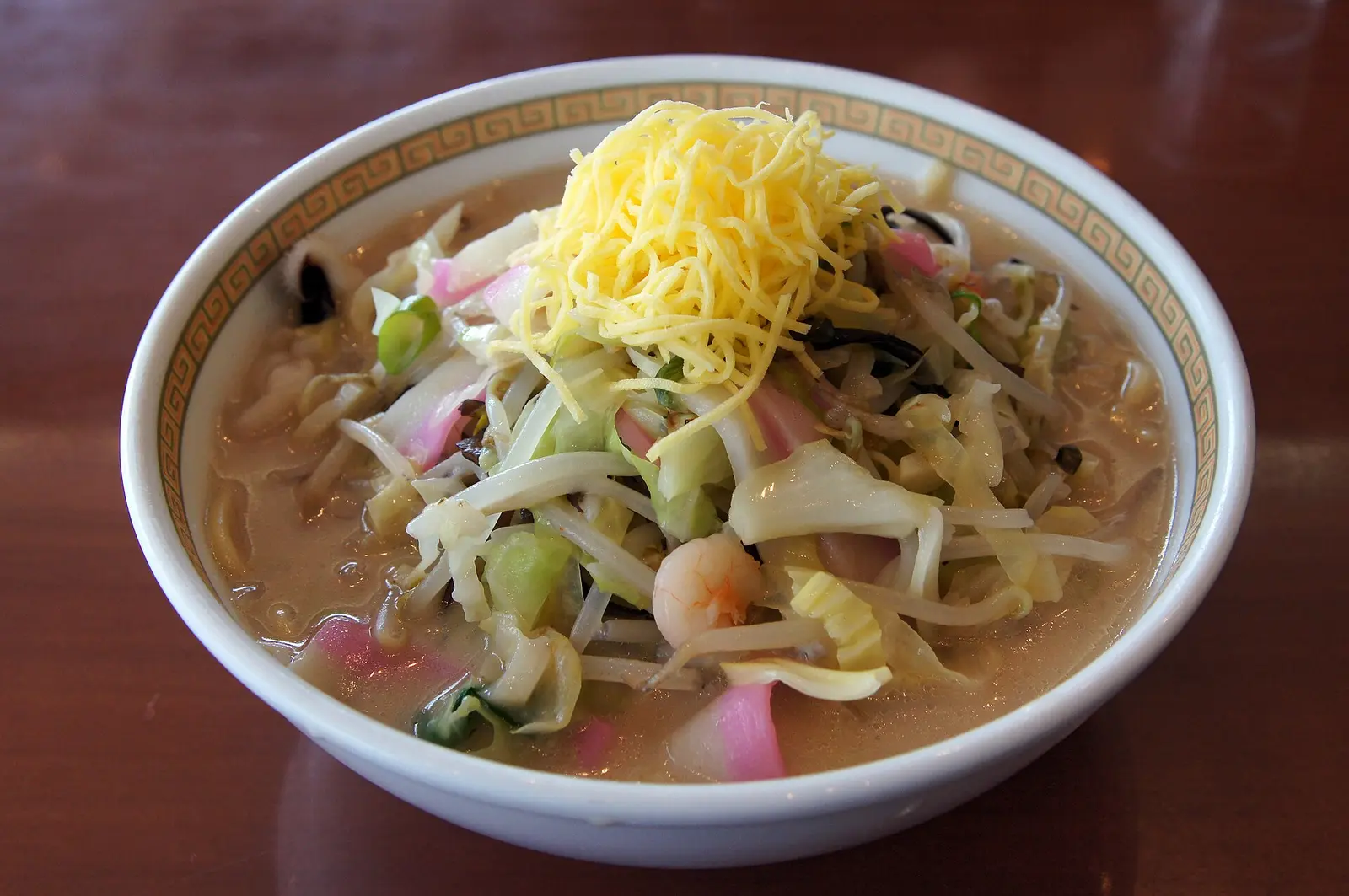
Nagasaki champon
ちゃんぽん Champon · Nagasaki Prefecture · Nagasaki City
An inexpensive, nutritious bowl of noodles devised in the Meiji era by Chinese residents of Nagasaki for students from Qing China.
Know before you go
- Don't treat champon like ordinary ramen and ask to change the noodle firmness
- don't eat while walking when Chinatown is crowded
- don't waste food—at shops with large portions, two people can share one bowl (ask the shop first)
This article is Not yet verified. Please check official announcements for prices, opening hours and dates.
Culture
Culture & customs
Background
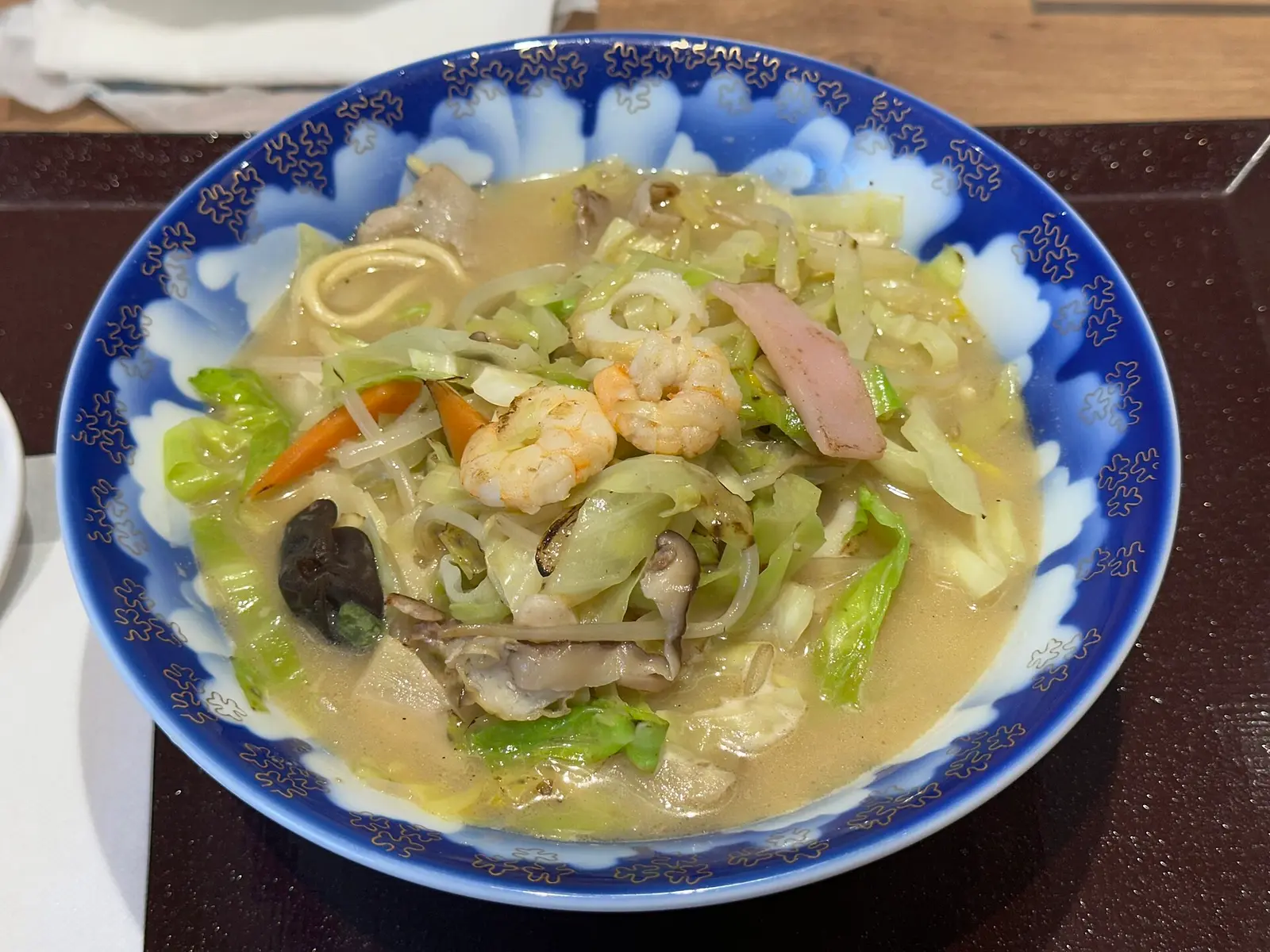
Champon is a local noodle dish of Nagasaki: more than a dozen ingredients such as pork, seafood, vegetables and kamaboko fish cake are stir-fried in lard, a broth simmered from chicken and pork bones is added, and the special noodles are boiled directly in the soup, all in one pot. According to Japanese Wikipedia, Nagasaki champon is based on Fujian cuisine and is generally believed to have been devised in the mid-Meiji period by Chen Pingshun, founder of the Nagasaki Chinese restaurant Shikairō, as a cheap and nourishing meal for the many Qing Chinese students then coming to Japan. Another account holds that in the early Meiji years someone was already selling “Shina udon” under the name “champon” in Maruyama, Nagasaki. The Nagasaki Prefecture Bulletin, published in 1907, already records it as a favourite of students and young scholars, served at more than a dozen places in the city. In Fuqing, Fuzhou, there is a similar dish called “menmian” (braised noodles). Nagasaki champon also influenced Kyushu's tonkotsu ramen.
Local customs
- A big bowl piled high with toppings, with a rich broth sweetened by pork bones and seafood
- you can add Nagasaki's own kinren (ichigo) chili vinegar or pepper
- the same shop usually also serves sara udon (fried thin noodles or thick noodles topped with a thick sauce), so two people can order one of each and share.
Religion & beliefs
Champon was born in Nagasaki's overseas Chinese community and sits alongside Chinese heritage such as Nagasaki Shinchi Chinatown, the Confucius Shrine and the Chinese temples (Sōfukuji and Kōfukuji), so you can explore the exchanges between Nagasaki and China together. Every Lunar New Year Nagasaki holds its Lantern Festival, the busiest time of year in Chinatown, and champon shops are especially busy too.
Etiquette & taboos
Etiquette & taboos
Rules that apply here
No photography and no eating or drinking in the permanent gallery of the Okinawa Prefectural Peace Memorial Museum
Do
- Put away your camera, food and drinks before entering the permanent gallery
- For the special exhibition gallery and the children's gallery, check the notices of the day to see whether photography is allowed
- If you need to eat or drink, go to the areas designated by the museum, such as the outdoor colonnade
Don’t
- Do not take photos or videos in the permanent gallery
- Do not eat or drink in the permanent gallery, and do not have meals in other areas of the museum either
- Do not extend the permanent gallery's photo ban into a photo ban across the entire park
The museum's 2026 visitor guide explicitly prohibits photography, eating and drinking in the permanent gallery and asks visitors to check the restrictions for other galleries separately; follow the museum's instructions on site.
Not yet verifiedSource: Okinawa Prefectural Peace Memorial Museum: FY2026 visitor guide, page 6
Follow the photography rules for each zone at the Nagasaki Atomic Bomb Museum
Do
- Check the signs in each zone first; in general viewing areas you may take photos or videos
- If you wish to photograph exhibits up close one by one, request permission from the museum in advance
- Do not use flash, tripods or selfie sticks when taking pictures
Don’t
- Do not take photos or videos of "The Atomic Bomb Panels" in front of the B2 ticket machines or of "The Boy Standing by the Crematory" at the B1 exit
- Do not photograph exhibits up close one by one without permission
- Do not mistake the museum's photography restrictions for a total photo ban across the whole Peace Park
The museum explicitly prohibits photographing two works, requires prior permission for close-up shots of exhibits, and bans flash, tripods and selfie sticks; if you are told by staff to stop prohibited photography, do so immediately.
Not yet verifiedSource: Nagasaki Atomic Bomb Museum: FAQ on photography inside the museum
Japan: At fireworks festivals, don't tape off spots in advance, and never fly drones
Do
- Spread your sheet where there is actual space when you arrive, leaving room for neighbours
- Follow police and staff directions and move with the crowd
- Bring plenty of water and cooling gear to prevent heatstroke
- Riverbanks have lots of insects, so bring repellent
- Festivals usually go ahead in light rain, so bring a raincoat
- Take your rubbish home
Don’t
- Don't mark spots in advance with tape or spray paint on roads or in parks
- Don't fly drones
- Don't use selfie sticks in crowds; the Sumida River festival bans them
- Don't stop in the middle of the path to watch and block the flow
Spots marked in advance are cleared by the organisers, and flying drones is prohibited by law. City-centre festivals run one-way crowd flows, and going against the flow or stopping can cause dangerous crushes.
Verified Oct 19, 2026Source: Excite News: Sumida River Fireworks, access and viewing guide
Mixed, open-air and private baths: read the signs, don't stare, never take photos
Do
- Check the signs before entering; mixed baths are clearly marked, and joining is entirely your choice
- Most mixed baths are nude only, with no swimwear; some allow or lend special bathing wraps or towels, so follow the bath's rules
- If you prefer not to bathe mixed, use the separate men's and women's baths or a private bath
- Outdoor baths are slippery and the temperature changes sharply; hold the handrails when moving
- Use a private bath only within your booked slot and leave on time
- Tohoku and other regions still have many therapeutic hot springs with mixed bathing; for long therapeutic stays, follow the ryokan's and your doctor's advice
Don’t
- Don't stare at other bathers, strike up conversations, or linger to watch
- Don't take photos or videos in the bath area
- Don't overstay a private bath; the next group is waiting
Mixed bathing works only because bathers keep their eyes to themselves; staring or taking photos will get you asked to leave, and filming others in a bath may break local law.
Verified Oct 19, 2026Source: Wikipedia (Japanese): Konyoku
Stay off private land, and ask before photographing children or people
Do
- Ask parents' permission before photographing their children
- Ask geiko, maiko, and other working people before photographing them
- Check for 撮影禁止 (no photography) signs, and ask staff if there are none
- Photograph trains and stations themselves without disrupting operations
Don’t
- Do not enter private homes or land for a shot
- Do not photograph the inside of homes
- Do not aim your camera at individual passengers on trains or buses
- Do not step into rice paddies, flower beds, or along railway tracks for photos
- Do not use selfie sticks or tripods in crowds or dangerous spots
- Do not chase or stop geiko or maiko
Trespassing on private land is illegal and can get you told to leave or to delete your photos. Shooting in no-photo areas will be stopped, and photographing children is seen as an invasion of privacy.
Verified Oct 19, 2026Source: Aichi Now: Sightseeing Manners
Bathe nude in the onsen and keep your towel out of the water
Do
- Bathe fully nude, without swimwear or underwear
- Rest your small towel on your head or the edge of the bath
- Tie up long hair so it stays out of the water
- Enter the bath slowly and keep quiet
- Leave your phone in the locker
- Keep your first soak short, and dry off before returning to the changing room
Don’t
- Do not dip your towel into the bath
- Do not swim, dive, or talk loudly in the bath
- Do not take photos anywhere in the bathing area
- Do not wrap your yukata right side over left; that is how the deceased are dressed
Most of these are written bathhouse rules. Breaking them gets you a reminder from staff, and in serious cases you may be asked to leave. Soaking too long can also make you dizzy.
Verified Oct 19, 2026Source: Authentic Local Japan: Onsen Etiquette
Don’t DON'T
- Don't treat champon like ordinary ramen and ask to change the noodle firmness
- don't eat while walking when Chinatown is crowded
- don't waste food—at shops with large portions, two people can share one bowl (ask the shop first)
- don't talk loudly inside the shop
- don't pour the whole bottle of chili vinegar from the table.
Locals appreciate DO
- People in Nagasaki appreciate guests who try both champon and sara udon
- at the old shops in Chinatown, ask about the shop's history and the owners are usually happy to tell you. Tell the staff it is your first time and they will often recommend the classic version
- order a plate of sara udon to share and you can get to know both of Nagasaki's overseas-Chinese noodle dishes in one meal.
Plan your visit
Practical info
Travel tips
- You can find champon shops in Nagasaki Shinchi Chinatown, around Oura Church and Glover Garden, and near Nagasaki Station
- a bowl takes about half an hour. It combines well with Chinatown, Meganebashi and Dejima for a half-day outing. Dietary notes: the broth is made from pork and chicken bones, the toppings are stir-fried in lard and include pork, shrimp, squid and shellfish, so it is not suitable for those who avoid pork or are allergic to crustaceans
- the noodles contain wheat
- the fish cake contains fish. During the Nagasaki Lantern Festival, Chinatown is very crowded and queues at champon shops get much longer, so consider eating a little earlier or later
- some old shops have short lunch hours, so check before you go. Prices and opening hours are set by each shop
- popular old shops often have queues, so eating outside peak mealtimes is more relaxed.
Photos
Photos
663highland · CC BY 2.5
ノボホショコロトソ · CC BY 4.0
Sources & verification notes
How do you like this place?
More nearby
Also in Nagasaki
Nearby sights
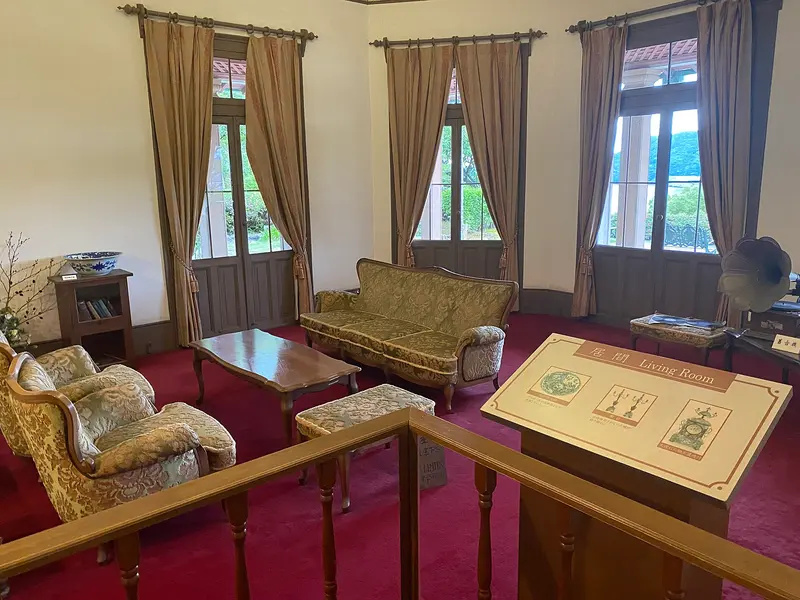
Glover Garden
The former home of the Scottish merchant Glover looks down over Nagasaki harbour, its group of exotic Western houses telling stories of Japan's …
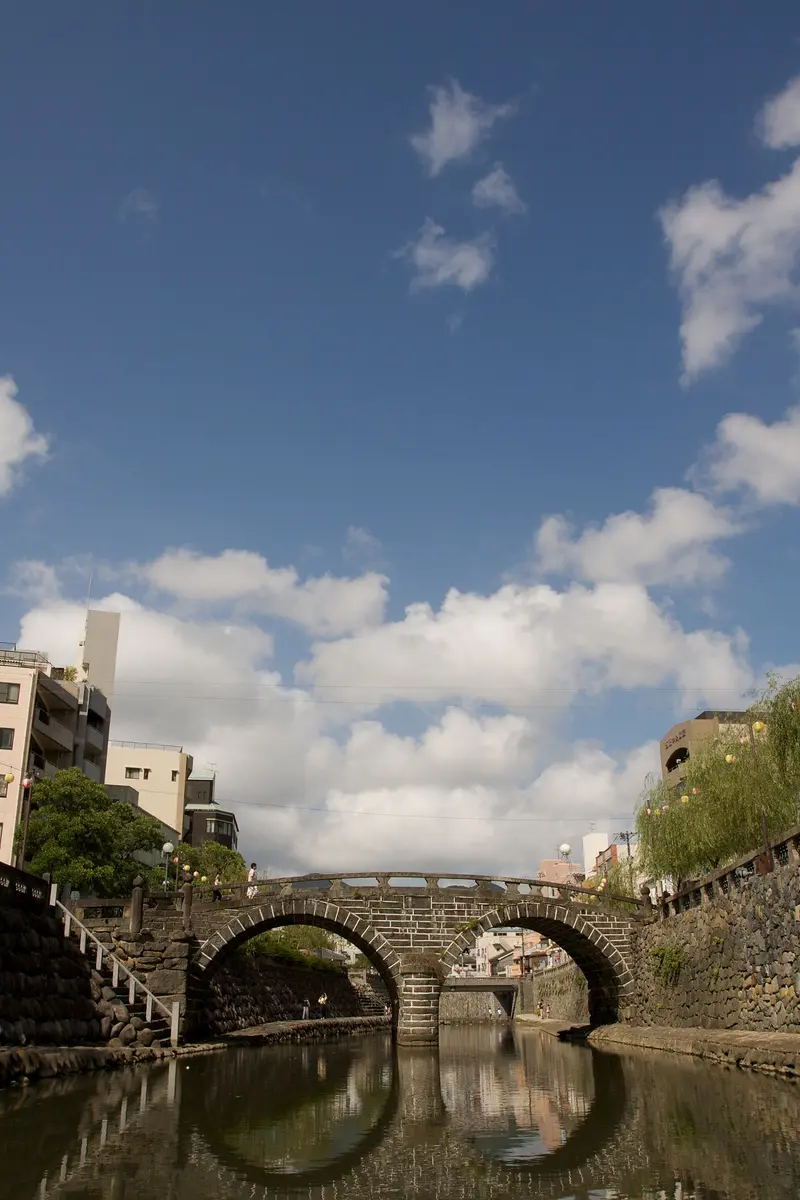
Megane Bridge
Said to be one of Japan's oldest stone arch bridges: its twin stone arches and their reflection in the Nakashima River form a pair of spectacles…
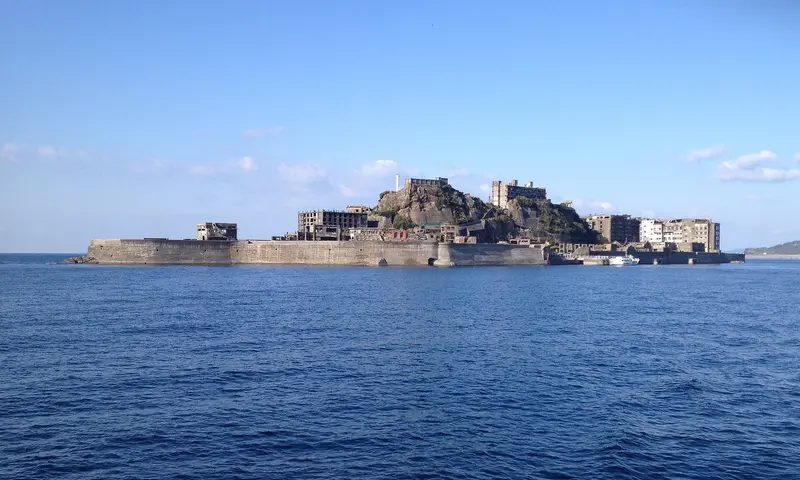
Hashima Island (Gunkanjima)
Seen from the sea, its towering seawalls and dense concrete blocks look like a warship; this 6.3-hectare undersea coal-mining island once housed…
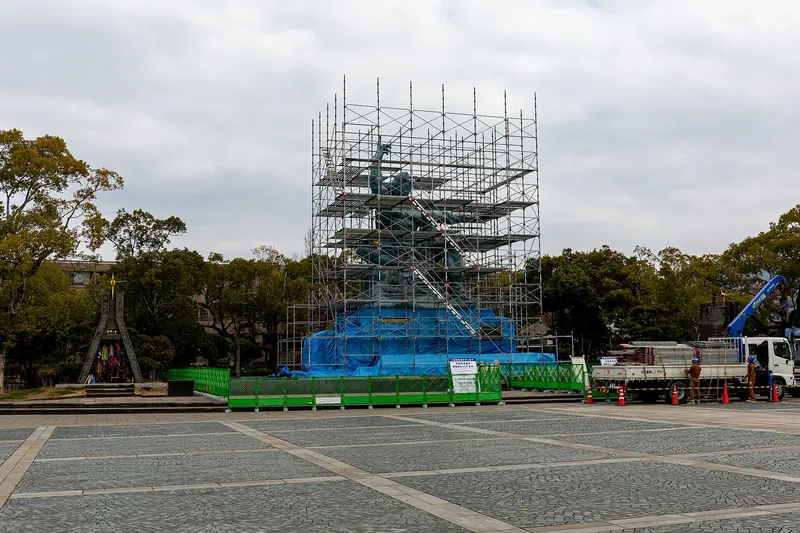
Nagasaki Peace Park
11:02 a.m., 9 August 1945: an atomic bomb exploded 500 m above this ground.
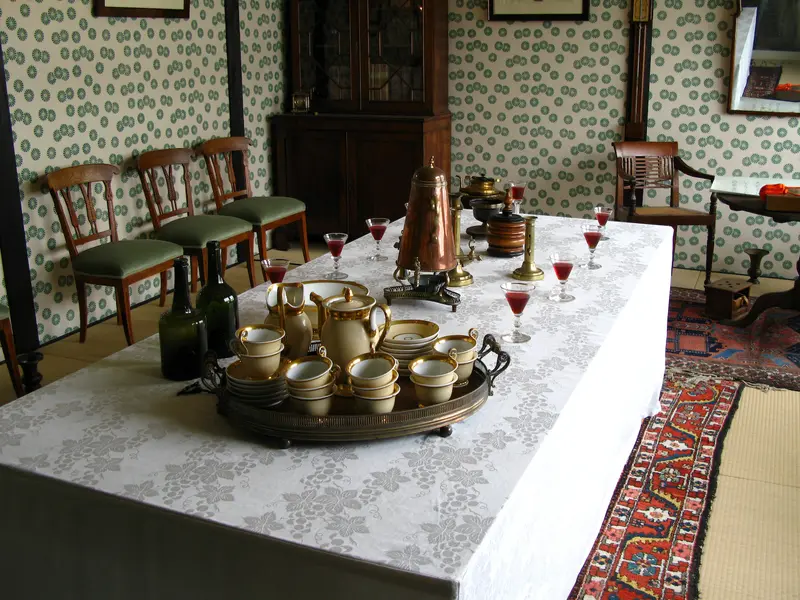
Dejima
For two centuries of national seclusion, Japan's only window on the West: a small fan-shaped artificial island.
Local legends
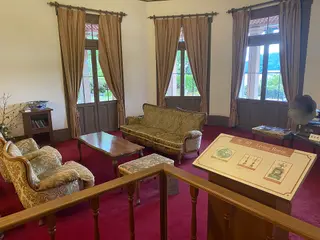 Glover GardenThe 'Madame Butterfly' houseBecause the house and its surroundings evoke Puccini's opera 'Madama Butterfly', it is also know…
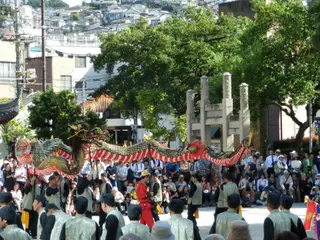 Nagasaki KunchiThe komai of Takao and OtowaTradition holds that in 1634 two courtesans of the Maruyama quarter, Takao and Otowa, performed …
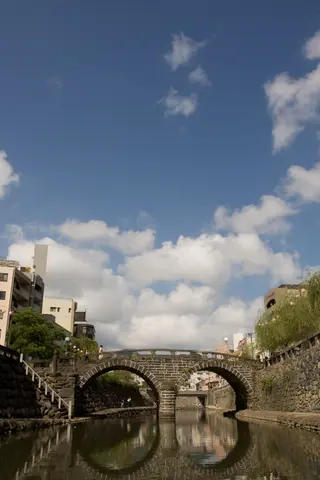 Megane BridgeWishing on the Heart StonesTwenty heart-shaped stones are set in the embankment near Megane Bridge. It is said that you can…