
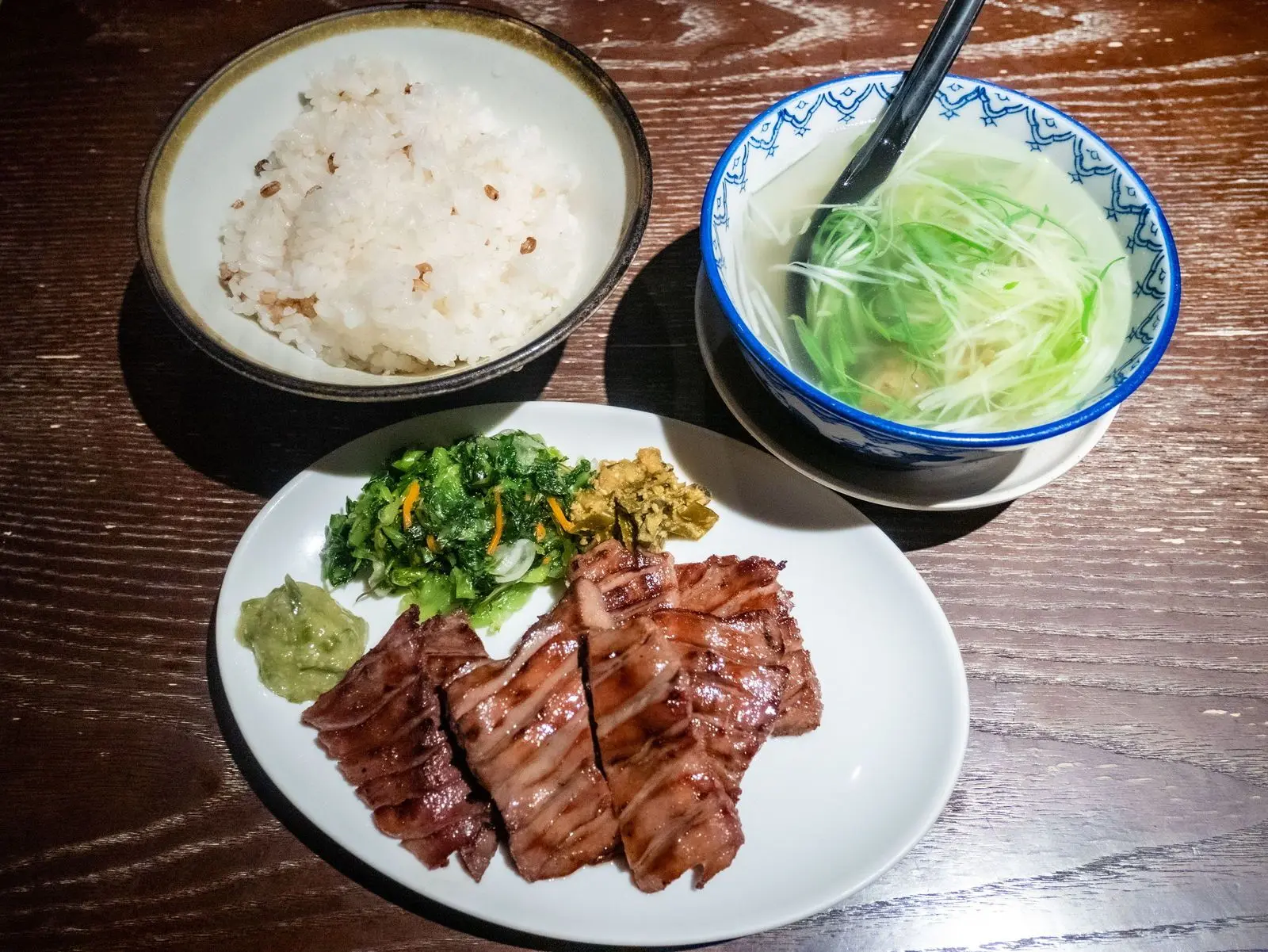
Sendai grilled beef tongue (gyūtan)
牛タン焼き Gyūtan · Sendai, Miyagi Prefecture
After the war, a yakitori shop owner marinated beef tongue in salt and pepper and grilled it over charcoal, and it became a Sendai specialty.
Know before you go
- Do not jump the queue or save places for several people when queuing on Gyūtan Street at Sendai Station
- do not eat a whole piece of the spicy pickles in one bite (some are very hot)
- do not put the oxtail bones from the soup down on the table, but back in the bowl or on the plate the shop provides.
This article is Not yet verified. Please check official announcements for prices, opening hours and dates.
Culture
Culture & customs
Background
Grilled beef tongue is a specialty of Sendai in Miyagi Prefecture. Japanese Wikipedia records that the first to serve beef tongue in Sendai was Sano Keishirō, owner of the eatery Tasuke, with two dates given, 1948 and 1950: 1948 is the year Tasuke opened, and 1950 the year beef tongue went on the menu. Sano had studied Japanese cuisine in Tokyo and eaten stewed tongue at a Western restaurant; after repeated experiments he concluded that tongue was best marinated in salt and pepper and grilled over charcoal. In 1952 Tasuke moved to Inari Kōji and became a beef-tongue specialist; the set of “beef tongue, barley rice, oxtail soup and pickles” took shape afterwards and is still served today. Beef tongue was at first a cheap drinking snack for ordinary people, but rising demand later made it a premium cut.
Local customs
- The standard way to eat it is a gyutan set meal: grilled beef tongue with barley rice, oxtail soup and pickles (often chili peppers pickled in nanban miso)
- the tongue is cut fairly thick and scored on the surface, with a distinctly chewy texture
- you can choose salt or sauce flavoring, salt being the most common. The barley rice in the set meal can usually be refilled once.
Religion & beliefs
- Grilled beef tongue has nothing to do with religion
- eating beef only became widespread after the Meiji era, and Sendai beef tongue is a new speciality that appeared only after the war.
Etiquette & taboos
Etiquette & taboos
Rules that apply here
No photography and no eating or drinking in the permanent gallery of the Okinawa Prefectural Peace Memorial Museum
Do
- Put away your camera, food and drinks before entering the permanent gallery
- For the special exhibition gallery and the children's gallery, check the notices of the day to see whether photography is allowed
- If you need to eat or drink, go to the areas designated by the museum, such as the outdoor colonnade
Don’t
- Do not take photos or videos in the permanent gallery
- Do not eat or drink in the permanent gallery, and do not have meals in other areas of the museum either
- Do not extend the permanent gallery's photo ban into a photo ban across the entire park
The museum's 2026 visitor guide explicitly prohibits photography, eating and drinking in the permanent gallery and asks visitors to check the restrictions for other galleries separately; follow the museum's instructions on site.
Not yet verifiedSource: Okinawa Prefectural Peace Memorial Museum: FY2026 visitor guide, page 6
Japan: At fireworks festivals, don't tape off spots in advance, and never fly drones
Do
- Spread your sheet where there is actual space when you arrive, leaving room for neighbours
- Follow police and staff directions and move with the crowd
- Bring plenty of water and cooling gear to prevent heatstroke
- Riverbanks have lots of insects, so bring repellent
- Festivals usually go ahead in light rain, so bring a raincoat
- Take your rubbish home
Don’t
- Don't mark spots in advance with tape or spray paint on roads or in parks
- Don't fly drones
- Don't use selfie sticks in crowds; the Sumida River festival bans them
- Don't stop in the middle of the path to watch and block the flow
Spots marked in advance are cleared by the organisers, and flying drones is prohibited by law. City-centre festivals run one-way crowd flows, and going against the flow or stopping can cause dangerous crushes.
Verified Oct 19, 2026Source: Excite News: Sumida River Fireworks, access and viewing guide
Mixed, open-air and private baths: read the signs, don't stare, never take photos
Do
- Check the signs before entering; mixed baths are clearly marked, and joining is entirely your choice
- Most mixed baths are nude only, with no swimwear; some allow or lend special bathing wraps or towels, so follow the bath's rules
- If you prefer not to bathe mixed, use the separate men's and women's baths or a private bath
- Outdoor baths are slippery and the temperature changes sharply; hold the handrails when moving
- Use a private bath only within your booked slot and leave on time
- Tohoku and other regions still have many therapeutic hot springs with mixed bathing; for long therapeutic stays, follow the ryokan's and your doctor's advice
Don’t
- Don't stare at other bathers, strike up conversations, or linger to watch
- Don't take photos or videos in the bath area
- Don't overstay a private bath; the next group is waiting
Mixed bathing works only because bathers keep their eyes to themselves; staring or taking photos will get you asked to leave, and filming others in a bath may break local law.
Verified Oct 19, 2026Source: Wikipedia (Japanese): Konyoku
Stay off private land, and ask before photographing children or people
Do
- Ask parents' permission before photographing their children
- Ask geiko, maiko, and other working people before photographing them
- Check for 撮影禁止 (no photography) signs, and ask staff if there are none
- Photograph trains and stations themselves without disrupting operations
Don’t
- Do not enter private homes or land for a shot
- Do not photograph the inside of homes
- Do not aim your camera at individual passengers on trains or buses
- Do not step into rice paddies, flower beds, or along railway tracks for photos
- Do not use selfie sticks or tripods in crowds or dangerous spots
- Do not chase or stop geiko or maiko
Trespassing on private land is illegal and can get you told to leave or to delete your photos. Shooting in no-photo areas will be stopped, and photographing children is seen as an invasion of privacy.
Verified Oct 19, 2026Source: Aichi Now: Sightseeing Manners
Bathe nude in the onsen and keep your towel out of the water
Do
- Bathe fully nude, without swimwear or underwear
- Rest your small towel on your head or the edge of the bath
- Tie up long hair so it stays out of the water
- Enter the bath slowly and keep quiet
- Leave your phone in the locker
- Keep your first soak short, and dry off before returning to the changing room
Don’t
- Do not dip your towel into the bath
- Do not swim, dive, or talk loudly in the bath
- Do not take photos anywhere in the bathing area
- Do not wrap your yukata right side over left; that is how the deceased are dressed
Most of these are written bathhouse rules. Breaking them gets you a reminder from staff, and in serious cases you may be asked to leave. Soaking too long can also make you dizzy.
Verified Oct 19, 2026Source: Authentic Local Japan: Onsen Etiquette
Don’t DON'T
- Do not jump the queue or save places for several people when queuing on Gyūtan Street at Sendai Station
- do not eat a whole piece of the spicy pickles in one bite (some are very hot)
- do not put the oxtail bones from the soup down on the table, but back in the bowl or on the plate the shop provides.
Locals appreciate DO
- People in Sendai appreciate diners who order a full set meal and eat it together with barley rice and oxtail soup
- asking the staff how spicy the nanban miso pickles are before deciding whether to eat them goes down better than swallowing one whole. Praising the thickness and chewiness of the tongue will please the staff
- you can also ask which kind is best for a first-timer.
Plan your visit
Practical info
Travel tips
- Specialist restaurants cluster on Gyūtan Street and Sushi Street on the third floor of Sendai Station and around Kokubunchō
- a meal takes about 40 to 50 minutes. Popular restaurants have long queues at lunch and on weekends. Dietary notes: gyūtan is beef, so it is not suitable if you do not eat beef
- barley rice contains barley (gluten)
- the accompanying pickled chili is very hot, so if you are sensitive to spice, try a little first
- some shops also sell beef-tongue stew and beef-tongue curry. Souvenir shops at Sendai Station sell vacuum-packed beef tongue
- check your destination's rules on bringing in meat before you fly home. Prices and opening hours are set by each restaurant
- popular old shops often have queues, so going outside peak mealtimes is more relaxed.
Photos
Photos
くろふね · CC BY 4.0
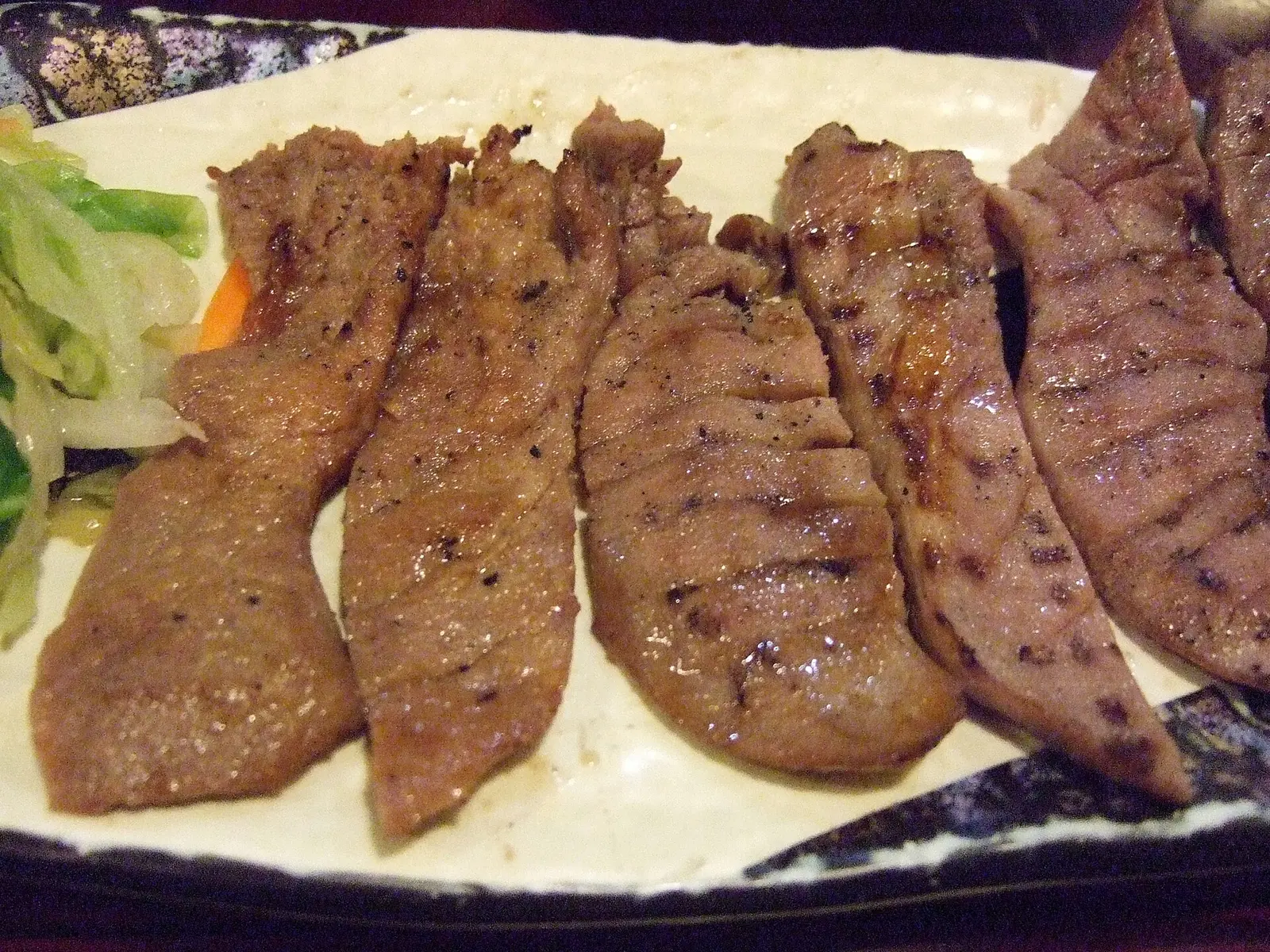
Sakurai Midori · CC BY-SA 3.0
Sources & verification notes
How do you like this place?
More nearby
Also in Tohoku
Nearby sights
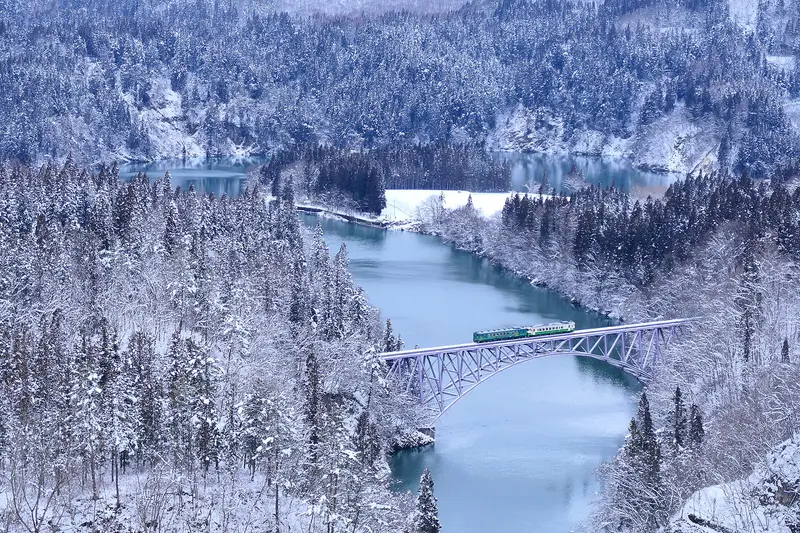
Tadami Line · First Tadami River Bridge
A railway poem of snow country: the postcard view of a train crossing the Tadami River
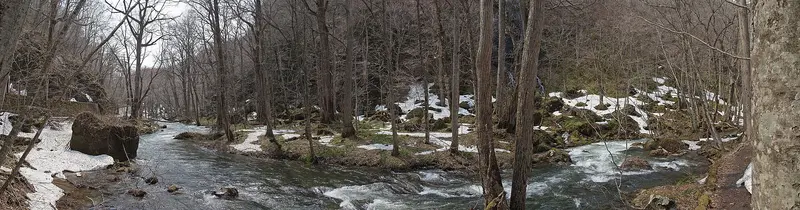
Oirase Stream
Fourteen kilometres of moss and waterfalls: a poem walked upstream through virgin forest
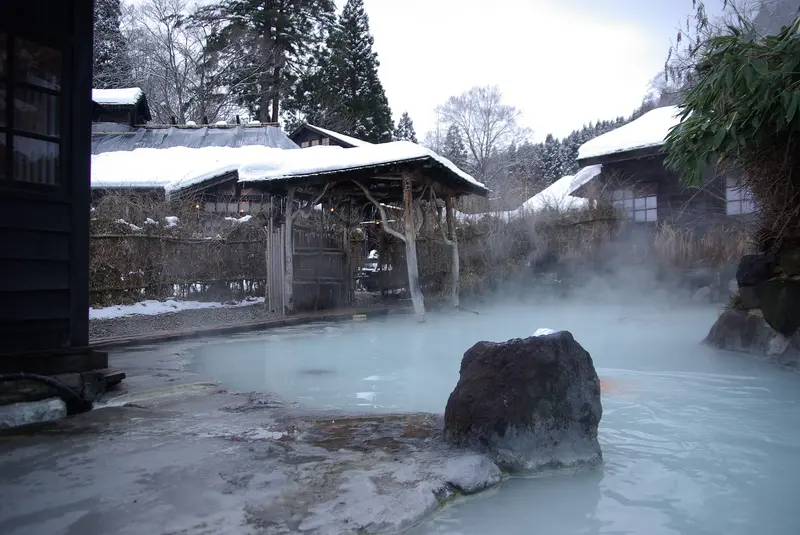
Nyūtō Onsen
A tour of seven hot springs: milky secret baths under thatched roofs
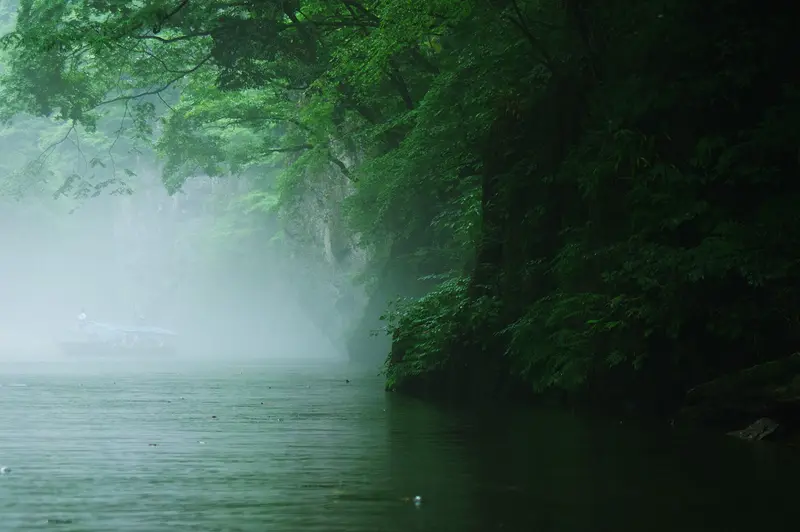
Geibikei Gorge
In the boatman's song: a river trip through one of Japan's 100 landscapes
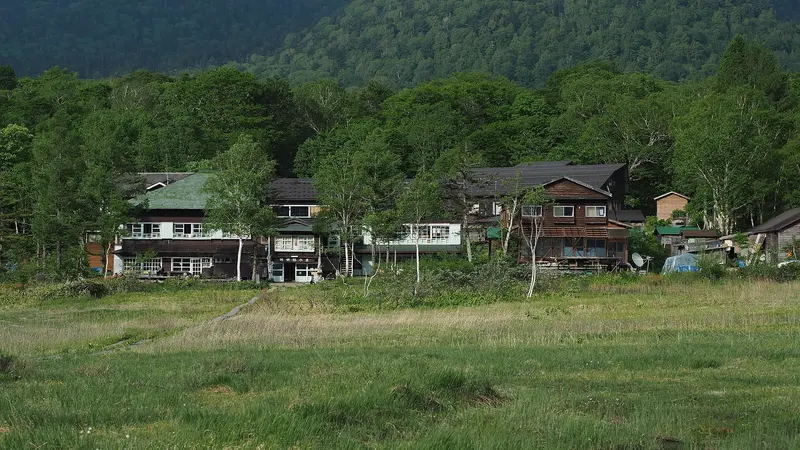
Oze
Wetlands of skunk cabbage: walking the boardwalks into the birthplace of Japanese nature conservation
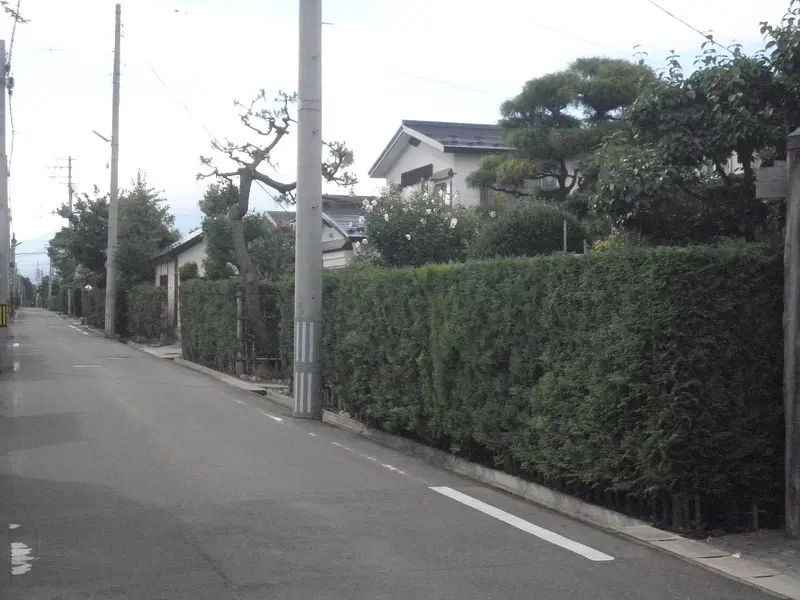
Hirosaki Nakachō Samurai District
Step out of the north gate of Hirosaki Castle into an old samurai district that is still lived in, and see how plots, hedges and gates preserve …
Local legends
 Lake TowadaThe Azure Dragon of the LakeLocal legend says that Lake Towada is guarded by an azure dragon. With its clear, deep water rin…
 Ginzan OnsenEchoes of Spirited AwayMany visitors say the snowy night streets of Ginzan Onsen remind them of the animated film Spiri…
 Chūson-ji Temple, HiraizumiMarco Polo's "land of gold"The Travels of Marco Polo (c. 1300) describes "Zipangu", a land with tremendous quantities of go…
 Matsushima"Matsushima, ah!" is not by BashōBashō is often credited with the verse "Matsushima, ah! Ah, Matsushima, ah! Matsushima, ah!" Its…MatsushimaThe Fukuura Bridge superstitionA local superstition holds that a couple who cross the long bridge to Fukuurajima together will …
 ZuihōdenWhere did that eye go?Masamune's right eye was blinded by smallpox, but exactly how he lost it is not reliably recorde…