
Longsheng Various Nationalities Autonomous County, Guilin, Guangxi Zhuang Autonomous Region · Terraced Farming / Ethnic Villages
Longji Terraced Fields
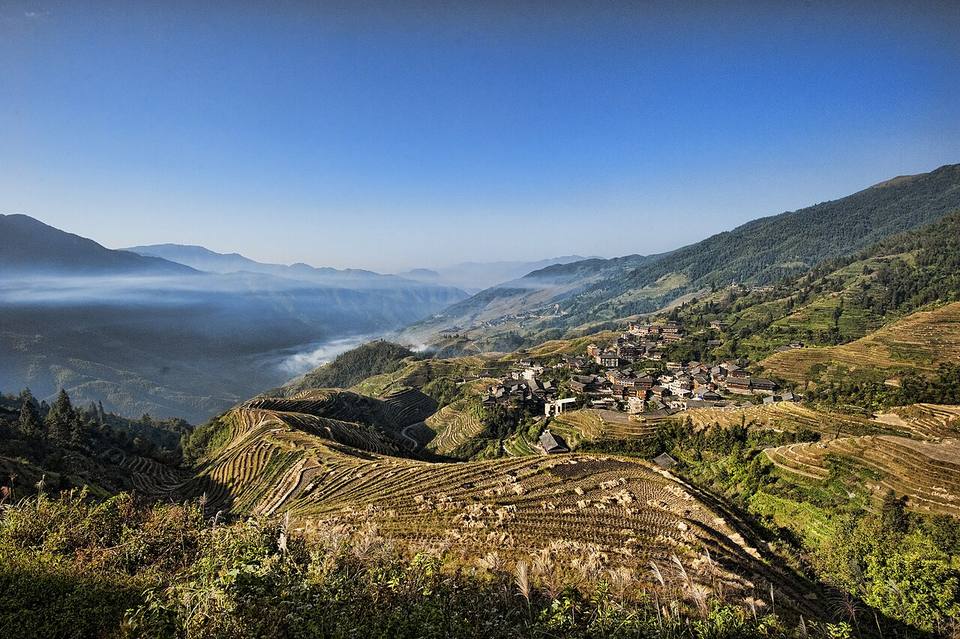
Curves coiling from the foot of the mountain to its summit, layered over 650 years, with Zhuang and Red Yao villages living in the golden rice waves of autumn — the terraces are not scenery but a living farm tool.
Location
Longsheng Various Nationalities Autonomous County, Guilin, Guangxi Zhuang Autonomous Region
Stories and legends
The terraces' opening has legends of the "Zhuang ancestors and Shennong" kind — the oral layer.
History and context
The Longji terraces were first opened in the Yuan and completed by the early Qing; Zhuang and Yao ancestors spent some 650 years carving out terraces from about 300 to 1,100 metres above sea level. The core villages are Ping'an Village (Zhuang) and Jinkeng Dazhai (Red Yao). The Red Yao women's custom of growing their hair long and coiling it in a bun (the long-hair culture) and Yao song and dance are ethnic hallmarks. The terraces through the seasons: mirror-like flooded fields in spring, green waves in summer, gold in autumn, silver dress in winter (with occasional snow).
Local life
Longji's temperament is "farming as rhythm": transplanting, weeding and harvesting set the villages' calendar, and the visitor's viewing-platform perspective and the villager's field-ridge perspective are two faces of the same landscape. The Red Yao's long-hair banquets and the Zhuang's oil-tea hospitality pull the terraces back from photographic object to living substance. Recent inn development has given some villages a growing commercial air, but the old folk who head down to the fields at dawn are still the anchor here.
Customs
Red Yao long-hair song-and-dance displays and Zhuang road-blocking welcomes (per village arrangements; paid items are clearly priced); in the busy farming season, villagers working the fields are the real scene.
Beliefs
Traditional Zhuang and Yao nature / ancestor beliefs (the Red Yao's Panwang Festival is a great Yao festival); ethnic farming culture dominates overall.
Local etiquette
Never step on the field ridges or the rice crop (the ridges are the villagers' paths and the lifeline of water retention); ask and confirm prices before photographing displays such as the long-hair combing; obtain consent before photographing elders and sacrificial sites in the villages.
Visiting notes
Best from late September to mid-October for the golden period (per that year's rice-ripening announcements) and in April–May for the mirror flooding period; the mountain road winds, and direct buses from Guilin take about 2.5–3 hours; staying a night in a village for the dawn is the best value; National Day is the year's peak — avoid it if you can.
What to eat nearby
Bamboo-tube rice; Longji chillies and Longji tea (local specialities); cured pork and wild vegetables; Zhuang five-colour glutinous rice (festive); Yao oil tea
Farmhouse restaurants in Ping'an Village / Jinkeng Dazhai
Road-blocking wine / welcome tea is a courtesy — a small sip to show respect suffices (you may politely decline, explaining alcohol capacity or driving); farmhouse dishes are cooked to order and slow, so reserve ahead
A full meal 50–100 yuan (for reference only)
Having villagers carry your luggage for a fee is the norm (agree the price first); sunrise viewing platforms require walking mountain paths in the dark — bring a headlamp.
Source leads: Longsheng Various Nationalities Autonomous County Bureau of Culture and Tourism; Longji Terraces scenic area official site.
Image source · chensiyuan · CC BY-SA 4.0