
Putuo District, Zhoushan, Zhejiang Province · Island / Buddhist Sacred Site
Mount Putuo
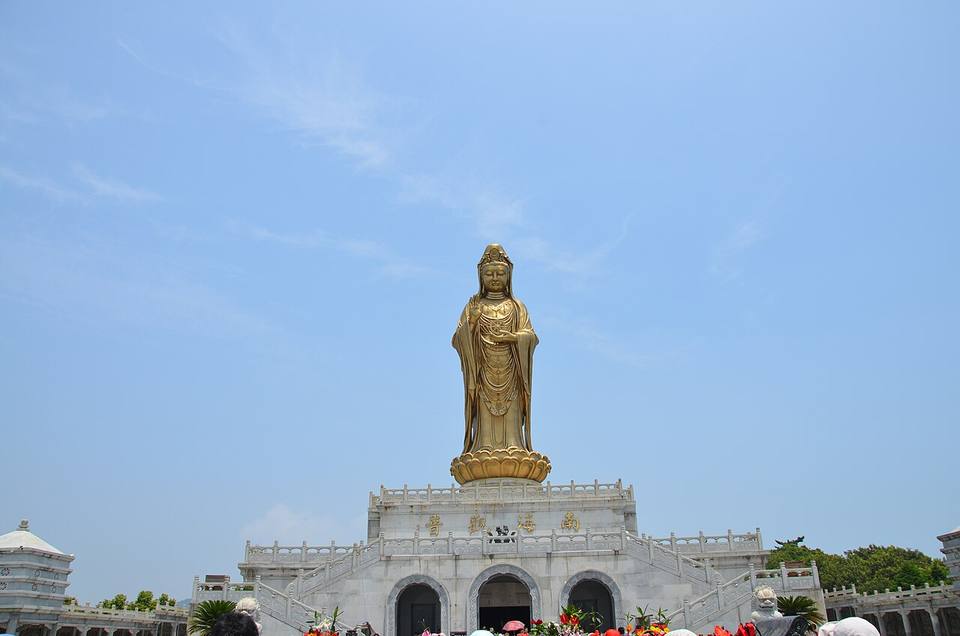
The Guanyin sanctuary, a Buddhist kingdom on the sea: the 33-metre standing statue of the South Sea Guanyin guards the East China Sea, while the incense of the island's three great temples meets the briny freshness of a fishing-village island in a single mountain.
Location
Putuo District, Zhoushan, Zhejiang Province
Stories and legends
The legend of the "Guanyin Who Refused to Leave": in the Later Liang, the Japanese monk Hui'e was taking a Guanyin statue home when his boat struck the reefs off Putuo and could not proceed, so the statue stayed and a temple was built — the founding legend, widely circulated.
History and context
Mount Putuo is one of the Four Sacred Buddhist Mountains of China (the Guanyin sanctuary), with flourishing incense since the Tang and Song. The three great Chan temples — Puji, Fayu and Huiji — form its core, alongside landmarks such as Zizhu Forest (Purple Bamboo Forest) and the standing South Sea Guanyin statue (completed in 1997, 33 metres tall including the base, as commonly stated). The whole island is reached by boat (from Zhujiajian / Shenjiamen piers) and runs on reservations and scheduled ferries (per official rules).
Local life
Mount Putuo's doubleness is utterly charming: at four in the morning the bells of Puji Temple's dawn service rise together with the motors of the fishing harbour, and pilgrims and tourists walk the incense path together. Islanders' lives are governed by the incense seasons — the Guanyin incense fairs on the 19th days of the second, sixth and ninth lunar months put the whole island into examination mode, with inns, vegetarian kitchens and ferries all at full load; on ordinary days it returns to slow island-village pace.
Customs
During the incense fairs some pilgrims climb Mount Foding "three steps, one prostration"; requesting incense, fulfilling vows and eating vegetarian meals form the complete mountain-pilgrimage set.
Beliefs
A centre of the Buddhist Guanyin faith and a sacred site of Chinese Buddhism.
Local etiquette
Do not photograph the Buddha statues inside the temples, make loud noise or enter the halls in revealing clothing; do not accept overpriced incense from unlicensed "wild guides" in the island's scenic spots; at seafood stalls, agree on prices before cooking (a historical problem, now strongly regulated — keep a receipt-conscious mindset).
Visiting notes
During incense fairs and holidays, book ferry tickets and rooms well ahead; the island is served by shuttle buses between the temples, with no disorderly private traffic; spring and autumn weekdays are best; the Wugongzhi Pier at Zhujiajian has frequent sailings — reserve parking in advance if driving (per pier notices).
What to eat nearby
Mount Putuo vegetarian food (temple vegetarian meals / vegetarian banquets); Guanyin cakes (island-made pastries); Zhoushan seafood noodles; East China Sea seasonal catches such as swimming crab / hairtail (in season); Buddhist-tea and cloud-tea snacks
The vegetarian restaurant area around Puji Temple, fishing-family restaurants in the Longsha / Xishan neighbourhoods, and the seafood-stall area at Zhujiajian Pier (after leaving the island)
Some temple vegetarian windows observe the no-food-after-midday rule — follow on-site practice; seafood is weighed at market price, so confirm "processing fee + total" first
Vegetarian meals 30–80 yuan (for reference only); a seafood meal 150–300 yuan (for reference only)
Island prices include freight and run high as a matter of course; for expensive seafood, eating at the Shenjiamen night stalls after leaving the island is better value.
Source leads: Mount Putuo Scenic Area Management Committee official site; Zhoushan Municipal Bureau of Culture and Tourism.
Image source · guan · CC BY 3.0