
Bulguksa Temple
불국사 佛國寺 · Gyeongju, Gyeongsangbuk-do, South Korea
The pinnacle of Unified Silla Buddhist art: the Cheongungyo and Baegungyo bridges and the Seokgatap and Dabotap pagodas
Know before you go
- Cheongungyo and Baegungyo bridges and Yeonhwagyo and Chilbogyo bridges are all National Treasures and may not be walked on
- don't make noise or use flash when people are worshipping in the halls
- don't touch the stone pagodas
Culture
Culture & customs
Background
Bulguksa stands at the foot of Tohamsan Mountain in Gyeongju. The temple's records say a small temple already existed in 528 under King Beopheung, and the Samguk Yusa records that the present temple was founded in 751 by the chief minister Kim Dae-seong as a vow for his parents; after Kim Dae-seong died in 774 the Silla royal court completed it and named it Bulguksa, meaning "land of the Buddha." The temple holds six National Treasures, including the Seokgatap and Dabotap pagodas, the Cheongungyo and Baegungyo bridges, the Yeonhwagyo and Chilbogyo bridges, and two gilt-bronze Buddha statues. The Cheongungyo (16 steps) and Baegungyo (18 steps) bridges at the entrance have 34 steps in all, symbolising the stairway to enlightenment; the plain three-storey Seokgatap pagoda is 8.2 m tall and the intricate, ornate Dabotap is 10.4 m tall, and Dabotap appears on Korea's 10-won coin. The Pure Light Dharani Sutra found inside Seokgatap in 1966 was printed between 704 and 751 and is one of the world's oldest woodblock prints. It was inscribed as a World Heritage Site together with Seokguram in 1995.
Local customs
- All the temple's wooden buildings burned down during the Imjin War
- they were rebuilt bit by bit from 1604, with about forty rounds of repairs up to 1805. A major restoration in 1969–1973 gave the temple its present appearance, while the stonework is still original Silla. Hyun Jin-geon's historical novel The Shadowless Pagoda, based on the Seokgatap and Dabotap pagodas, was also made into a film in 1957.
Religion & beliefs
- The head temple of the 11th district of the Jogye Order of Korean Buddhism
- Daeungjeon Hall enshrines Shakyamuni Buddha, Geungnakjeon Hall a seated gilt-bronze Amitabha Buddha, and Birojeon Hall a seated gilt-bronze Vairocana Buddha.
Etiquette & taboos
Etiquette & taboos
Don’t DON'T
- Cheongungyo and Baegungyo bridges and Yeonhwagyo and Chilbogyo bridges are all National Treasures and may not be walked on
- don't make noise or use flash when people are worshipping in the halls
- don't touch the stone pagodas
Locals appreciate DO
- In front of Daeungjeon Hall, compare the simplicity of Seokgatap with the intricacy of Dabotap
- take the full frontal view from the square in front of the Cheongungyo and Baegungyo bridges
- ideally plan it for the same day as Seokguram.
Plan your visit
Practical info
Travel tips
- Take a bus or taxi from central Gyeongju
- the temple is built into the mountainside and has many steps. After Bulguksa you can take a bus or follow the mountain path to Seokguram, about 3 km away. Allow about 2 hours for Bulguksa. Tickets and opening hours are as announced by the temple.
Photos
Photos
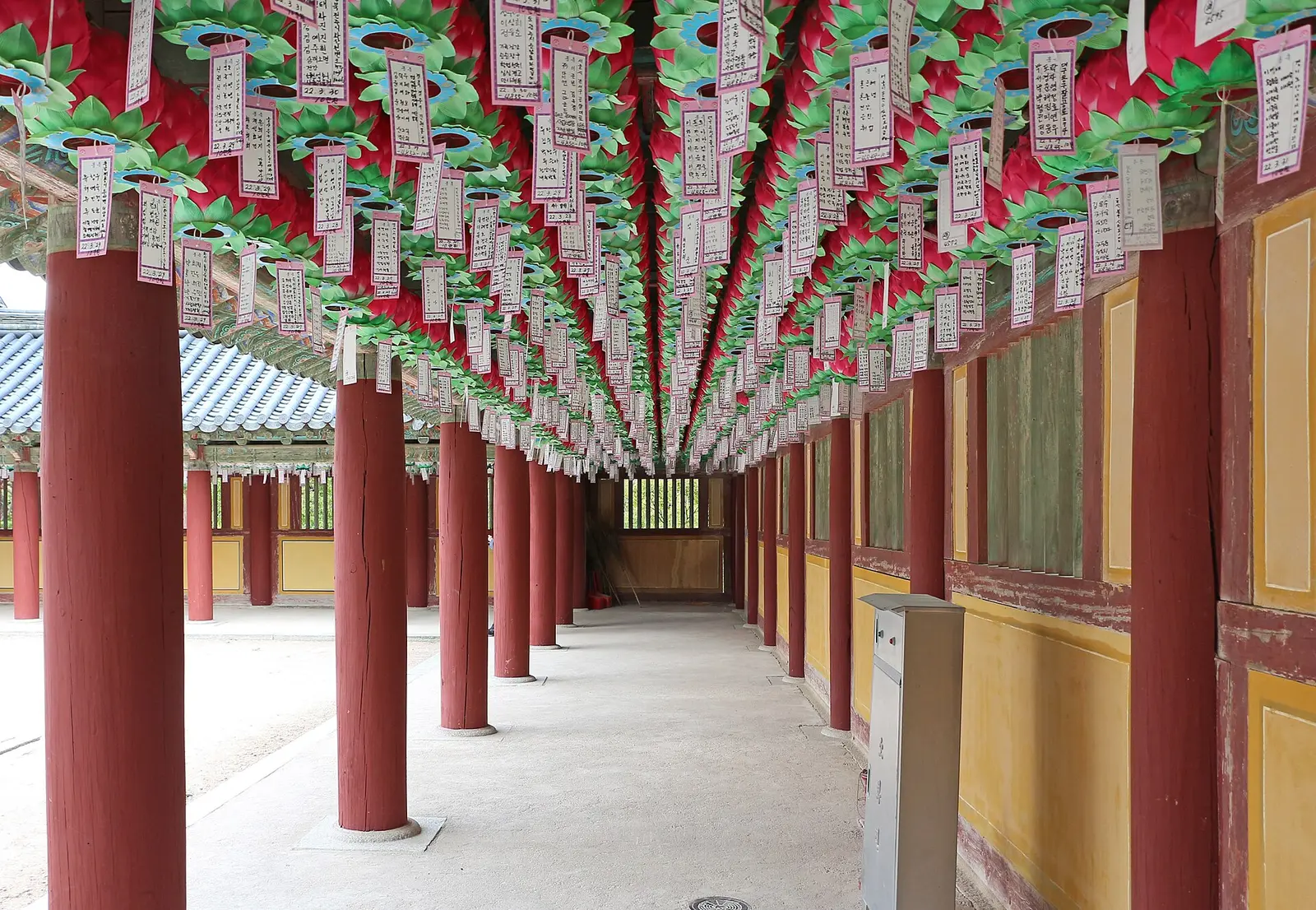
Bernard Gagnon · CC0
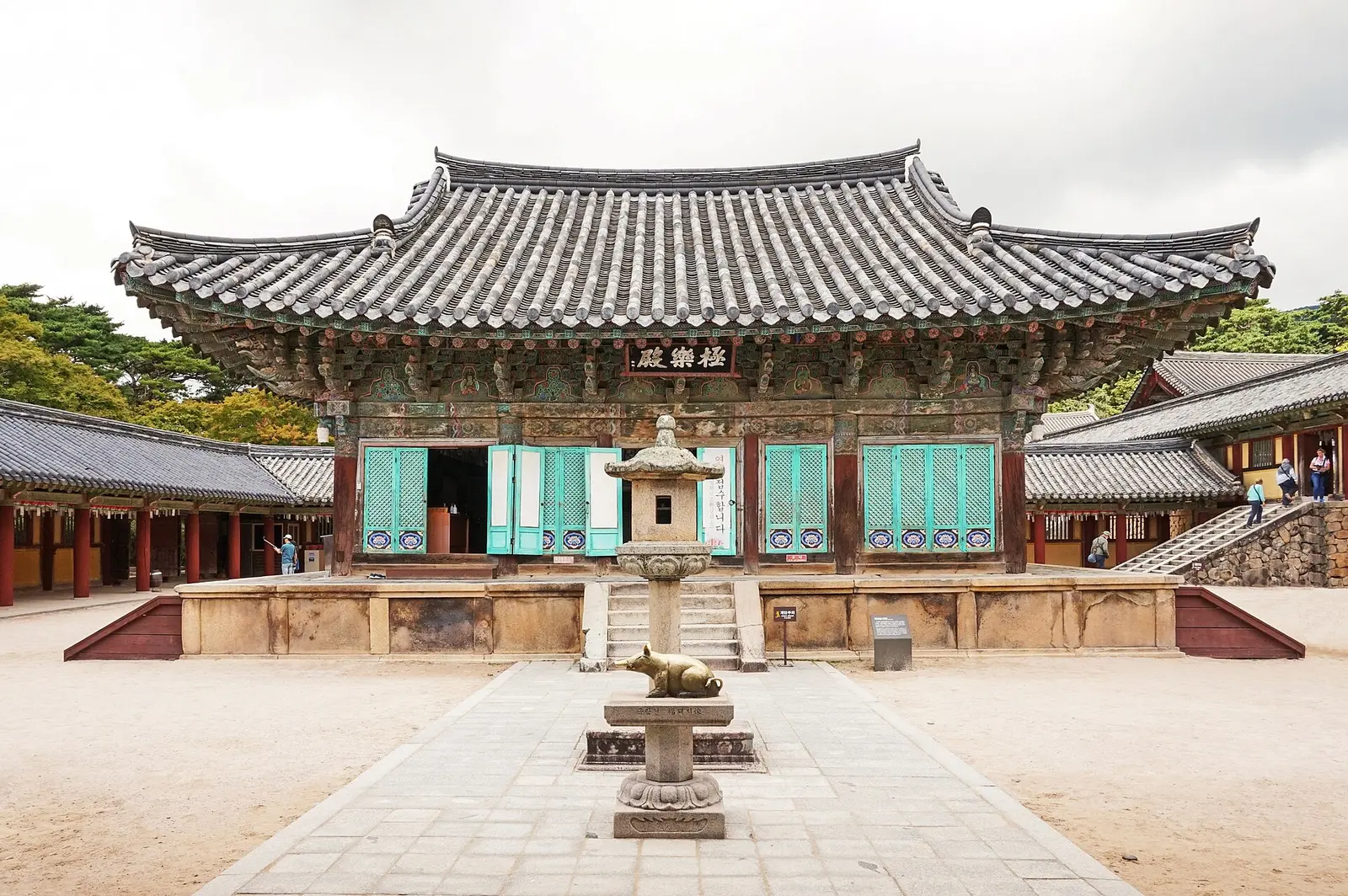
Bernard Gagnon · CC0
How do you like this place?
More nearby
Also in Gyeongju
Nearby sights
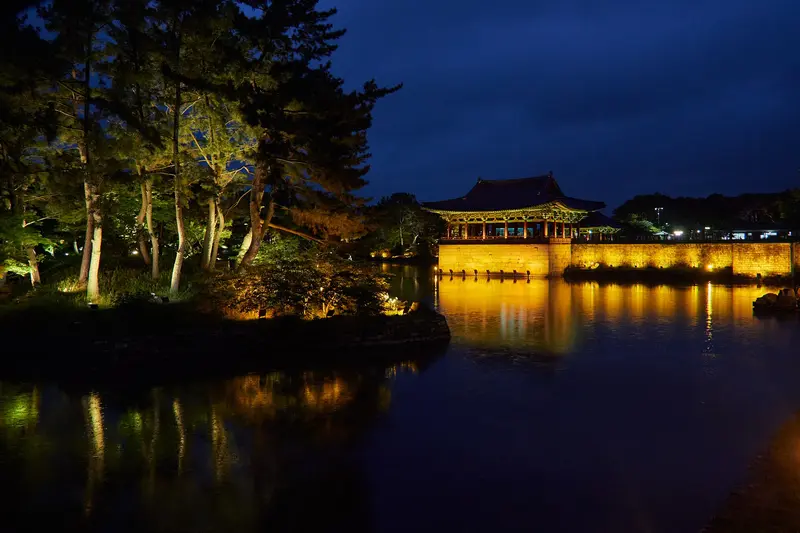
Donggung Palace and Wolji Pond
Detached palace and artificial pond of the Silla kings, where the pavilions reflected at night make Gyeongju's most beautiful scene
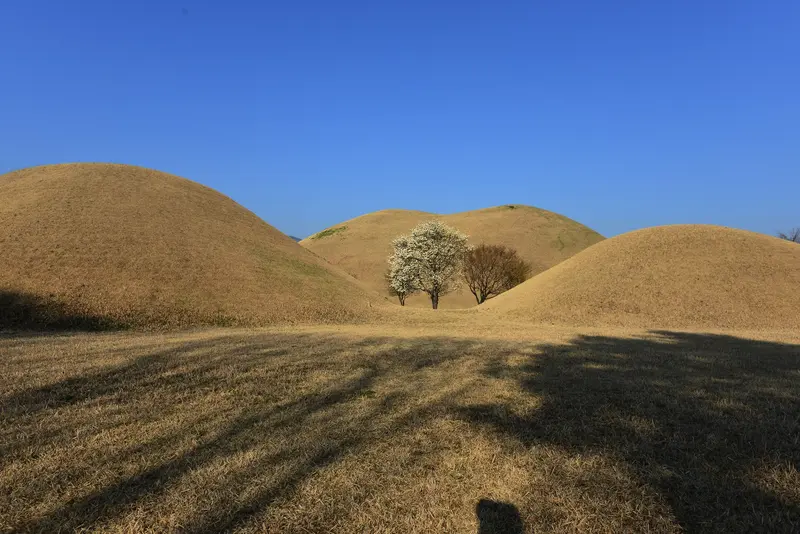
Daereungwon Tomb Complex
Silla royal tombs rising from the flat ground of the city center; the gold crown and the Heavenly Horse painting were found in Cheonmachong
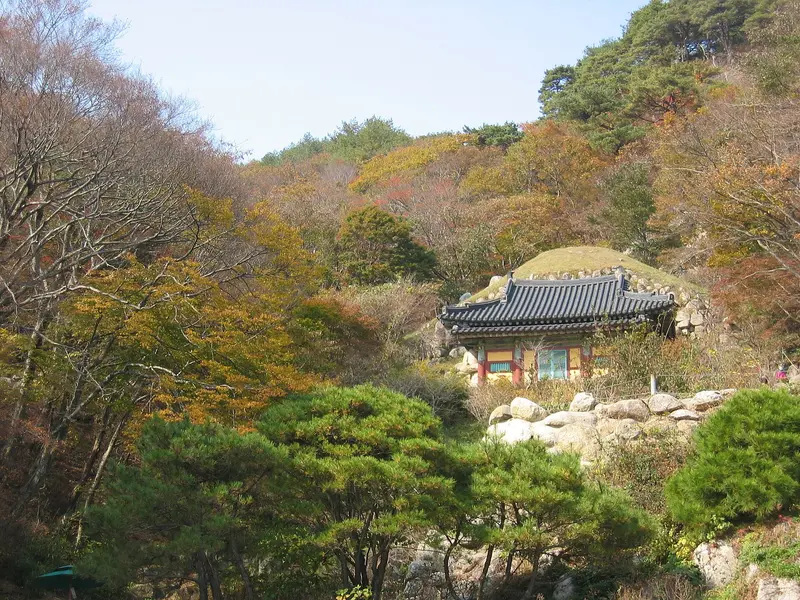
Seokguram Grotto
A man-made granite grotto on Tohamsan Mountain, its main Buddha facing the sunrise over the East Sea