
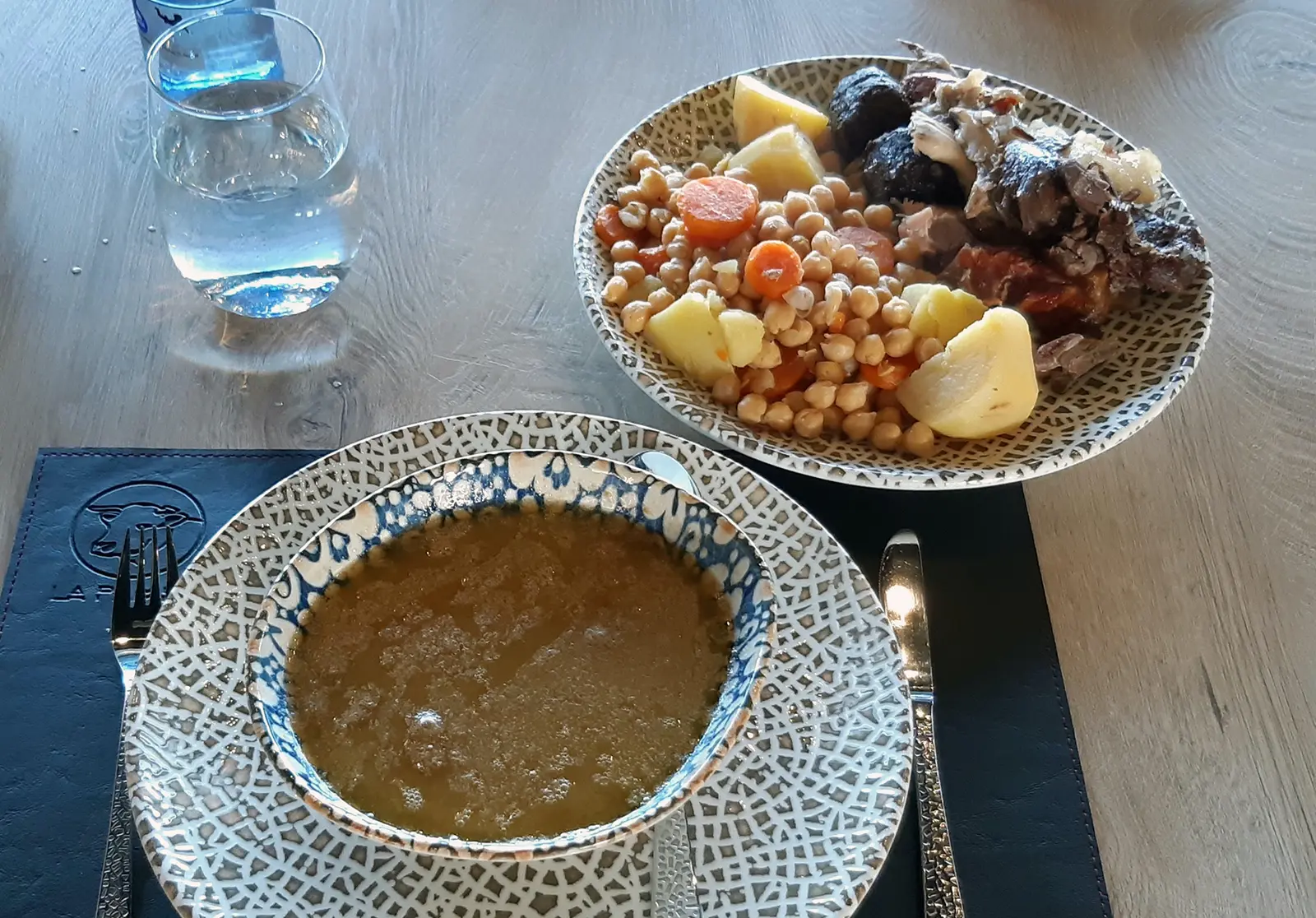
Cocido madrileño
Cocido madrileño · Madrid, Spain
A pot of chickpeas, vegetables and assorted meats, served in turn as three 'vuelcos'.
Know before you go
- Do not expect every place to have the stew in the evening (many places only serve it at lunch, or even only on certain days)
- do not mix all three courses on one plate and eat them in one go
- do not waste food, as portions are large, so you can first ask the staff whether one portion is enough for two
This article is Not yet verified. Please check official announcements for prices, opening hours and dates.
Culture
Culture & customs
Background
Cocido madrileño is one of the most representative dishes of Madrid cuisine: chickpeas as the main ingredient, slowly stewed with assorted vegetables, meat, pork fat and sausages. According to Spanish Wikipedia, it has humble origins as food of the lower classes, later entered restaurant menus and was gradually accepted by high society; it shares roots with other Spanish stews such as cocido lebaniego and cocido maragato. There are several theories about its origin: some see it as an evolution of Berber couscous, some trace it to the traditional Spanish "olla podrida," and others to the Sephardic Jewish Sabbath stew "adafina"; all are only speculation. Chickpeas are said to have reached Spain in Carthaginian times and were used in Sephardic Jewish stews in the Middle Ages. It is a hearty home-style winter dish that has now spread from Madrid throughout Spain.
Local customs
- The classic way to serve it is in three courses (vuelco): the first is the broth from the stew, often with thin noodles
- the second is chickpeas with vegetables and potatoes
- the third is various meats, sausages and pork fat. Many restaurants serve it only at lunch, often as one serving per person with both soup and meat, and the portions are very large.
Religion & beliefs
Pork and blood sausage are traditionally common in cocido madrileño. As for its link to the Jewish Sabbath stew, that is only one of the theories proposed by scholars and should not be taken as settled. In the Catholic tradition, some families avoid meat stews during Lent.
Etiquette & taboos
Etiquette & taboos
Rules that apply here
Spain: Cover your shoulders and knees and take off your hat in churches
Do
- Wear a top that covers your shoulders and trousers or a skirt below the knee
- Take off your hat once you are inside
- Carry a light shawl or cardigan to cover up on hot days
- Keep quiet during Mass or prayers and watch from the back
- Rules vary by church: follow the signs at the door and the staff
Don’t
- Don't wear sleeveless tops, shorts above the knee, miniskirts or swimwear
- Don't go in barefoot
- Don't walk around the nave or talk loudly during Mass
The Sagrada Família enforces its dress code at the entrance for visitors of all ages, so you may be turned away if you do not comply; even where you get in, revealing clothes offend worshippers.
Verified Oct 19, 2026Source: Official site: Sagrada Família FAQ
Don’t DON'T
- Do not expect every place to have the stew in the evening (many places only serve it at lunch, or even only on certain days)
- do not mix all three courses on one plate and eat them in one go
- do not waste food, as portions are large, so you can first ask the staff whether one portion is enough for two
- do not hurry the staff during the break after lunch.
Locals appreciate DO
- People in Madrid appreciate guests who eat the courses in order, starting with the soup
- a pot of stew at lunchtime in winter, finished slowly, followed by a coffee and a chat, is the rhythm locals love most. Ask the staff how to eat the three courses and they are usually happy to explain.
Plan your visit
Practical info
Travel tips
- In Madrid's old town, around Puerta del Sol and the Latin Quarter, there are some long-established restaurants famous for cocido
- it is most popular at lunch in winter and often requires a reservation, and a meal takes about an hour and a half to two hours. Some restaurants serve it only on certain weekdays, so check before you go. It combines well with Puerta del Sol, Plaza Mayor and the Sunday flea market in the Latin Quarter. Dietary notes: the stew contains pork fat, Spanish chorizo and blood sausage (morcilla), so it is not suitable for those who avoid pork
- you can ask whether there is a version with only chicken and beef
- the thin noodles in the soup contain gluten
- it is high in salt and fat. Prices and opening hours are set by each restaurant
- popular old places often have queues, so eating outside peak mealtimes is more relaxed.
How do you like this place?
More nearby
Also in Spain
Nearby sights
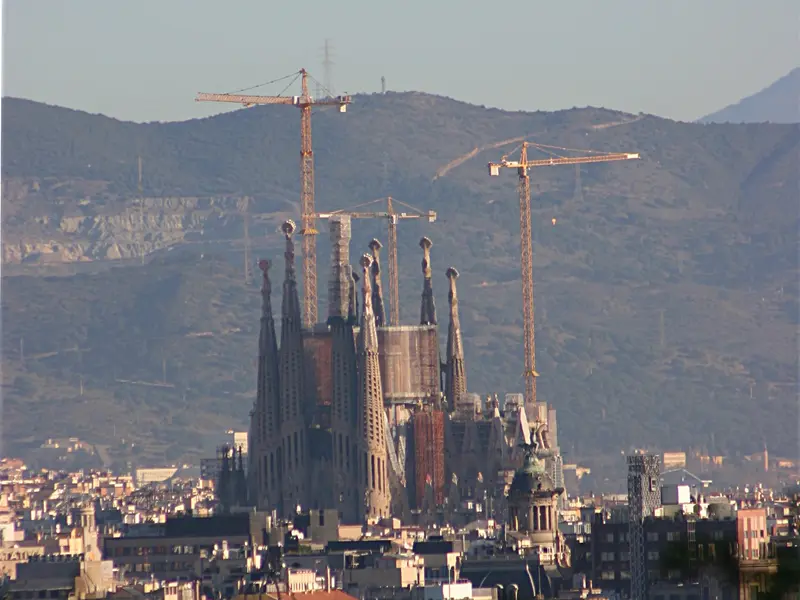
Sagrada Família
Gaudí's lifelong 'Bible in stone', a church that is still growing
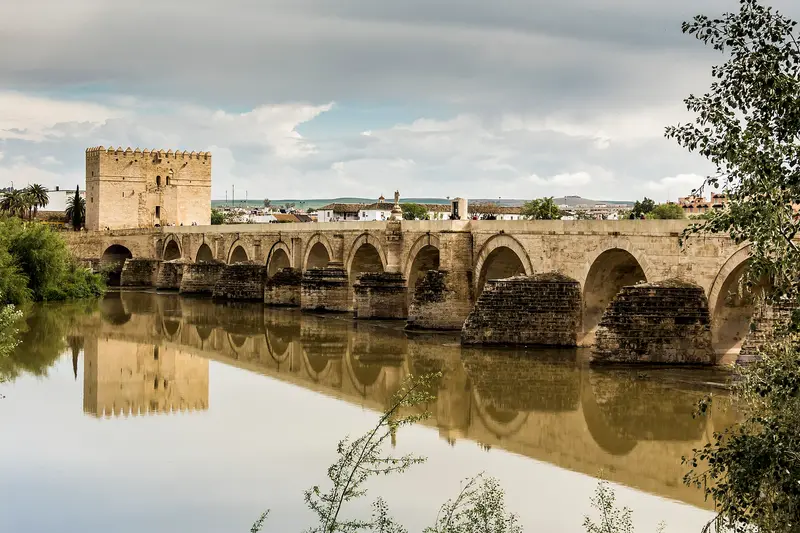
Roman Bridge of Córdoba
Look back from the river at the Mosque–Cathedral and the old town, and observe a bridge where Roman origins and later rebuilding are layered tog…
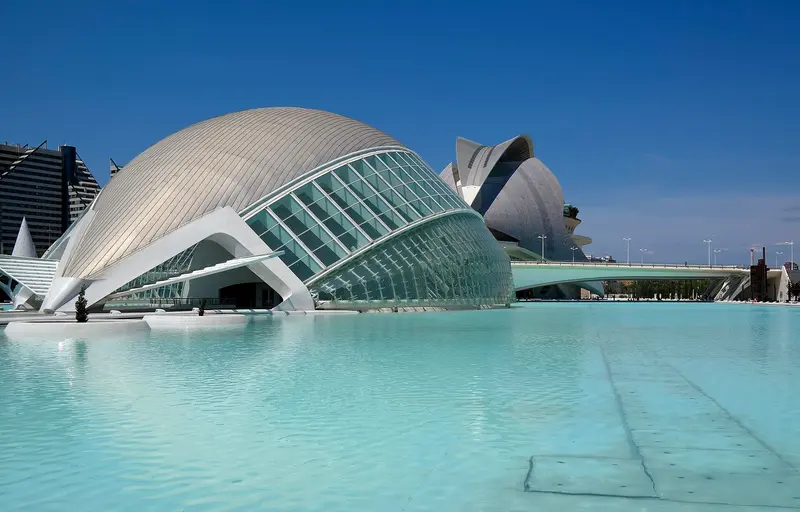
City of Arts and Sciences, Valencia
Walk along the old bed of the Turia and choose between the science museum, the aquarium or the dome cinema according to your interests.
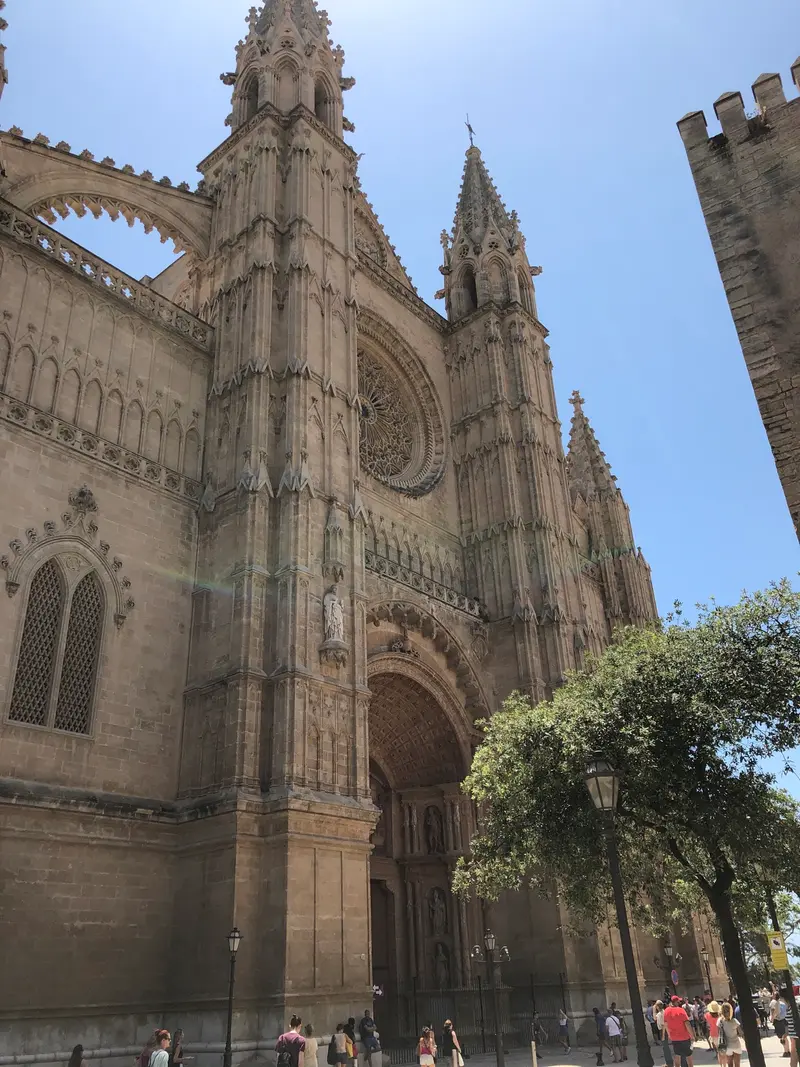
Mallorca
The largest of the Balearic Islands, with the World Heritage-listed Serra de Tramuntana, Palma Cathedral rising by the sea, prehistoric megalith…
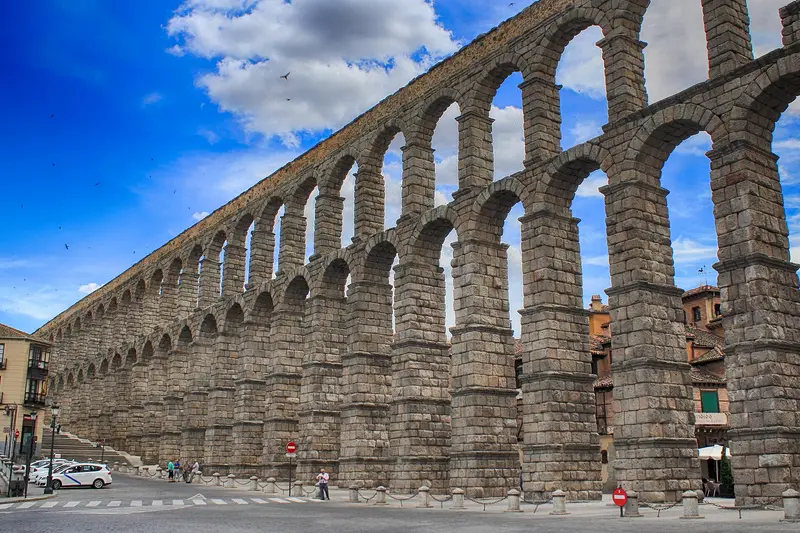
Segovia
The Roman aqueduct, built of granite without mortar, strides across the Plaza del Azoguejo and still stands nearly two thousand years later; the…

Guggenheim Museum Bilbao
Frank Gehry's curving titanium building unfolds along the river and has become a landmark of contemporary architecture; inside is Richard Serra'…
Local legends
 La Tomatina in BuñolThe fallen big-headIt is said that on the last Wednesday of August 1945, during a parade of giants and big-heads in…
 Falles of ValenciaThe carpenters' candle standsIt is said that Valencia's carpenters once worked through the winter by candles hung on wooden s…
 Camino de SantiagoThe bridegroom covered in shellsLegend says that after Saint James was martyred, his body was carried by boat back to the Iberia…Camino de SantiagoThe Milky Way as pilgrims' dustA medieval legend held that the Milky Way was formed from the dust raised by pilgrims on the roa…
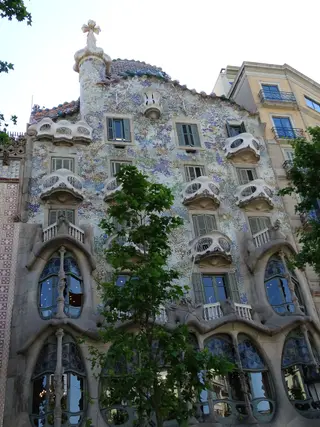 Casa Batlló and Casa MilàThe dragon and Saint George on the roofThe arched roof of Casa Batlló is often read as a dragon's back, and the cross-topped spire is s…
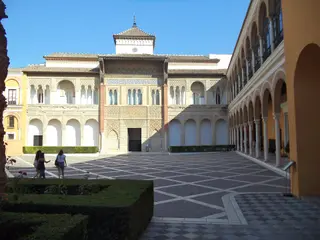 Royal Alcázar of SevilleThe legend of the maidens' tributeLegend has it that the Moorish rulers demanded an annual tribute of one hundred maidens from the…