
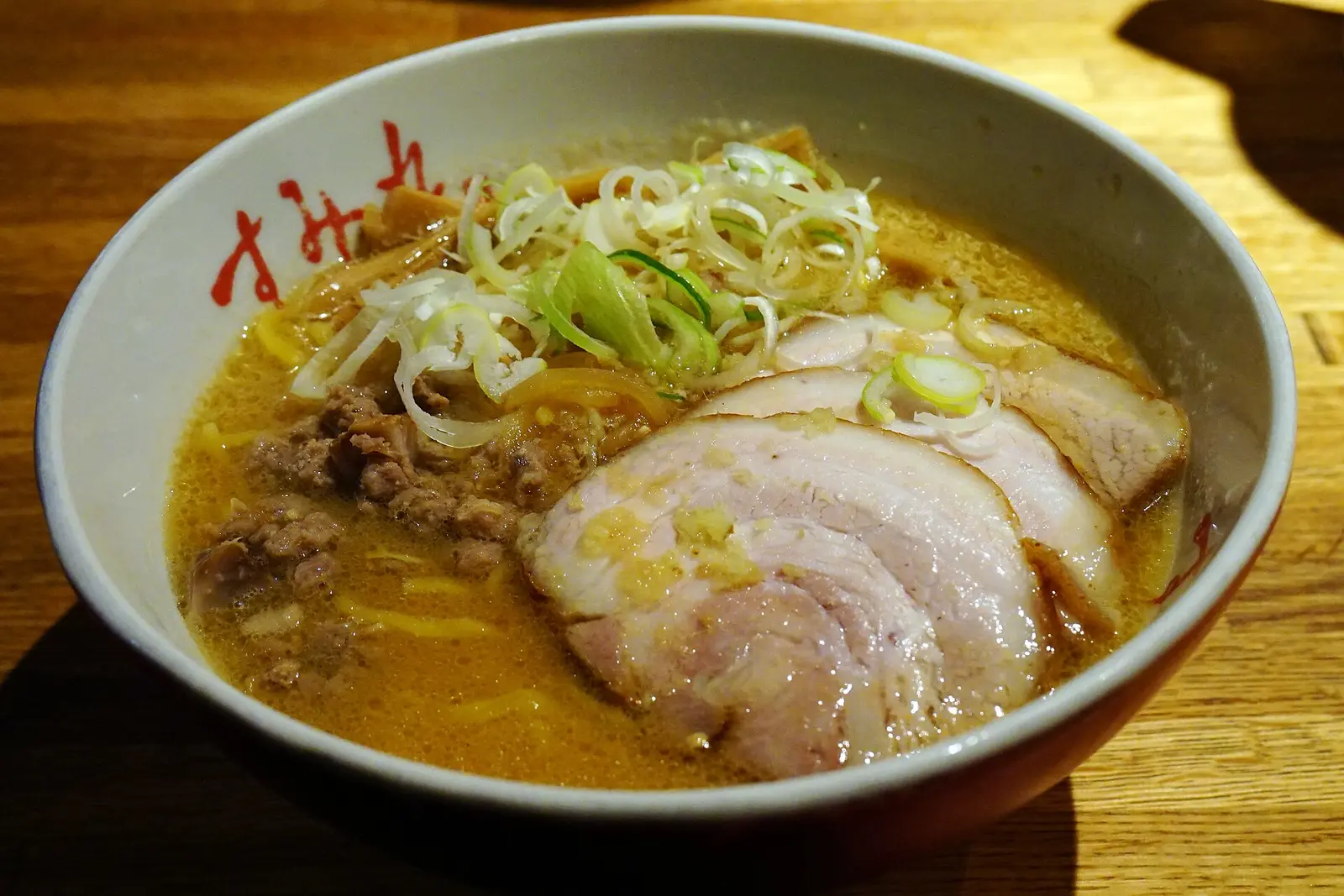
Sapporo miso ramen
味噌ラーメン Miso ramen · Sapporo, Hokkaido
An experiment at a Sapporo diner in 1955 later spread across Japan through restaurant chains and instant noodles.
Know before you go
- Do not stay seated playing on your phone after eating in a small shop with a long queue
- do not pick toppings out of your soup and leave them on the table
- do not hesitate too long at the ticket machine and block people behind you (check the menu in advance)
This article is Not yet verified. Please check official announcements for prices, opening hours and dates.
Culture
Culture & customs
Background
Miso ramen is Japanese ramen with a broth seasoned with miso, most famous in Sapporo, Hokkaido. According to Japanese Wikipedia, Sapporo miso ramen was devised in 1955 by Morito Ōmiya, owner of the city's popular diner Aji no Sanpei: he ordered miso from all over Japan and had his regulars taste-test it, and in 1963 miso ramen officially went on the shop's menu. It attracted attention after demonstration sales at regional product fairs at Takashimaya in Tokyo and Osaka in 1965; from 1967 Dosanko Ramen opened chain shops nationwide, and in 1968 Sanyo Foods launched the instant noodle “Sapporo Ichiban Miso Ramen”, and Sapporo miso ramen thus became Hokkaido's signature ramen. Common toppings are stir-fried bean sprouts, onion and minced meat, and some people add butter and corn.
Local customs
- At many ramen shops you first buy a meal ticket from the ticket machine (kenbaiki) at the entrance and then take a seat
- the layer of lard on the soup keeps it hot, so it is very hot when served
- slurping noodles is common in Japanese ramen shops and is not rude
- you can order extra butter or corn.
Religion & beliefs
- Miso ramen has nothing to do with religion
- it is a product of popular postwar dining in Sapporo, and Susukino's “Ramen Yokocho”, where many small shops are gathered, is part of Sapporo's nightlife. Ramen is not subject to religious dietary rules, but the broths and toppings mostly contain pork
- a few shops in Sapporo offer halal-certified ramen.
Etiquette & taboos
Etiquette & taboos
Rules that apply here
No photography and no eating or drinking in the permanent gallery of the Okinawa Prefectural Peace Memorial Museum
Do
- Put away your camera, food and drinks before entering the permanent gallery
- For the special exhibition gallery and the children's gallery, check the notices of the day to see whether photography is allowed
- If you need to eat or drink, go to the areas designated by the museum, such as the outdoor colonnade
Don’t
- Do not take photos or videos in the permanent gallery
- Do not eat or drink in the permanent gallery, and do not have meals in other areas of the museum either
- Do not extend the permanent gallery's photo ban into a photo ban across the entire park
The museum's 2026 visitor guide explicitly prohibits photography, eating and drinking in the permanent gallery and asks visitors to check the restrictions for other galleries separately; follow the museum's instructions on site.
Not yet verifiedSource: Okinawa Prefectural Peace Memorial Museum: FY2026 visitor guide, page 6
Japan: At fireworks festivals, don't tape off spots in advance, and never fly drones
Do
- Spread your sheet where there is actual space when you arrive, leaving room for neighbours
- Follow police and staff directions and move with the crowd
- Bring plenty of water and cooling gear to prevent heatstroke
- Riverbanks have lots of insects, so bring repellent
- Festivals usually go ahead in light rain, so bring a raincoat
- Take your rubbish home
Don’t
- Don't mark spots in advance with tape or spray paint on roads or in parks
- Don't fly drones
- Don't use selfie sticks in crowds; the Sumida River festival bans them
- Don't stop in the middle of the path to watch and block the flow
Spots marked in advance are cleared by the organisers, and flying drones is prohibited by law. City-centre festivals run one-way crowd flows, and going against the flow or stopping can cause dangerous crushes.
Verified Oct 19, 2026Source: Excite News: Sumida River Fireworks, access and viewing guide
Mixed, open-air and private baths: read the signs, don't stare, never take photos
Do
- Check the signs before entering; mixed baths are clearly marked, and joining is entirely your choice
- Most mixed baths are nude only, with no swimwear; some allow or lend special bathing wraps or towels, so follow the bath's rules
- If you prefer not to bathe mixed, use the separate men's and women's baths or a private bath
- Outdoor baths are slippery and the temperature changes sharply; hold the handrails when moving
- Use a private bath only within your booked slot and leave on time
- Tohoku and other regions still have many therapeutic hot springs with mixed bathing; for long therapeutic stays, follow the ryokan's and your doctor's advice
Don’t
- Don't stare at other bathers, strike up conversations, or linger to watch
- Don't take photos or videos in the bath area
- Don't overstay a private bath; the next group is waiting
Mixed bathing works only because bathers keep their eyes to themselves; staring or taking photos will get you asked to leave, and filming others in a bath may break local law.
Verified Oct 19, 2026Source: Wikipedia (Japanese): Konyoku
Stay off private land, and ask before photographing children or people
Do
- Ask parents' permission before photographing their children
- Ask geiko, maiko, and other working people before photographing them
- Check for 撮影禁止 (no photography) signs, and ask staff if there are none
- Photograph trains and stations themselves without disrupting operations
Don’t
- Do not enter private homes or land for a shot
- Do not photograph the inside of homes
- Do not aim your camera at individual passengers on trains or buses
- Do not step into rice paddies, flower beds, or along railway tracks for photos
- Do not use selfie sticks or tripods in crowds or dangerous spots
- Do not chase or stop geiko or maiko
Trespassing on private land is illegal and can get you told to leave or to delete your photos. Shooting in no-photo areas will be stopped, and photographing children is seen as an invasion of privacy.
Verified Oct 19, 2026Source: Aichi Now: Sightseeing Manners
Bathe nude in the onsen and keep your towel out of the water
Do
- Bathe fully nude, without swimwear or underwear
- Rest your small towel on your head or the edge of the bath
- Tie up long hair so it stays out of the water
- Enter the bath slowly and keep quiet
- Leave your phone in the locker
- Keep your first soak short, and dry off before returning to the changing room
Don’t
- Do not dip your towel into the bath
- Do not swim, dive, or talk loudly in the bath
- Do not take photos anywhere in the bathing area
- Do not wrap your yukata right side over left; that is how the deceased are dressed
Most of these are written bathhouse rules. Breaking them gets you a reminder from staff, and in serious cases you may be asked to leave. Soaking too long can also make you dizzy.
Verified Oct 19, 2026Source: Authentic Local Japan: Onsen Etiquette
Don’t DON'T
- Do not stay seated playing on your phone after eating in a small shop with a long queue
- do not pick toppings out of your soup and leave them on the table
- do not hesitate too long at the ticket machine and block people behind you (check the menu in advance)
- do not bring your own food into the shop.
Locals appreciate DO
- Ramen shops appreciate customers who give up their seat as soon as they finish and don't linger during the busy queue times
- finishing your noodles while hot and praising the broth will make the owner happy. When ordering, say clearly whether you want butter, corn or bean sprouts added to suit your taste
- staff are used to this. Taking a few sips of broth and saying "oishii" is the simplest, most direct compliment.
Plan your visit
Practical info
Travel tips
- Shops cluster in places such as the Ramen Yokocho in Susukino and the Ramen Republic near Sapporo Station
- a bowl takes about 20 to 30 minutes. During the winter Snow Festival it gets crowded and popular shops have long queues. You can combine it with Odori Park, Nijo Market and Tanukikoji. Dietary notes: the broth is usually simmered from pork or chicken bones, and toppings often include minced pork and chashu, so if you do not eat pork, ask first
- the noodles contain wheat, and miso and soy sauce contain soy
- the broth is high in salt, so people with high blood pressure may want to drink less of it. Some shops offer vegetarian or halal ramen
- check separately. With the cold outside in winter, a hot bowl of ramen is especially welcome. Prices and opening hours are as set by each shop
- popular long-established shops often have queues, so going outside mealtimes is more relaxed.
Sources & verification notes
How do you like this place?
More nearby
Also in Hokkaido
Nearby sights
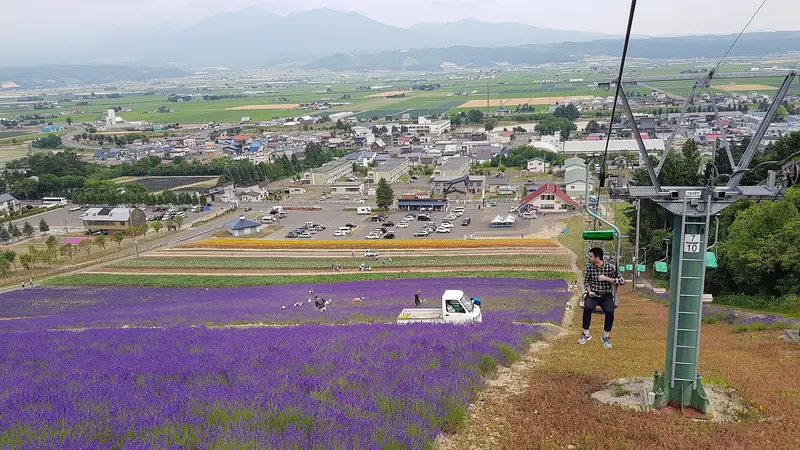
Furano
Lavender fields and the Patchwork Road: a purple dream of northern summer
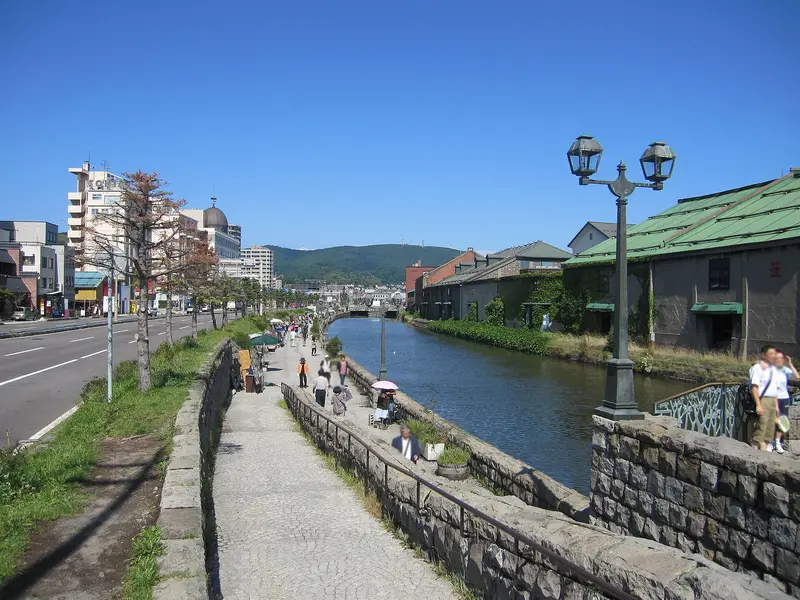
Otaru Canal
A canal at night lit by gas lamps: a romantic dusk in a northern port town
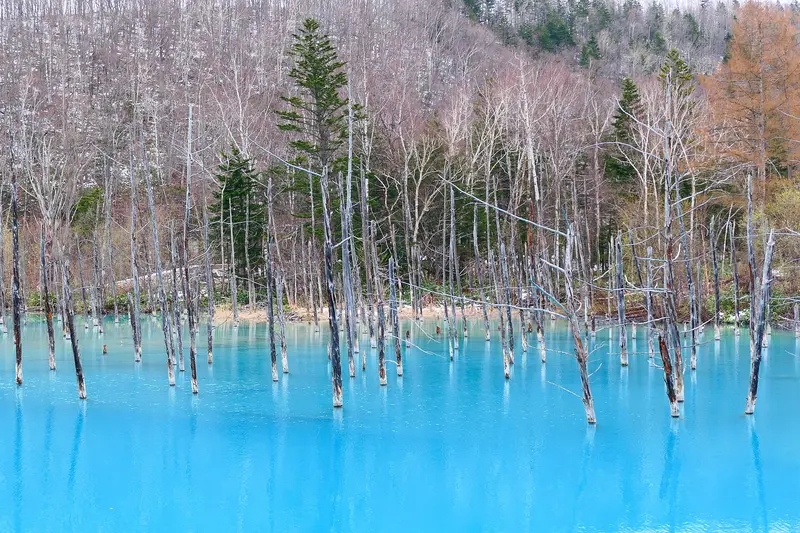
Blue Pond, Biei
Cobalt-blue water and dead trees: a dreamscape chosen as a Mac wallpaper
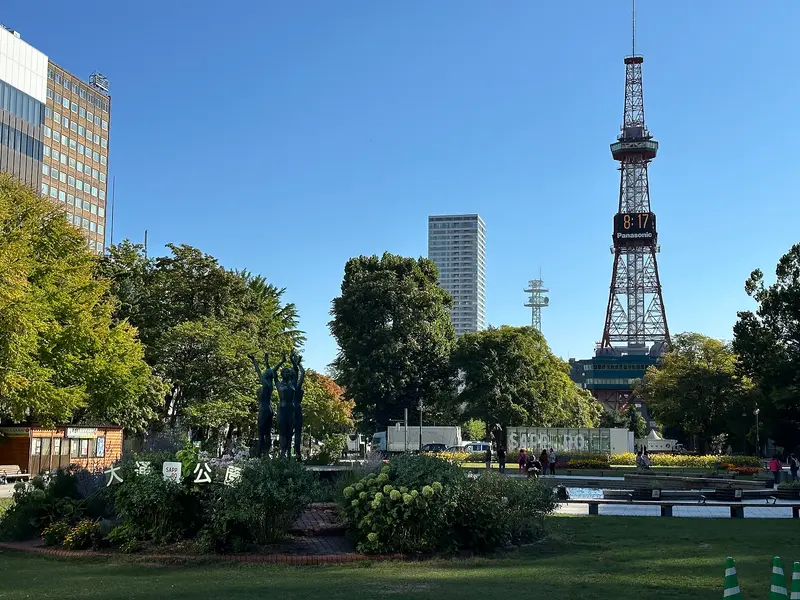
Ōdōri Park, Sapporo
A 1.5-km 'green carpet' running through the city centre, the grand stage of Sapporo's festivals all year round. Laid out in 1871 as a firebreak,…
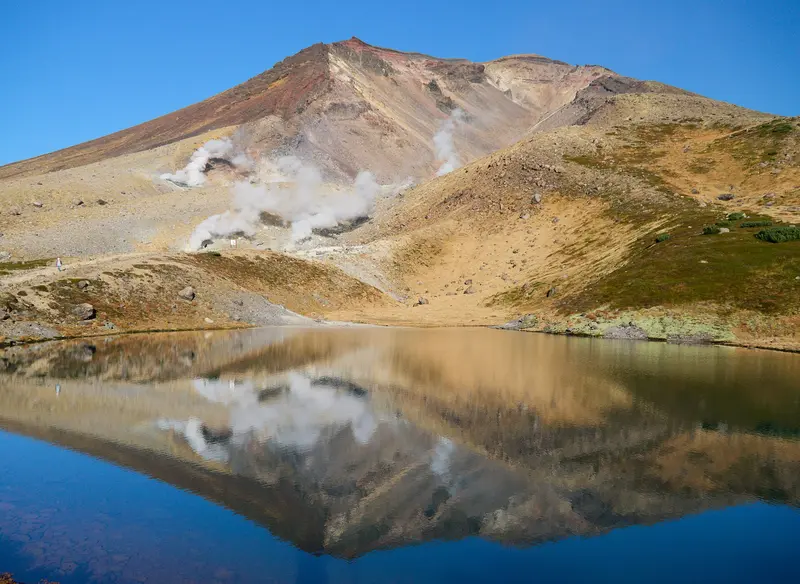
Mount Asahidake
Hokkaido's highest peak, an active volcano 2,290.9 metres high, with steaming fumaroles and Sugatami Pond below the summit mirroring the surroun…
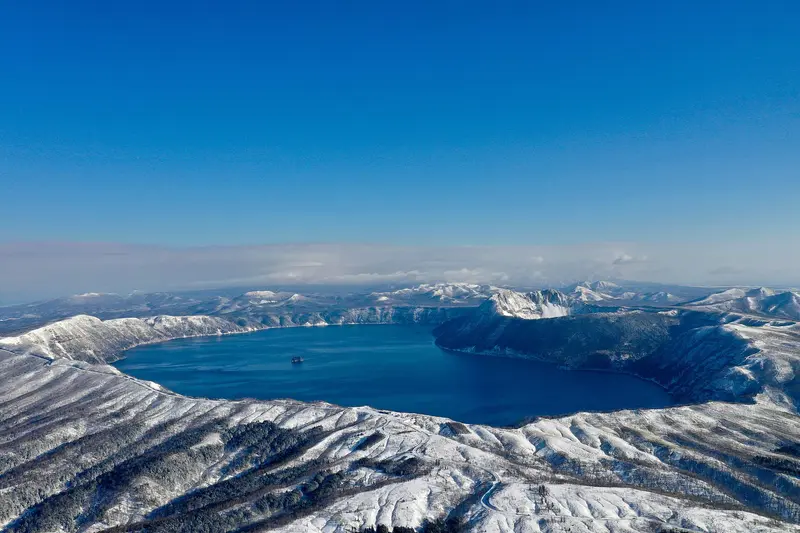
Lake Mashu
A caldera lake ringed by cliffs, once measured at 41.6 metres of transparency in 1931 and so claimed as the clearest lake in the world; its surf…
Local legends
 Mount AsahidakePlayground of the godsThe Ainu call Asahidake Kamui-mintara, usually explained as "the playground of the gods". Fumaro…
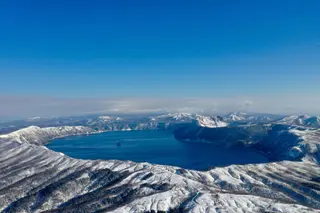 Lake MashuBad luck for a clear viewA local legend says that anyone who can see the surface of Lake Mashu will have bad luck. With f…
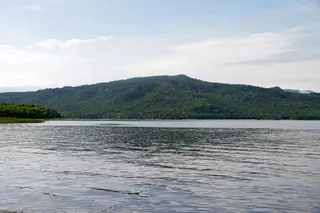 Lake Akan and Ainu CultureThe wren and the bearAt the Ikor theatre you can hear this Ainu legend: a fierce bear attacked a human village and th…