
Hokkaido · Festival / Snow scenery
Sapporo Snow Festival
Usually held for about 8 days in early February each year (subject to official announcements each year), the 1.5-kilometer snow-sculpture promenade in Odori Park and the giant snow stages built by the Self-Defense Forces are the collective work of postwar Sapporo citizens "turning a snow disaster into a festival."
Location
Sapporo, Hokkaido
Stories and legends
No myths or legends; the origin story passed among citizens — "six snow statues built by middle schoolers drew 50,000 people" — is a well-documented historical fact, not just a nice tale.
History and context
In 1950, local junior and senior high school students built six snow sculptures in Odori Park and held snowball fights and a carnival, drawing about 50,000 people; the next year it became a standing festival. In 1955 the Ground Self-Defense Force joined in making large snow sculptures; the 1972 Sapporo Winter Olympics made it internationally famous; an international snow-sculpting competition has run since 1974. The venues are Odori (the main snow sculptures), Susukino (ice sculptures), and Tsudome (snow play); in recent years there are about 200 snow sculptures in total and visitors on the order of two million.
Local life
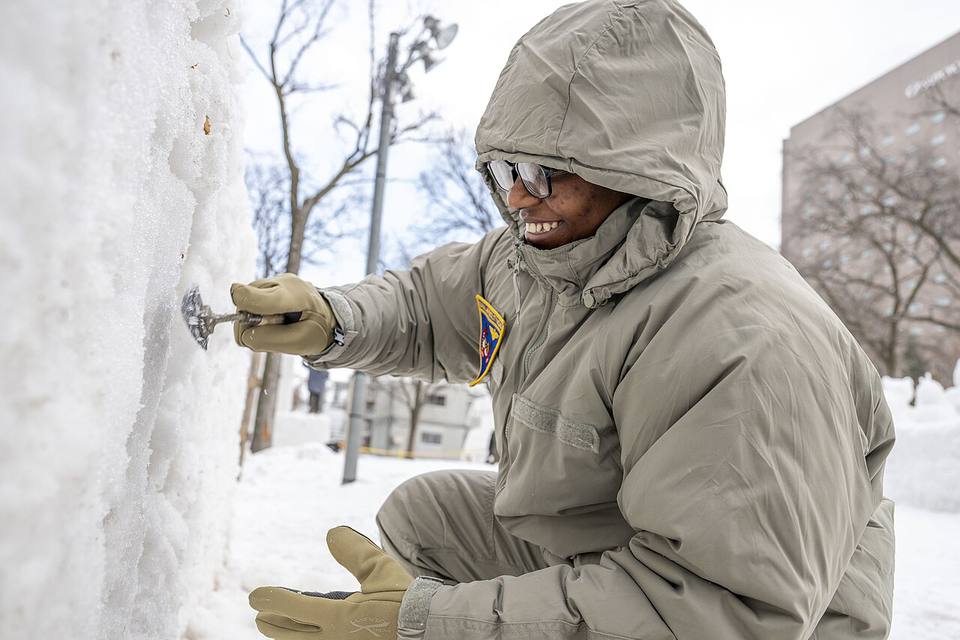
The soul of the Snow Festival is universal participation: the Self-Defense Forces build snow stages with engineering methods, citizens make small and medium snow statues, foreign teams compete on creativity — the whole city turns its hardest midwinter into its home ground. At night, lit snow sculptures take on a marble-like texture, and Susukino's ice sculptures glow transparent under the neon — two different festivals from the daytime. Sapporo hospitality is hearty too: festival stalls sell hot soup and jingisukan, and eating while you watch is the local way.
Customs
Parts of the large-sculpture construction period from January are open for viewing tours; after the festival the sculptures are demolished and leveled at once — "ichigo ichie" (one time, one meeting) is part of the festival aesthetic.
Beliefs
No specific religious association; its main cultural identity is a civic festival and winter city culture.
Local etiquette
Do not climb or touch the snow sculptures (body heat and pressure destroy the works) and do not cross the fences; sidewalks are seriously icy, and ordinary sneakers make falls very likely; no drones at the venues.
Visiting notes
The usual timing is about 8 days in early February (in 2026, February 4–11; per the official site snowfes.com each year); accommodation must be booked 3–6 months ahead, with prices multiplying several-fold; to avoid crowds, go on a weekday after opening and reach the Odori venue before 9:00; dress for -10°C plus wind chill, and stick a hand warmer on your phone to prevent battery drain.
What to eat nearby
Sapporo miso ramen (札幌味噌ラーメン, with stir-fried bean sprouts and butter-corn); soup curry (スープカレー, with chunky vegetables and a chicken leg); jingisukan grilled lamb; beer and barbecue at the Sapporo Beer Garden; seafood rice bowls at Nijo Market
Nijo Market, Tanukikoji shopping street, the Susukino dining district
At ramen shops, queue, buy your ticket first, and give up your seat as soon as you finish — that is the unspoken understanding; the Beer Garden requires reservations in peak season
Ramen 1,000–1,400 yen (about 47–66 yuan, for reference only); soup curry 1,500–2,200 yen (about 70–103 yuan, for reference only)
Popular shops queue for an hour or more during the Snow Festival — eat off-peak at 14:00 or 21:00; a hot soup curry is the best way to warm back up after being frozen through.
Source leads: Sapporo Snow Festival official site snowfes.com, Sapporo City official tourism sapporo.travel, JNTO Sapporo Snow Festival page.
Image source · U.S. Navy photo by Petty Officer 2nd Class Matthew Fischer · Public domain