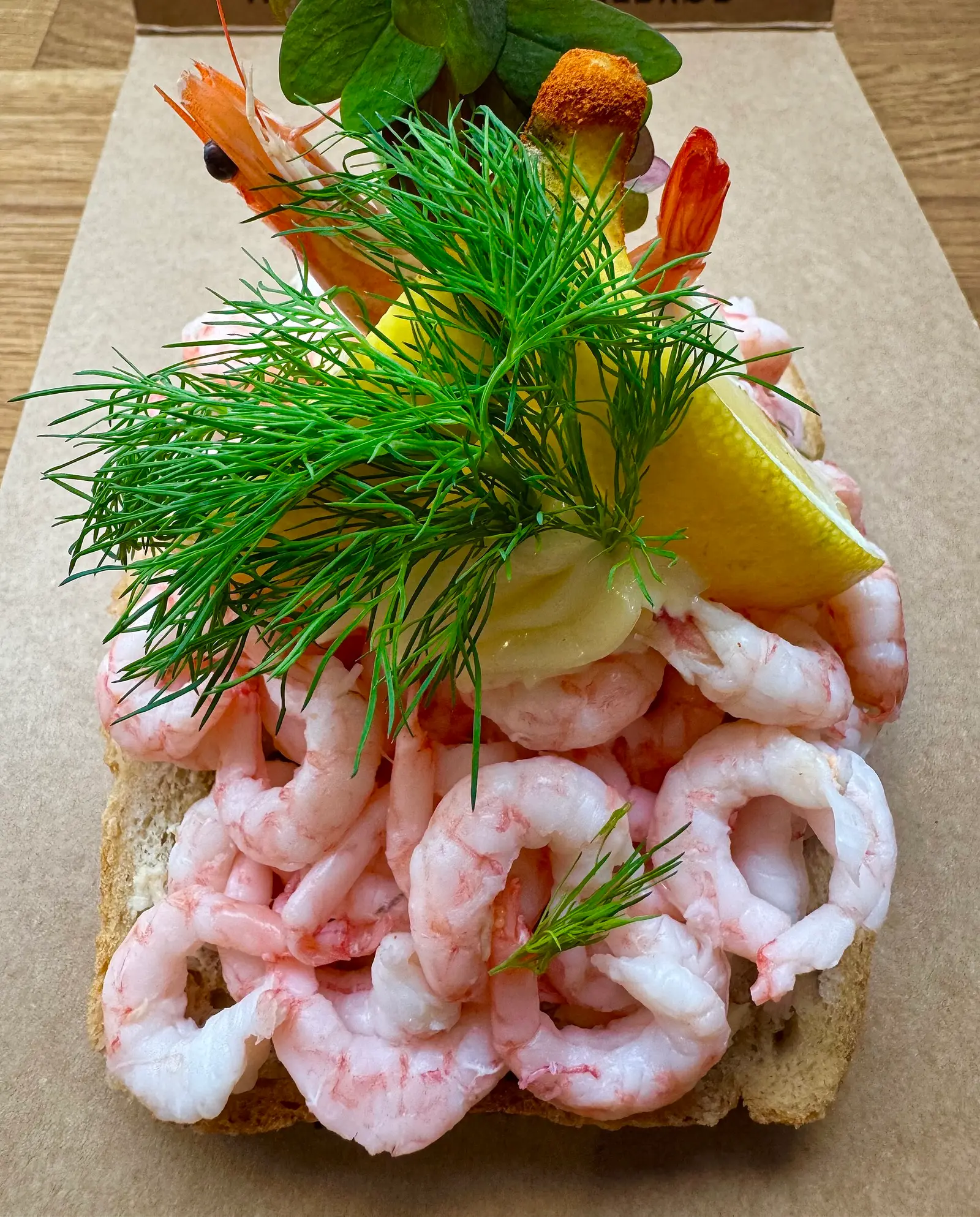
Smørrebrød (Danish open sandwich)
Smørrebrød · Copenhagen, Denmark
A slice of rye bread topped with herring, roast beef or shrimp: a lunch Danes eat with a knife and fork.
Know before you go
- Don't pick up an elaborately decorated open sandwich with your hands and bite straight into it
- don't go to old lunch restaurants at dinner time (many serve lunch only)
- don't fail to look the other person in the eye when they raise a glass and say “Skål”
This article is Not yet verified. Please check official announcements for prices, opening hours and dates.
Culture
Culture & customs
Background
Smørrebrød is a slice of bread (especially rye bread) topped with cheese, fish, meat, liver pâté, sausage or other toppings, eaten for lunch, as a late-night snack or as a light bite. According to Danish Wikipedia, the name combines "smør" (butter) and "brød" (bread), and originally meant simply a slice of bread spread with butter or fat. The most distinctively Danish form is the elaborately decorated, high-piled "festive smørrebrød", which developed in the late 19th century and was one of the first Danish dishes to become famous abroad. Specialist smørrebrød restaurants appeared in Copenhagen at that time, and the earliest known menu listing smørrebrød comes from the Nimb restaurant in Tivoli Gardens in 1883. Wine merchant and restaurateur Oskar Davidsen became famous for a menu 140 cm long listing up to 190 varieties, making Danish smørrebrød renowned worldwide.
Local customs
- Eat with a knife and fork rather than your hands
- for lunch people usually order two or three pieces, and the traditional order is herring first, then other fish, then meat, and cheese last
- beer or akvavit is the traditional drink.
Religion & beliefs
- Open sandwiches have nothing to do with religion
- at festive meals such as the Danish Christmas lunch (julefrokost), they are an important part alongside pickled herring and schnapps. The Christmas lunch season usually runs from late November to December, so book popular restaurants early.
Etiquette & taboos
Etiquette & taboos
Don’t DON'T
- Don't pick up an elaborately decorated open sandwich with your hands and bite straight into it
- don't go to old lunch restaurants at dinner time (many serve lunch only)
- don't fail to look the other person in the eye when they raise a glass and say “Skål”
- don't pick the toppings off the bread layer by layer to eat only one of them.
Locals appreciate DO
- Danes appreciate guests who eat the dishes in order and savor them slowly with a knife and fork
- at lunch restaurants, ticking your choices on an order slip from the menu is also a tradition at many old establishments, so just follow suit. Asking the staff which herring is recommended that day often gets you a seasonal flavor.
Plan your visit
Practical info
Travel tips
- There are many open sandwich places at Torvehallerne market, Nyhavn and in the city center of Copenhagen
- many traditional lunch restaurants open only at midday and need to be booked in advance, and a meal takes about an hour. You can combine it with Torvehallerne, Rosenborg Castle and the National Museum. Dietary notes: common toppings include pickled herring, smoked eel, shrimp, roast beef and liver pâté, and pregnant women should take care with raw fish and cold-smoked products
- rye bread contains gluten
- the sauces often contain egg (mayonnaise) and dairy
- the aquavit served alongside is a strong spirit with a high alcohol content. Stalls in Torvehallerne offer takeaway, good for a simple lunch. Prices and opening hours are set by each shop
- popular old places often have queues, so go outside peak mealtimes for a more relaxed meal.
Sources & verification notes
How do you like this place?
More nearby
Also in Denmark
Nearby sights

Tivoli Gardens
Opened in 1843 next to Copenhagen Central Station, Tivoli is the world's second-oldest amusement park still in operation; its 1914 wooden roller…

Kronborg Castle
A Renaissance castle guarding the narrowest point of the Øresund, inscribed on the UNESCO World Heritage List in 2000; the Great Hall, the chape…