Munich Weisswurst
Weißwurst · Munich, Germany
They say it should never hear the 12 o'clock noon bell: white sausage, sweet mustard, pretzels and wheat beer make up the Munich late-morning snack.
Know before you go
- Don't eat the skin
- don't ask for ketchup
- don't order Weisswurst late in the afternoon—in old-style restaurants that marks you as an outsider (though many places now serve it all day)
This article is Not yet verified. Please check official announcements for prices, opening hours and dates.
Culture
Culture & customs
Background
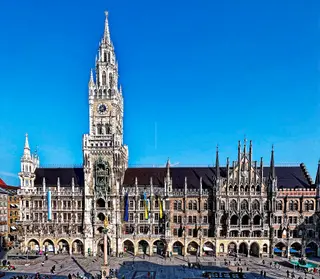
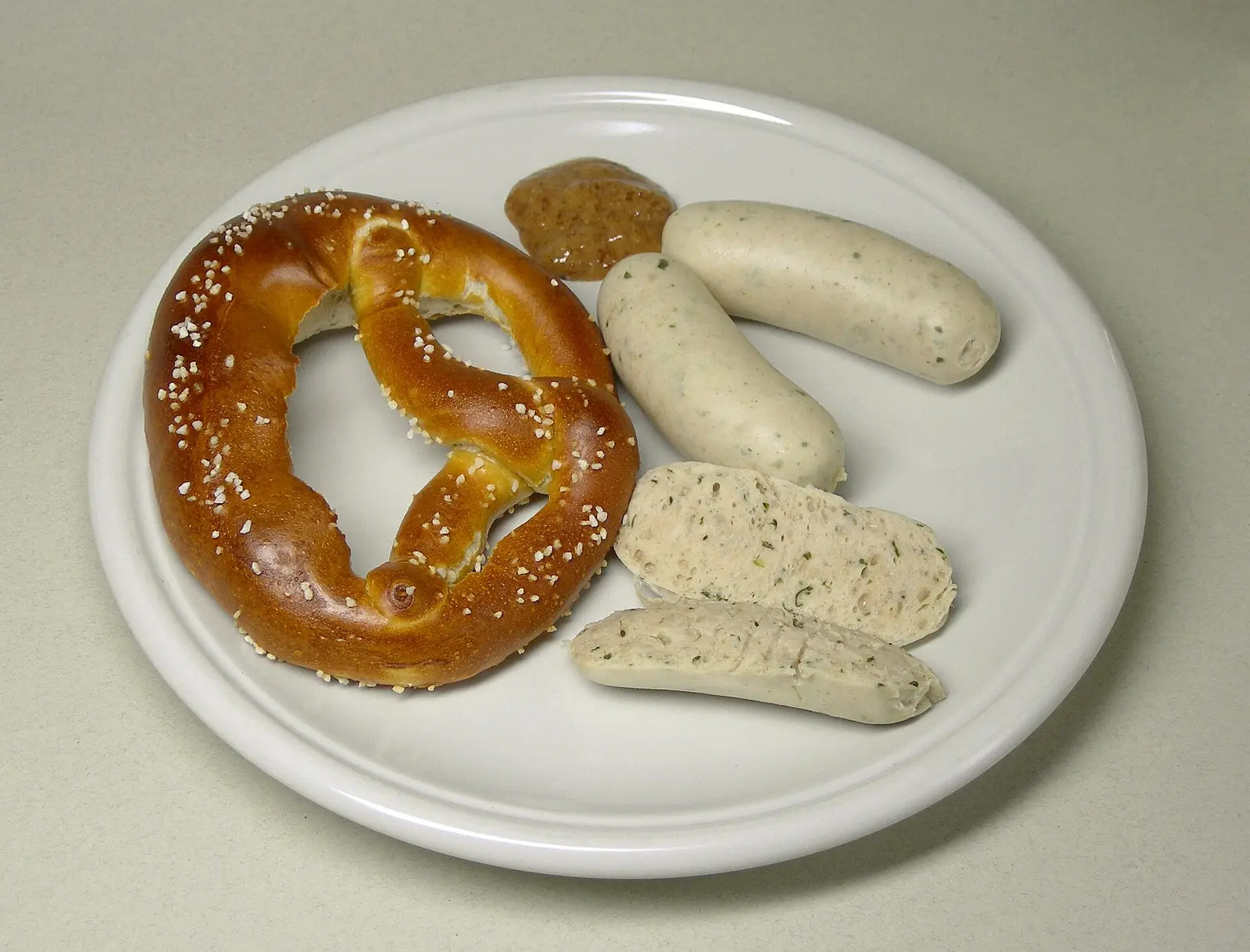
Weißwurst is a boiled sausage made of finely minced veal (nowadays with pork too), pork back fat and spices. According to German Wikipedia, it is white because it is cured with ordinary salt rather than nitrite salt; it is one of Munich's best-known specialties, traditionally made early in the morning and eaten in the late morning at markets and taverns with sweet mustard, pretzels (Brezn) and wheat beer. Legend has it that it was invented by accident on 22 February 1857 (Carnival Sunday) by butcher Joseph Moser at the "Zum Ewigen Licht" tavern on Marienplatz while making sausages. However, Munich city archivist Richard Bauer points out that Weißwurst may have existed before 1857; he found an 1814 print showing Munich people "sucking" white sausages. The saying that "Weißwurst must not hear the noon bells" dates from the era before refrigeration.
Local customs
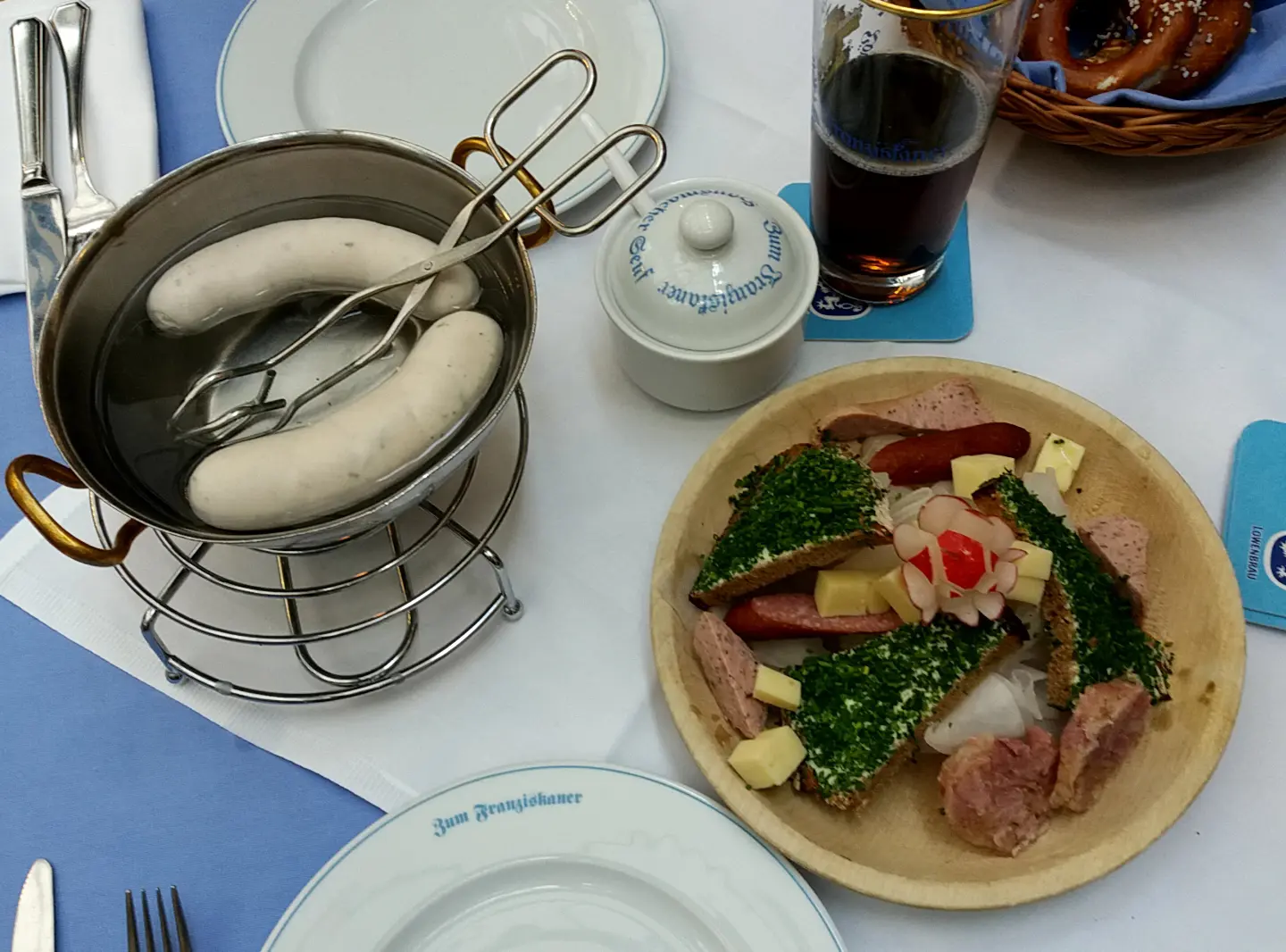
- Weißwurst is warmed in water at about 70 degrees, never boiled, and served in its water in a small pot
- you peel it before eating: either cut it lengthwise with knife and fork and peel off the skin, or follow Bavarian tradition and "suck" the meat out of the skin (zuzeln)
- the skin is not eaten
- it comes with sweet mustard, usually two per person.
Religion & beliefs
- Weißwurst has nothing to do with religion, but it is closely tied to Munich's traditional festivals such as Carnival and Oktoberfest
- the Sunday-morning "Weißwurstfrühstück" (white-sausage breakfast) is a Bavarian social custom.
Etiquette & taboos
Etiquette & taboos
Rules that apply here
Dachau Concentration Camp Memorial Site: the grounds are like a cemetery, so no eating, drinking or smoking, and no audio played aloud
Do
- Treat this place as a cemetery and place of mourning, and visit quietly
- Dress appropriately and respect the solemnity of the place
- Parents should make sure children behave appropriately; the museum advises that children under 12 not visit the exhibitions, the grounds or the former crematorium
- If you want a guide, choose one authorized by the memorial site's education department
Don’t
- Do not smoke, eat or drink alcohol within the former barracks area
- Do not wear clothing or symbols associated with far-right extremist groups
- Do not use devices with loudspeakers, and do not record audio or video or repost the guided-tour content online
- Do not touch camp relics or exhibits, and do not leave luggage unattended
- Do not bring dogs inside (guide dogs and assistance dogs excepted)
The memorial's visitor rules expressly forbid disturbing the peace of the dead in any way, and all the above behaviors are prohibited; those who damage relics or exhibits must pay compensation, and commercial photography requires prior permission.
Not yet verifiedSource: KZ-Gedenkstätte Dachau:Guidelines for Visitors
Germany: Keep quiet on Sundays and at night
Do
- Do noisy chores such as vacuuming, spin cycles and drilling on weekday daytimes
- At night (usually 10 pm to 6 or 7 am), keep sound low enough that neighbours can't hear it with the door shut
- When you move in, read the house rules (Hausordnung) posted in the building
- If you hold a party, tell your neighbours in advance and turn it down by 10 pm
Don’t
- Don't use power tools such as drills or lawnmowers on Sundays and public holidays
- Don't throw bottles into public glass bins on Sundays or at night (check the sign on the bin)
- Don't make noise during the midday quiet period (often 1 to 3 pm) where it applies
Quiet hours are set by state law, local bylaws and house rules rather than a single national law. Repeated disturbances can lead to complaints from neighbours, action by the public order office or police, and fines; amounts are as officially published.
Verified Oct 19, 2026Source: Germany Focus Guide: German Ruhezeit and Sunday etiquette
Germany: Pedestrians, stay out of cycle lanes
Do
- Before crossing or stopping for photos, check whether you are on the pavement or a cycle lane
- When cycling, keep right and overtake on the left
- On shared paths, give way to pedestrians and slow down
- Children under 8 must cycle on the pavement; those aged 8 to 10 may choose
Don’t
- Don't stand or walk in cycle lanes (a blue round sign with a bicycle marks a dedicated lane)
- Don't cycle on the pavement unless a sign allows it
Cycle lanes are part of the road: stepping into one can bring a fine and, more importantly, a collision with a fast-moving cyclist. Cycling on the pavement without permission is also fined; amounts are as officially published.
Verified Oct 19, 2026Source: Live in Germany: Cycling in Germany
Don’t DON'T
- Don't eat the skin
- don't ask for ketchup
- don't order Weisswurst late in the afternoon—in old-style restaurants that marks you as an outsider (though many places now serve it all day)
- don't be loud with no regard for others or stand on the long tables in a beer hall.
Locals appreciate DO
- Munich locals appreciate guests who come for Weisswurst in the morning and eat it with sweet mustard rather than ordinary mustard
- try the traditional "sucking" method—even if you are not very good at it, locals will find it charming. They also appreciate the unhurried pace of enjoying it slowly with a wheat beer or a non-alcoholic drink.
Plan your visit
Practical info
Travel tips
- Long-established restaurants around Marienplatz in Munich's old town, the Viktualienmarkt and the beer halls all serve Weisswurst in the morning
- a meal takes about half an hour to an hour, ideal before or after morning sightseeing. Combine with the Glockenspiel at the New Town Hall on Marienplatz, the Viktualienmarkt and the Frauenkirche. Dietary notes: Weisswurst contains veal, pork and pork back fat, so it is not suitable if you do not eat pork
- pretzels contain gluten
- wheat beer contains alcohol—drinking in the morning is common in Bavaria, but not for drivers or minors, and you can order alcohol-free beer or other drinks instead. Prices and opening hours are subject to each restaurant
- popular old establishments often have queues, so going off-peak is more relaxed.
Photos
Photos
1971markus · CC BY-SA 4.0
Rainer Z ... · CC BY-SA 3.0
Sources & verification notes
How do you like this place?
More nearby
Also in Munich
Nearby sights
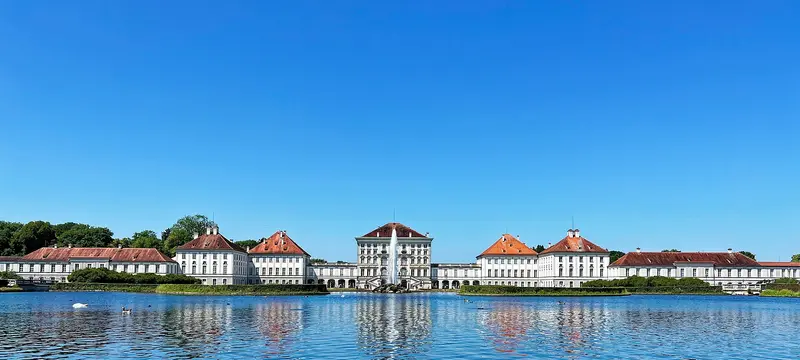
Nymphenburg Palace
The Wittelsbachs' summer palace: its façade is wider than Versailles', and it was the birthplace of Ludwig II, the 'Fairy-Tale King'.
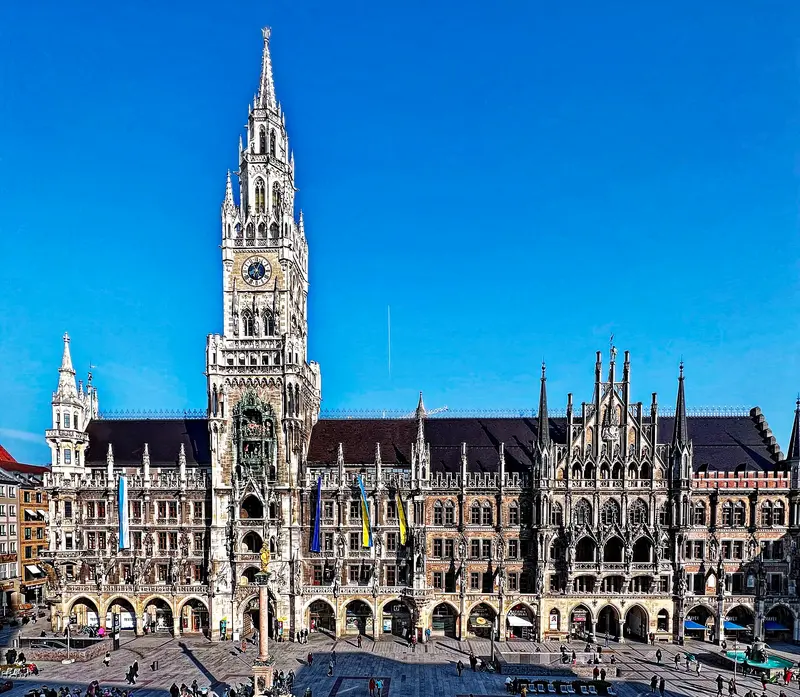
Marienplatz and the New Town Hall
Munich's central square since 1158: the Glockenspiel in the New Town Hall tower re-enacts a 16th-century wedding and the coopers' dance.